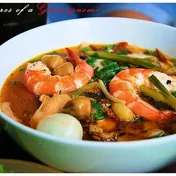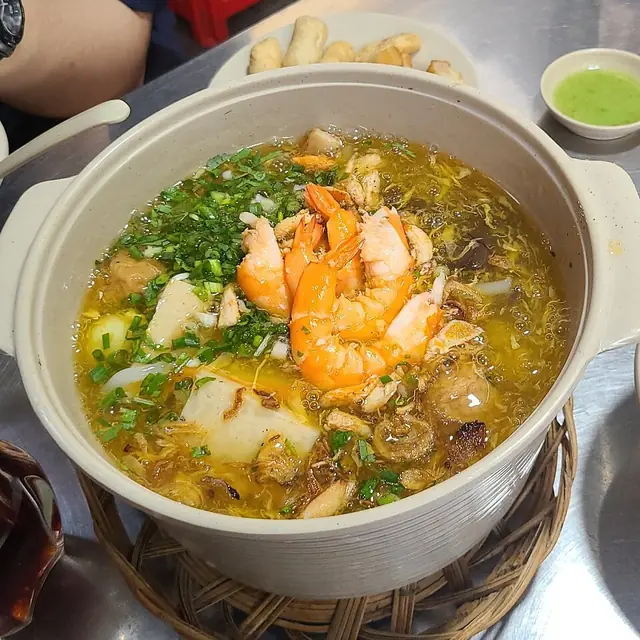
A rich, thick crab soup of chewy tapioca-and-rice noodles, often with quail eggs, served at sidewalk stalls such as Banh Canh Cua 87 in Tan Dinh.

Banh canh are thick noodles made from tapioca flour or a mix of rice and tapioca flour; the name joins banh, flour-based noodles or cakes, with canh, soup. The crab version is described as a rich, thick crab soup, often with the addition of quail eggs. Banh Canh Cua 87 on Tran Khac Chan in Tan Dinh serves it from a sidewalk stall, and Banh Canh Ghe Muoi Ot Xanh in District 10 serves a version with sea crab and a tangy green-chili salt.

Where to eat Banh canh cua in Ho Chi Minh City

2 editor picks for Banh canh cua in Ho Chi Minh City, ranked by editorial score. All Ho Chi Minh City signature dishes · Banh canh cua across every city.

More places near Banh Canh Cua 87 and Banh Canh Ghe Muoi Ot Xanh

Not on this list, but close by, nearest first. Every one is in our guide with its address, hours and what to order.

Make it at home

Serves Serves 41 hr 30 minIntermediate

Ingredients

  • 800g pork bones
  • 2 whole crabs, steamed, meat picked
  • 400g fresh banh canh (tapioca-rice) noodles
  • 150g minced pork, rolled into small balls
  • 8 quail eggs, boiled
  • 2 tbsp tapioca starch slurry (to thicken)
  • Fish sauce, sugar, white pepper
  • Fried shallots, spring onion and lime to serve

Method

  1. Simmer the pork bones in 2 litres of water for 1 hour, skimming, then strain.
  2. Season the broth with fish sauce and a little sugar, add the pork balls and cook through.
  3. Stir in the tapioca slurry a little at a time until the broth is thick enough to coat a spoon.
  4. Add the banh canh noodles and quail eggs and simmer briefly.
  5. Fold in most of the crab meat, then ladle into bowls, top with the rest of the crab, fried shallots, spring onion and plenty of white pepper. Serve with lime.

Editor tip. Add the tapioca slurry gradually; the broth should be thick and clinging but still pourable, not a paste.

Common allergens: Shellfish, Egg, Fish.