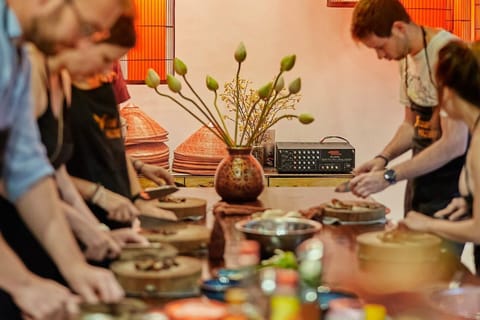
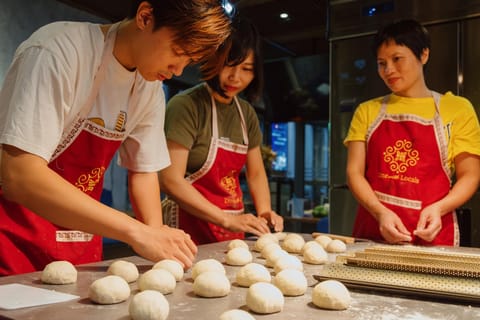
The plates that define Hanoi: what they are, where they came from, and where to eat the canonical version.
Signature dishes
-
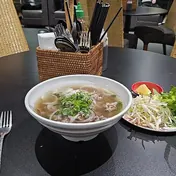
Phở Bò ★ 4.9
Pho bo is beef noodle soup, rice noodles and beef in a bone broth. In Hanoi bowls come with rare flank, brisket or round at Pho Gia Truyen, or heel muscle at Pho Bo Lam.
Where to try it: Phở Gia Truyền Bát Đàn, Phở 10 Lý Quốc Sư, Phở Bò Lâm, Phở Thìn Lò Đúc
Pho first appears in written records in the early 20th century in northern Vietnam, and its modern form emerged between 1900 and 1907 in Nam Dinh province. Hanoi's first fixed pho stands included Cat Tuong on Cau Go Street, and around 1925 a Van Cu villager opened the first Nam Dinh style stand in the city. In 1979 Nguyen Trong Thin began selling pho tai lan at 13 Lo Duc, with the beef stir-fried in hot fat with garlic, onion and chilli.
Watch out for: Gluten (in quay), Soy
-
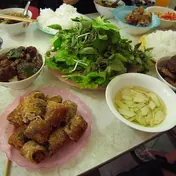
Bún Chả ★ 4.9
Bun cha is grilled pork with rice noodles: smoky pork and pork patties with vermicelli, fresh herbs and a sweet fish-sauce dip, a Hanoi dish that Michelin lists at several shops.
Where to try it: Bún Chả Hương Liên, Bún Chả Đắc Kim, Tuyết Bún Chả 34
Bun cha is thought to have originated in Hanoi. Bun Cha Huong Lien became famous when US President Barack Obama dined there with Anthony Bourdain in May 2016, and its Obama Combo is a bowl of bun cha, a fried seafood roll and a Hanoi beer. Bun Cha Dac Kim has been in the Old Quarter since 1966, and Tuyet Bun Cha 34 grills to order. Michelin gives Tuyet Bun Cha 34 a Bib Gourmand and lists the other two.
Watch out for: Fish (in nuoc cham), Soy
-
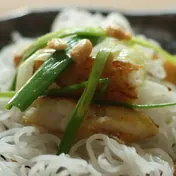
Chả Cá ★ 4.7
Cha ca La Vong is a Hanoi grilled fish dish: turmeric-marinated Hemibagrus catfish served in a hot pan with dill and spring onions, eaten with noodles and shrimp paste.
Where to try it: Chả Cá Lã Vọng, Chả Cá Thăng Long
In the 19th century the Doan family of the Old Quarter grilled fish for their neighbours, and the community helped them open an eatery on Hang Son Street in 1871. It was nicknamed Cha Ca La Vong after a statue inside, and the street was later renamed Cha Ca. Michelin gives Cha Ca Thang Long a Bib Gourmand; it has three branches on one street, and its cha ca is Hemibagrus catfish seasoned with turmeric and cooked in a hot pot with spring onions and herbs.
Watch out for: Fish, Shrimp (mam tom), Peanut
Book food experiences in Hanoi

-
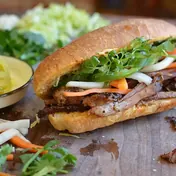
Bánh Mì ★ 4.8
Banh mi is a short baguette with a thin, crisp crust, filled with pate, sausage or grilled meat, pickles and herbs. Hanoi sells it from pavement stalls such as Banh Mi 25.
Where to try it: Banh Mi 25, Banh Mi Hang Gai
Price: 15,000 VND at Banh Mi Hang Gai (April 2026)
The French introduced the baguette in the mid-19th century and it became a staple by the early 20th century. Wheat shortages in the First World War led bakers to mix in rice flour, and a distinctly Vietnamese sandwich developed in Saigon in the 1950s. The Hang Gai stall at 46 Hang Gai was opened in 1979 by Linh's mother-in-law, reheats its bread in a handmade oven and sells from 05:15 to 10:15.
Watch out for: Gluten, Soy, Sesame (some sandwiches)
-
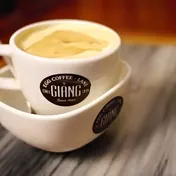
Cà Phê Trứng ★ 4.9
Egg coffee is a Hanoi drink of egg yolk whisked with sugar and condensed milk, set on hot coffee. Cafe Giang, where it began in 1946, serves the cup in warm water.
Where to try it: Café Giảng, Cafe Đinh, Cafe Phố Cổ
Nguyen Van Giang, a bartender at the Metropole Hotel, used whisked egg yolk in place of scarce fresh milk and started selling the drink at his own Cafe Giang in 1946. His youngest son now runs the cafe. His daughter Bich opened Cafe Dinh at 13 Dinh Tien Hoang, up a flight of steps in an old house above an alley near Hoan Kiem Lake.
Watch out for: Egg, Dairy
-
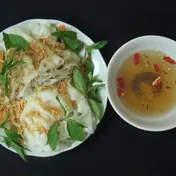
Bánh Cuốn ★ 4.6
Banh cuon is a northern Vietnamese rice roll: a thin steamed sheet of fermented rice batter filled with ground pork, wood ear mushroom and shallots, dipped in nuoc cham.
Where to try it: Bánh Cuốn Gia Truyền, Bánh Cuốn Bà Hoành
Banh cuon comes from northern Vietnam and is generally eaten for breakfast. The sheet is steamed from a slightly fermented rice batter on a cloth stretched over a pot of boiling water. Michelin added Banh Cuon Gia Truyen Thanh Van on Hang Ga Street, open since 1973, to its Bib Gourmand list in 2026, and also lists Banh Cuon Ba Hoanh, where sheets are steamed to order around minced shiitake and pork.
Watch out for: Gluten (in soy), Soy, Pork
-
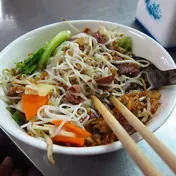
Bún Bò Nam Bộ ★ 4.6
Bun bo Nam Bo is a dry noodle bowl: rice vermicelli with marinated beef, bean sprouts, onion, roasted peanuts, fried shallots and raw herbs, dressed with a fish-sauce nuoc cham.
Where to try it: Bún Bò Nam Bộ Bách Phương
Nam Bo is the Vietnamese name for the south, and bun bo Nam Bo is the southern-style beef noodle salad that Hanoi shops now sell by the bowl. Bach Phuong on Hang Dieu is one of the best known, serving the dish with roasted peanuts, fried shallots and raw vegetables over soft vermicelli. The sauce is a fish-sauce dressing, so the bowl is eaten tossed rather than in broth.
Watch out for: Peanut, Fish (nuoc cham), Soy
-
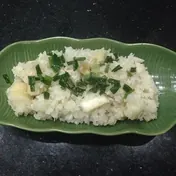
Xôi Xèo ★ 4.5
Xoi xeo is sticky rice served with smashed mung beans, fried onions and rousong. At Xoi Yen on Nguyen Huu Huan the xeo base takes chicken, cha, lap suong or braised egg.
Where to try it: Xôi Yến
Price: 57,000-94,000 VND with toppings at Xoi Yen
Xoi is steamed glutinous rice with many savoury and sweet varieties, and xoi xeo is one of the savoury ones. Xoi Yen at 35B Nguyen Huu Huan lists xoi xeo, white xoi and corn xoi with toppings of chicken, cha, lap suong, braised egg and floss on a 17-item menu, and serves in the shop and through ShopeeFood.
Watch out for: Pork, Soy
-

Bia Hơi ★ 4.7
Bia hoi is a light draught beer of about 4 percent alcohol, brewed daily and delivered in steel kegs; a glass costs 10,000 to 15,000 VND at northern street corners.
Where to try it: Bia Hơi Corner Ta Hien
Price: 10,000-15,000 VND per glass
Bia hoi, 'fresh beer', is found mostly in northern Vietnam, in small bars and on street corners. Each bar gets a fresh batch every day in steel barrels, and the glasses are made from recycled glass, a look that dates to the 1970s when the first were made quickly from cheap materials. The corner of Ta Hien and Luong Ngoc Quyen in the Old Quarter is known as Beer Corner, where drinkers sit on tiny plastic stools.
Watch out for: Gluten
-
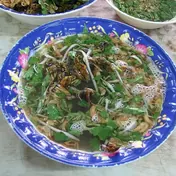
Miến Lươn ★ 4.5
Mien luon is a Hanoi eel dish: vermicelli with crisp shredded eel in soup or served dry, with eel also in congee and spring rolls at Mien Luon Chan Cam, a Michelin Bib Gourmand.
Where to try it: Miến Lươn Chân Cầm
Mien Luon Chan Cam, at nearly 40 years old, is a shop in the Old Quarter popular for its array of eel dishes, cold or stir-fried, served with vermicelli in soup, in congee and in spring rolls. Michelin made it a Bib Gourmand in 2025 and notes that a steaming bowl of vermicelli with crisp shredded eel suits winter, while a salad suits summer.
Watch out for: Fish (eel), Soy
-
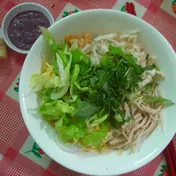
Bún Thang ★ 4.4
Bun thang is a Hanoi chicken noodle soup: rice vermicelli in clear broth, topped with thin strips of chicken, egg and pork sausage arranged like flower petals.
Bun thang is traditionally eaten the day after Tet, made from the leftovers of the New Year feast. Chef Thuy Linh Do's family says that after Tet nobody wanted to waste the boiled chicken, banh chung and cha lua, so the soup was invented to use them up, and it was called the dish of the poor. She does not know when it began. Many Hanoians now eat it every day.
Watch out for: Egg, Shrimp, Fish sauce
-
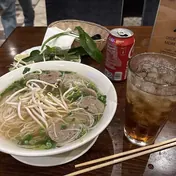
Phở Cuốn ★ 4.5
Pho cuon is rolled pho: fresh rice noodle sheets wrapped around lightly sauteed beef, lettuce and herbs, dipped in a sweet-and-sour sauce instead of served in broth.
Where to try it: Phở Cuốn Hương Mai, Phở Cuốn Chính Thắng
Michelin says Pho Cuon Chinh Thang on Mac Dinh Chi is said to be the birthplace of pho cuon, in 2000, and it also serves crispy fried pho with beef gravy. Pho Cuon Huong Mai opened on Ngu Xa, near West Lake, more than a decade ago and now has branches across Hanoi; its menu includes egg-fried pho, crispy fried pho and stir-fried pho.
Watch out for: Fish (nuoc cham), Soy
-
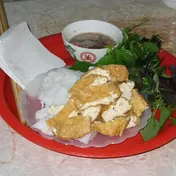
Bún Đậu Mắm Tôm ★ 4.3
Bun dau mam tom is rice vermicelli with fried tofu and a fermented shrimp paste dip. At Co Tuyen in an alley off Hang Khay it comes with cha com, spring rolls and pork.
Where to try it: Bún Đậu Mắm Tôm Cô Tuyến
Bun dau mam tom is a northern Vietnamese noodle dish of rice vermicelli, fried tofu and shrimp paste. Hang Khay is a small street of about 160 m between Trang Tien and Trang Thi, and Co Tuyen is the best known of its bun dau shops, with a single address in alley 31. Its toppings include cha com, tofu, pork intestine, spring rolls and meat, and its mam tom has its own recipe.
Watch out for: Shrimp, Soy, Pork
Signature Dishes in Hanoi, FAQ
What food is Hanoi known for?
Hanoi's signature dishes include Phở Bò, Bún Chả, Chả Cá, Bánh Mì, Cà Phê Trứng. See our signature dishes chapter for where to eat each.