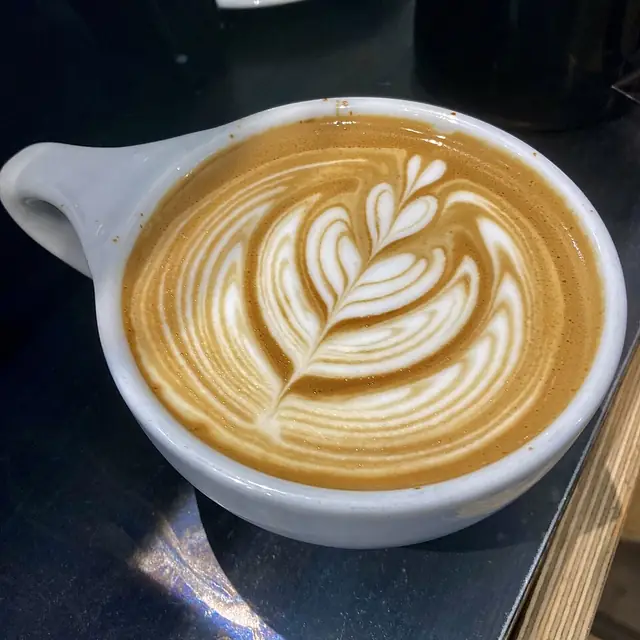
Seattle's coffee story runs from Starbucks' 1971 start in Pike Place Market to Espresso Vivace, founded 1988, where David Schomer popularized latte art.

Starbucks was founded on March 30, 1971 in Pike Place Market. Howard Schultz left in 1985 to found Il Giornale, a cafe inspired by the coffee bars he saw in Milan, which used Starbucks beans. Espresso Vivace was founded in 1988 by David Schomer and Geneva Sullivan on Capitol Hill, and Schomer is credited with developing and popularizing latte art in the United States. Caffe Vita was founded in Queen Anne in 1995 by Mike McConnell, and Victrola Coffee Roasters was established in 2000.

Where to eat Seattle latte in Seattle

3 editor picks for Seattle latte in Seattle, ranked by editorial score. All Seattle signature dishes · Seattle latte across every city.

Make it at home

Serves 18 minIntermediate

Ingredients

  • 18g freshly ground espresso beans (medium-dark roast Seattle blend; Vivace Dolce, Caffe Vita Theo or Stumptown Hair Bender)
  • 200ml whole milk (cold, full-fat; the protein and fat are what make the microfoam)
  • 1 (340ml) cappuccino cup, warmed

Method

  1. Pre-heat the espresso machine 20 to 30 minutes. The group head must be hot or the shot pulls under-temperature.
  2. Grind the espresso beans fresh to a fine consistency (the grind should feel like icing sugar between your fingers; if it feels gritty, grind finer).
  3. Dose 18g into a portafilter basket; level the grounds; tamp firmly with 15kg of even pressure (a tamper that fits the basket exactly is non-negotiable).
  4. Lock the portafilter in; pull a 36g double-shot in 28 to 32 seconds (the shot ratio is 1:2, dose to yield). The pour should start dark, develop into ribbons of golden crema, then taper.
  5. Pour the shot directly into the warmed cup; let it rest 10 seconds.
  6. Steam the milk: pour 200ml cold whole milk into a metal steaming pitcher. Submerge the steam wand tip just below the surface; turn on full steam.
  7. Hold the wand at a slight angle to create a vortex; you should hear a paper-tearing sound (this is air being injected; it stretches the milk to microfoam) for 4 to 5 seconds.
  8. Once the milk reaches 35°C / 95°F, submerge the wand deeper to stop adding air and just heat through; bring up to 65°C / 150°F (the milk should be hot but not scalded; if it scalds, you have lost the sweetness).
  9. Tap the pitcher hard on the counter to break any large bubbles; swirl to integrate the foam with the milk; the surface should be glossy and paint-like.
  10. Pour the steamed milk from the pitcher into the espresso shot from height (about 10cm above the cup) until the cup is two-thirds full.
  11. Lower the spout to just above the surface; tilt the cup slightly; pour through the centre of the crema to create a white spot, then move side-to-side to draw a rosetta as the milk fills the cup.
  12. Finish by pulling the spout up and out, drawing a line through the heart of the rosetta. Serve immediately.

Editor tip. Whole milk is the only milk that gives proper microfoam; alt-milks (oat, almond) steam flatter and the latte art will not hold. Practice until paint-glossy.

Common allergens: Dairy.