Signature dishes
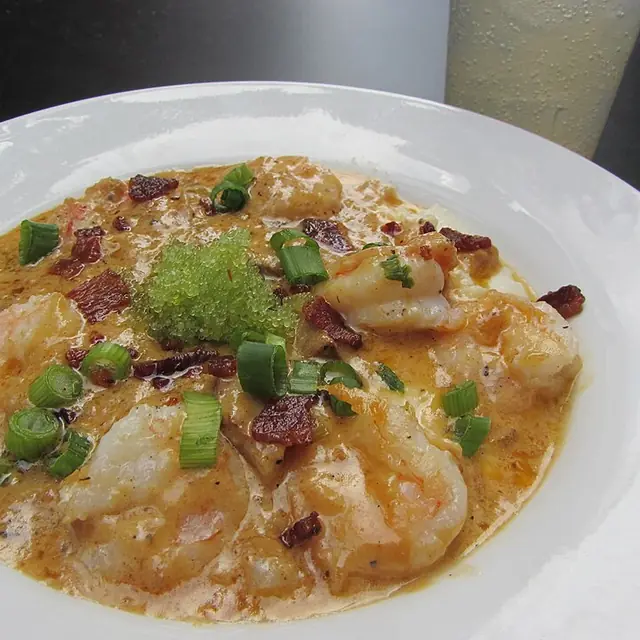
Stone-ground white grits with sauteed Carolina shrimp, andouille, country ham or mushrooms. The canonical Lowcountry plate served at breakfast and dinner alike.
Where: Slightly North of Broad, Poogan's Porch, Husk, Page's Okra Grill
Price: $18-28
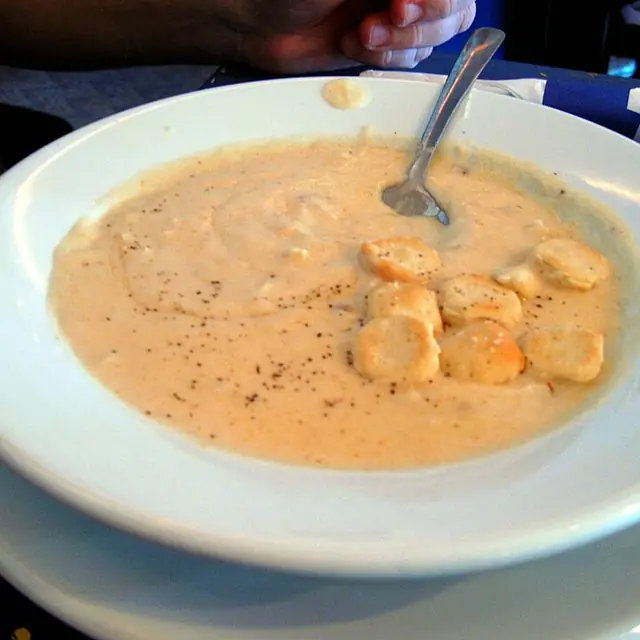
A rich blue-crab bisque thickened with cream and finished with a splash of sherry, traditionally made with the orange roe of female crabs.
Where: Poogan's Porch, 82 Queen, Slightly North of Broad, Hyman's Seafood
Price: $10-16
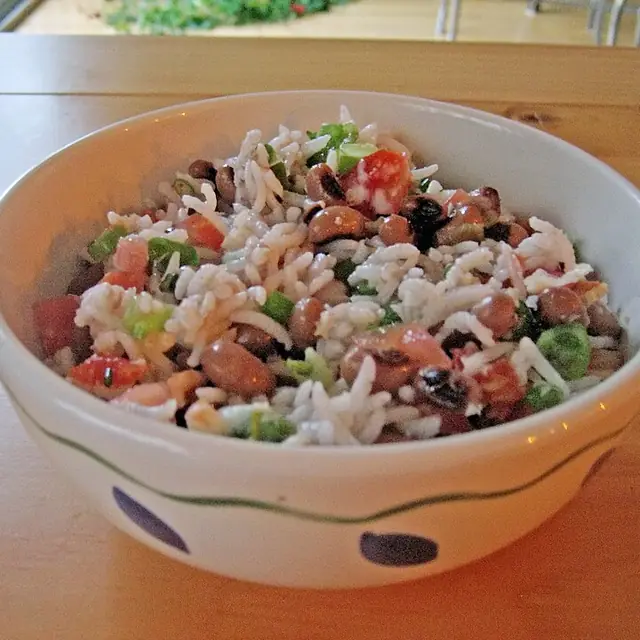
Carolina Gold rice cooked with field peas (or black-eyed peas), bacon and onion. The New Year's Day dish for luck, eaten year-round in Charleston.
Where: Husk, Bertha's Kitchen, Hannibal's Kitchen, Slightly North of Broad
Price: $8-16
A one-pot boil of shrimp, smoked sausage, corn on the cob and new potatoes seasoned with Old Bay. Poured onto newspaper, eaten with fingers.
Where: Bowens Island Restaurant, Hyman's Seafood, Page's Okra Grill, Hannibal's Kitchen
Price: $20-32
Thin, lacy sesame cookies the size of a coin. Crisp, brown-sugar-bittersweet, with toasted benne (sesame) seeds throughout. A Charleston tea-room classic.
Where: Charleston City Market, Sugar Bakeshop
Price: $8-14 per tin
The heirloom long-grain rice that built the Lowcountry's plantation economy. Nutty, floral, with a defined grain that holds its shape under sauce.
Where: Husk, FIG, Slightly North of Broad, The Ordinary
Price: $8-18 per pound retail
Single-select cluster oysters from local creeks, briny and small. Eaten raw on the half-shell or steamed in piles at outdoor oyster roasts in winter.
Where: The Ordinary, Bowens Island Restaurant, Leon's Fine Poultry and Oysters
Price: $2-4 per oyster on the half-shell
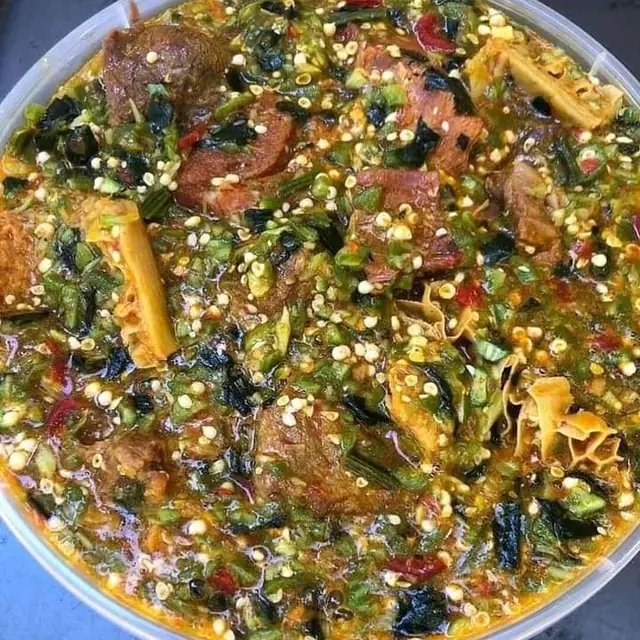
A Lowcountry tomato-and-okra stew with beef shin or oxtail. The okra thickens the broth; the slow-cooked meat gives it body. Served over rice.
Where: Bertha's Kitchen, Hannibal's Kitchen
Price: $10-16
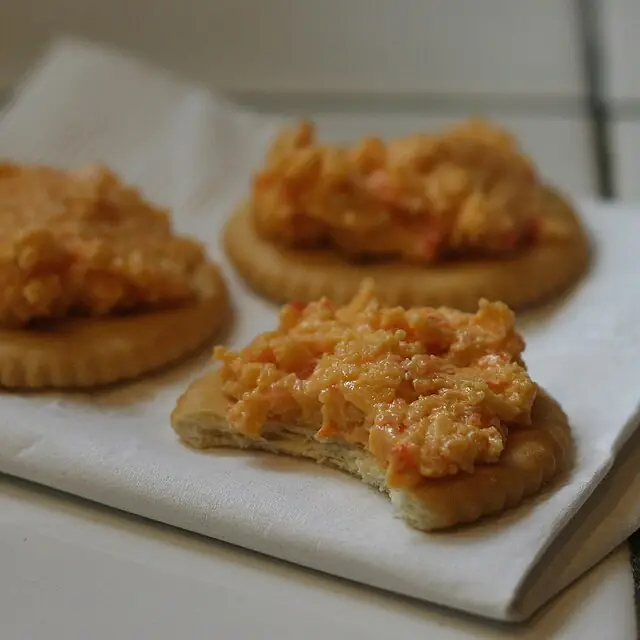
The pâté of the South: sharp orange cheddar, mayonnaise, diced piquillo peppers, cream cheese and a hit of cayenne, whipped to a fluffy spread. Eaten on crackers, in tomato sandwiches or as a burger topping.
Where: Husk, Magnolias, Slightly North of Broad, Callie's Hot Little Biscuit
Price: $8-14
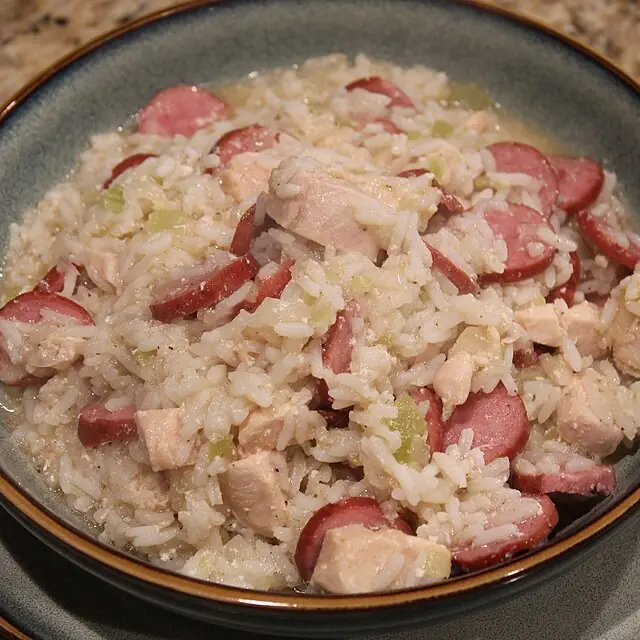
Pee Dee Lowcountry one-pot of bone-in chicken simmered with smoked sausage and rice, finished with enough chicken stock that the rice 'bogs' down. A communal dish for harvest dinners and church suppers in the Carolinas.
Where: Bertha's Kitchen, Hannibal's Kitchen, Dave's Carry-Out, Page's Okra Grill
Price: $12-18
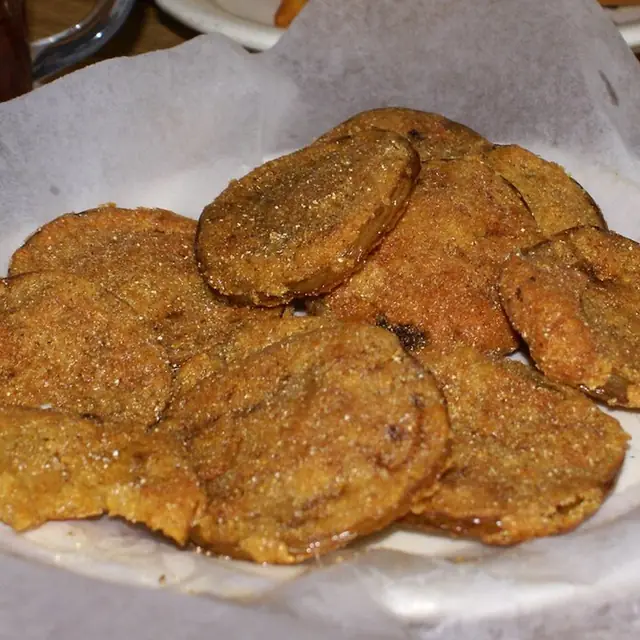
Thick slices of unripe firm green tomatoes dredged in cornmeal and buttermilk, fried in lard or bacon fat until shattering golden, served with comeback sauce or remoulade. The Southern summer side dish.
Where: Husk, Magnolias, Poogan's Porch, 82 Queen
Price: $10-16
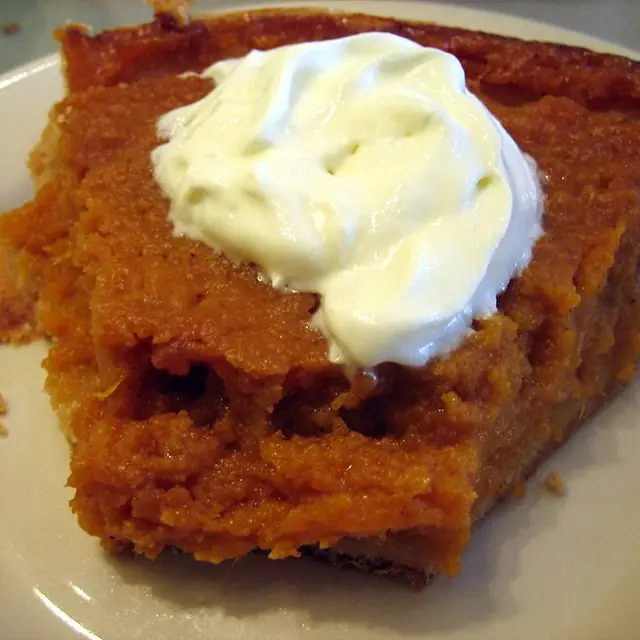
Roasted sweet potato puree, brown sugar, evaporated milk, cinnamon, nutmeg and bourbon in a butter pastry shell. A Lowcountry table fixture from Thanksgiving through Easter, silkier than pumpkin pie with deeper caramel.
Where: Bertha's Kitchen, Hannibal's Kitchen, Magnolias, Husk
Price: $7-12 a slice
A loosely bound disc of jumbo-lump blue crab, almost all meat and very little filler, pan-seared in butter and served with remoulade and lemon. The Lowcountry seafood-house benchmark.
Where: Hyman's Seafood, The Ordinary, Leon's Fine Poultry and Oysters
Price: $24-38
Green-shell raw peanuts simmered for hours in heavily salted water, sometimes with Old Bay or cajun spice. Eaten warm from a paper bag, the shells discarded as you go.
Where: Husk, Lewis Barbecue
Price: $6-9
Shrimp and grits
Stone-ground white grits with sauteed Carolina shrimp, andouille, country ham or mushrooms. The canonical Lowcountry plate served at breakfast and dinner alike.
History: Lowcountry watermen ate shrimp over grits at breakfast through the 19th century, a working-river dish documented in Bill Neal's 1985 Southern Cooking cookbook at Crook's Corner in Chapel Hill. Frank Lee at Slightly North of Broad in Charleston reworked it for the dinner menu in the 1990s, pairing fresh local shrimp with stone-ground grits and house-made kielbasa. That version became the canonical restaurant plate. Variations now run through nearly every Lowcountry kitchen, with andouille, country ham, mushrooms or tomato gravy as common partners.
Where to try it: Slightly North of Broad, Poogan's Porch, Husk, Page's Okra Grill
Watch out for: Shellfish, Dairy
She-crab soup
A rich blue-crab bisque thickened with cream and finished with a splash of sherry, traditionally made with the orange roe of female crabs.
History: She-crab soup is a Charleston invention attributed to William Deas, butler and chef to Mayor R. Goodwyn Rhett, who reportedly enriched a simple crab stew with crab roe to impress President William Howard Taft on a visit in 1909. The dish lifted Charleston's reputation as a coastal kitchen city and remains the menu opener at nearly every Lowcountry dining room. Restrictions on female crab harvesting now mean most kitchens use crab roe sparingly or substitute with crab stock and cream; the dish is named for the original technique rather than today's recipe.
Where to try it: Poogan's Porch, 82 Queen, Slightly North of Broad, Hyman's Seafood
Watch out for: Shellfish, Dairy, Gluten
Hoppin' John
Carolina Gold rice cooked with field peas (or black-eyed peas), bacon and onion. The New Year's Day dish for luck, eaten year-round in Charleston.
History: Hoppin' John is a Gullah-Geechee staple of West African origin, brought to the Sea Islands and Carolina rice plantations through the trans-Atlantic slave trade. The earliest printed recipe appears in Sarah Rutledge's 1847 Charleston cookbook The Carolina Housewife. Traditional versions use Sea Island red peas or field peas with Carolina Gold rice, slow-cooked with smoked ham hock. The plate is eaten on New Year's Day across the South for prosperity, paired with collards (for money) and cornbread. Glenn Roberts at Anson Mills in Columbia has spent thirty years restoring heirloom Carolina Gold rice; that rice now anchors versions at Husk and FIG.
Where to try it: Husk, Bertha's Kitchen, Hannibal's Kitchen, Slightly North of Broad
Frogmore stew
A one-pot boil of shrimp, smoked sausage, corn on the cob and new potatoes seasoned with Old Bay. Poured onto newspaper, eaten with fingers.
History: Frogmore stew (called Lowcountry boil elsewhere) takes its name from Frogmore, a small community on St. Helena Island near Beaufort. The recipe is credited to Richard Gay, a National Guardsman who fed his unit on the cheap in the 1960s by boiling whatever they had. The format scaled to family gatherings and church suppers. Today it lands on newspaper-covered tables across the Lowcountry, often at oyster roasts in winter and crab boils in summer. The Old Bay, while not historically Southern, is now non-negotiable; some kitchens add crab or sliced kielbasa.
Where to try it: Bowens Island Restaurant, Hyman's Seafood, Page's Okra Grill, Hannibal's Kitchen
Watch out for: Shellfish
Benne wafers
Thin, lacy sesame cookies the size of a coin. Crisp, brown-sugar-bittersweet, with toasted benne (sesame) seeds throughout. A Charleston tea-room classic.
History: Benne is the Gullah-Geechee word for sesame, brought from West Africa with enslaved Africans in the 17th century. The seed grew well in Carolina soil and became a staple of Sea Island cookery. Benne wafers are documented in Charleston Receipts (1950), the Junior League's still-in-print cookbook compiled by 11 Charleston women. The cookie became a tearoom and confectionery staple by the mid-20th century; tins of benne wafers are now the city's most-shipped edible souvenir. Charleston Receipts remains in print at the City Market and most bookshops.
Where to try it: Charleston City Market, Sugar Bakeshop
Watch out for: Gluten, Sesame, Egg, Dairy
Carolina Gold rice
The heirloom long-grain rice that built the Lowcountry's plantation economy. Nutty, floral, with a defined grain that holds its shape under sauce.
History: Carolina Gold rice arrived in Charleston harbour in 1685 on a ship from Madagascar, then took root as the cash crop of the Lowcountry plantation system. The variety nearly disappeared after the Civil War as plantation labour collapsed. Glenn Roberts founded Anson Mills in Columbia in 1998 and rebuilt the rice from a handful of saved seeds. Today it grows again on small Lowcountry farms and anchors the rice course at Husk, FIG, and Sean Brock's other projects. The grain is sweeter and more aromatic than commodity rice and forms the base of authentic Hoppin' John and red rice.
Where to try it: Husk, FIG, Slightly North of Broad, The Ordinary
Lowcountry oysters
Single-select cluster oysters from local creeks, briny and small. Eaten raw on the half-shell or steamed in piles at outdoor oyster roasts in winter.
History: Charleston has eaten oysters since the colonial era, and the city's oyster house tradition goes back to the 1800s. The local catch is a cluster oyster grown in marsh banks, smaller and brinier than Chesapeake or Pacific singles. The mid-20th-century industrial decline of the harvest reversed in the 2000s as growers like Lady's Island Oysters and Single Thread restored single-select cup oysters. The seasonal oyster roast (months ending in r) is a Lowcountry social ritual: bushels are steamed over a fire, dumped onto a table, opened with knives and eaten standing. Bowens Island Restaurant and the annual Lowcountry Oyster Festival in early February anchor the tradition.
Where to try it: The Ordinary, Bowens Island Restaurant, Leon's Fine Poultry and Oysters
Watch out for: Shellfish
Okra soup
A Lowcountry tomato-and-okra stew with beef shin or oxtail. The okra thickens the broth; the slow-cooked meat gives it body. Served over rice.
History: Okra arrived in Charleston with West African captives through the trans-Atlantic slave trade and grew into a Lowcountry pantry staple. Okra soup as cooked at Bertha's Kitchen and across Black-owned soul food kitchens descends directly from Gullah-Geechee cookery: stewed tomatoes, okra to thicken, oxtail or beef shin to fortify. The dish is served over rice or eaten as a one-pot meal. Vertamae Smart-Grosvenor's 1970 book Vibration Cooking documented the Gullah-Geechee tradition; her work informs how chefs like BJ Dennis present the dish today.
Where to try it: Bertha's Kitchen, Hannibal's Kitchen
Pimento Cheese
The pâté of the South: sharp orange cheddar, mayonnaise, diced piquillo peppers, cream cheese and a hit of cayenne, whipped to a fluffy spread. Eaten on crackers, in tomato sandwiches or as a burger topping.
History: Pimento cheese has roots in early-20th-century American food magazines: a 1908 Good Housekeeping recipe called for cream cheese and minced pimentos, and the 1909 'Up-to-Date Sandwich Book' put it in print as a sandwich filling. It migrated south through the 1920s and became the unofficial Charleston tea-table staple by the 1950s, codified through Duke's Mayonnaise marketing across the South. Husk's bourbon-and-bacon variant, Magnolias' classic and FIG's house version anchor the contemporary city interpretation.
Where to try it: Husk, Magnolias, Slightly North of Broad, Callie's Hot Little Biscuit
Watch out for: Dairy, Egg
Chicken Bog
Pee Dee Lowcountry one-pot of bone-in chicken simmered with smoked sausage and rice, finished with enough chicken stock that the rice 'bogs' down. A communal dish for harvest dinners and church suppers in the Carolinas.
History: Chicken bog has been a Pee Dee Lowcountry tradition (just north of Charleston) since at least the 18th century, named for the way the rice becomes bogged down in chicken stock during the slow simmer. The annual Loris Bog-Off festival has run since 1979. Bertha's Kitchen and Hannibal's Kitchen serve the canonical Charleston interpretation alongside red rice and gullah staples.
Where to try it: Bertha's Kitchen, Hannibal's Kitchen, Dave's Carry-Out, Page's Okra Grill
Fried Green Tomatoes
Thick slices of unripe firm green tomatoes dredged in cornmeal and buttermilk, fried in lard or bacon fat until shattering golden, served with comeback sauce or remoulade. The Southern summer side dish.
History: Fried green tomatoes have been a Southern home-kitchen fixture since the 19th century, with the dish entering the American food consciousness through the 1991 film. The Charleston version uses Anson Mills heirloom cornmeal and a hit of cayenne. Husk and FIG run elevated versions; Magnolias keeps the classic.
Where to try it: Husk, Magnolias, Poogan's Porch, 82 Queen
Watch out for: Gluten, Egg, Dairy
Sweet Potato Pie
Roasted sweet potato puree, brown sugar, evaporated milk, cinnamon, nutmeg and bourbon in a butter pastry shell. A Lowcountry table fixture from Thanksgiving through Easter, silkier than pumpkin pie with deeper caramel.
History: Sweet potato pie has been a Lowcountry African-American kitchen staple since the 18th century, predating pumpkin pie in the South by decades. The dish has both Gullah-Geechee and broader Southern roots. Bertha's Kitchen and Hannibal's Kitchen run the canonical Charleston versions; FIG carries the elevated take.
Where to try it: Bertha's Kitchen, Hannibal's Kitchen, Magnolias, Husk
Watch out for: Gluten, Egg, Dairy
Charleston crab cake
A loosely bound disc of jumbo-lump blue crab, almost all meat and very little filler, pan-seared in butter and served with remoulade and lemon. The Lowcountry seafood-house benchmark.
History: Charleston crab cakes have been a staple of the city's harbourside cooking since the late 19th century, when local blue crab (Callinectes sapidus) from the tidal estuaries was sold by the bushel at the city docks. The Karesh family ran a wholesale business at 215 Meeting Street from 1890; their descendants opened Hyman's Seafood there in 1987, and the dish remains the house signature. The contemporary fine-dining versions at The Ordinary, Leon's and Husk follow the same restraint, the meat barely held together so it falls apart on the fork.
Where to try it: Hyman's Seafood, The Ordinary, Leon's Fine Poultry and Oysters
Watch out for: Crustaceans, Egg, Dairy, Gluten
Lowcountry boiled peanuts
Green-shell raw peanuts simmered for hours in heavily salted water, sometimes with Old Bay or cajun spice. Eaten warm from a paper bag, the shells discarded as you go.
History: Boiled peanuts (Pinda boiled the African way) entered Lowcountry cuisine through enslaved West Africans on Sea Island plantations from the 1700s. The roadside-stand canon, paper bags from a coal stove kept by the side of US-17, is a continuous Carolina coastal tradition. South Carolina declared boiled peanuts its official state snack in 2006; Charleston restaurants from Husk to Lewis Barbecue serve a refined house version.
Where to try it: Husk, Lewis Barbecue
Watch out for: Peanuts