Signature dishes
An oversized Southern biscuit, fluffy and split warm to take pork sausage gravy or jam. Editor history on TableJourney with where to eat it and a home recipe.
Where: Biscuit Head, Sunny Point Café, Tupelo Honey Southern Kitchen and Bar, Early Girl Eatery
Price: $7-14
Rainbow and brook trout farmed in the cold streams of Western North Carolina, served whole or filleted with brown butter, sorghum, country ham or foraged.
Where: The Market Place, Rhubarb, Crusco, Posana
Price: $28-42
Wild Appalachian leeks foraged from the WNC mountain forests in April and May. Used in pickles, butters, salsa verde, frittatas and shaved raw over Italian.
Where: The Market Place, Rhubarb, Crusco, Cúrate
Price: $8-18 (seasonal add-on)
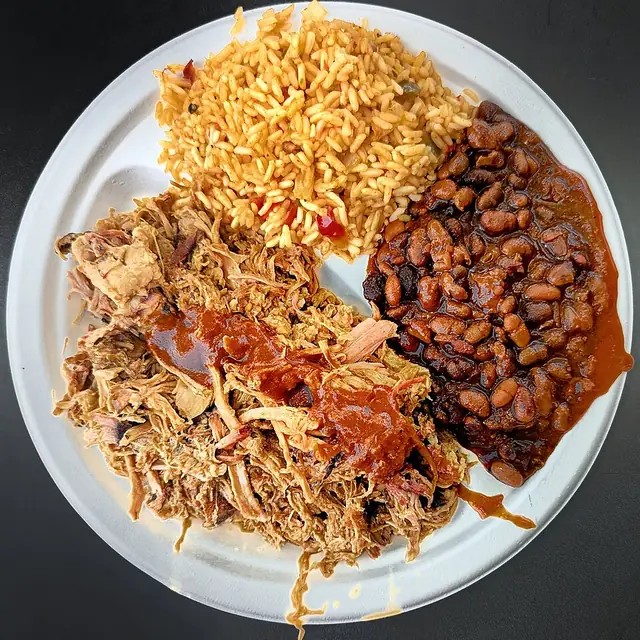
Slow-smoked pork shoulder pulled, chopped or sliced, served with vinegar-pepper or tomato-mustard sauce. Asheville sits between the Eastern Carolina.
Where: Buxton Chicken Palace, Sunny Point Café, The Market Place
Price: $14-22
Salt-cured country ham (often Allan Benton's Tennessee or local NC product) on a buttermilk biscuit with a drizzle of mountain sorghum syrup.
Where: The Market Place, Rhubarb, Sunny Point Café, Biscuit Head
Price: $8-14
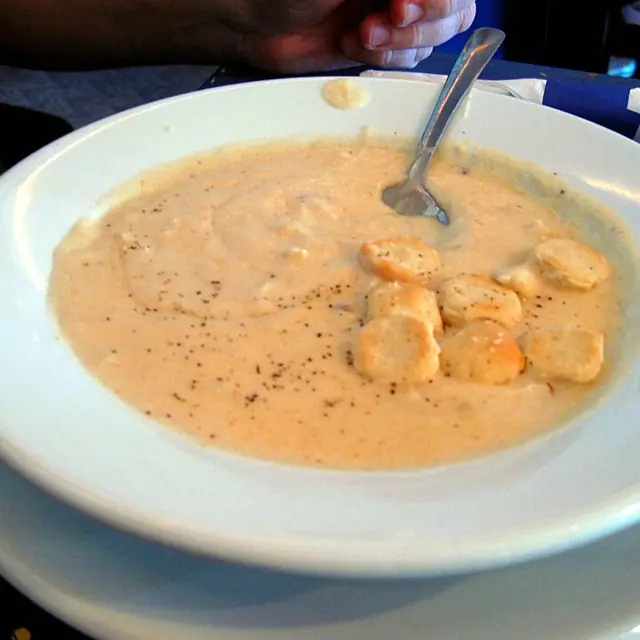
A cream-and-sherry crab soup with female crab roe, traditionally a Charleston Lowcountry plate adopted by Asheville's modern Southern kitchens.
Where: The Market Place, Tupelo Honey Southern Kitchen and Bar, Rhubarb
Price: $12-18 a bowl
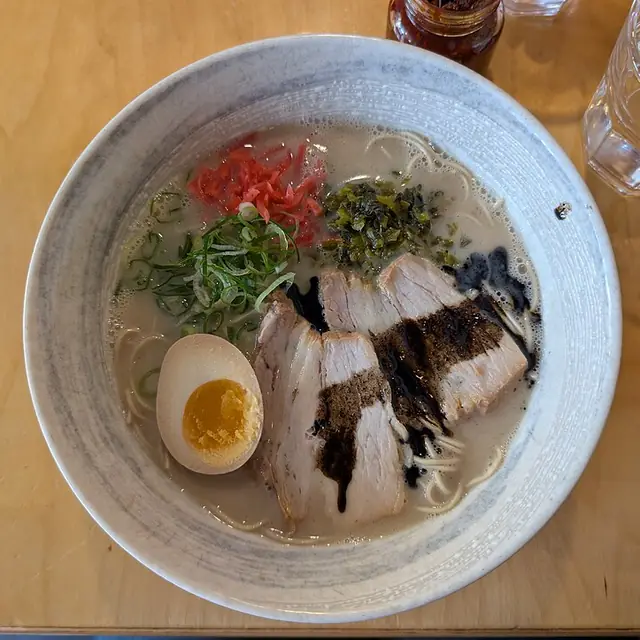
Long-simmered pork-bone broth ramen at one of the city's longest-running Japanese kitchens. Editor history on TableJourney with where to eat it and a home recipe.
Where: Heiwa Shokudo
Price: $16-22
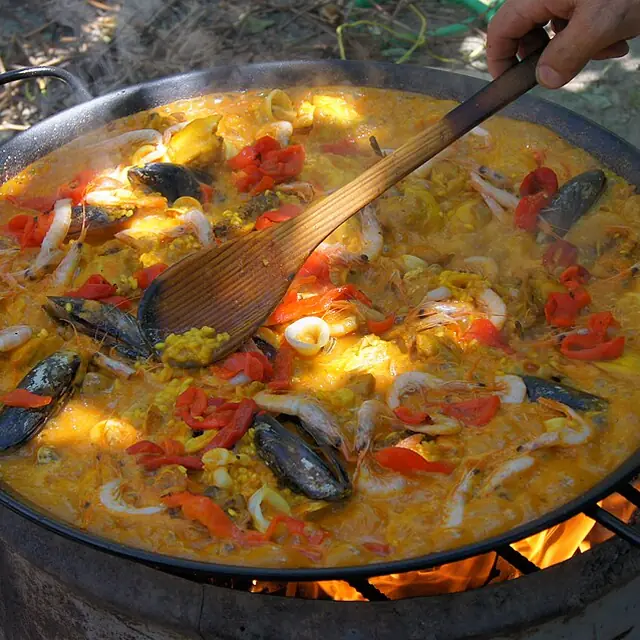
Bomba rice cooked in a wide pan with chicken, rabbit, garrofó beans, green beans and saffron-tomato sofrito. The traditional Valencian recipe served at lunch.
Where: Cúrate
Price: $38-58 per pan, for 2-4
Bombay street-style sandwich: spiced lamb hash with tomatoes and aromatics on two toasted buns, finished with onions, cilantro, green chutney and sweet yogurt.
Where: Chai Pani, Botiwalla by Chai Pani, Botiwalla by Chai Pani West, Mela Indian Restaurant
Price: $13-17
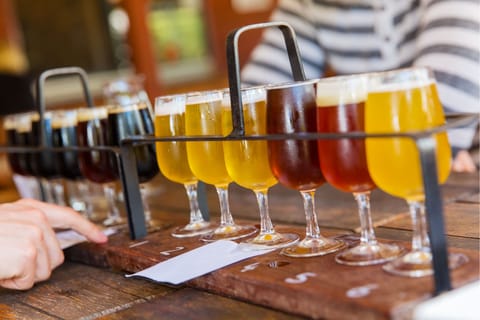
Asheville's defining beer style: a soft, hazy New England IPA with low bitterness and tropical-fruit hop saturation, pioneered locally by Burial Beer, Hi-Wire, and Wicked Weed.
Where: Burial Beer Co, Hi-Wire Brewing South Slope, Wicked Weed Brewpub, Highland Brewing Company, Green Man Brewery, Archetype Brewing West Asheville
Price: $7-10 per pour
Single-origin bean-to-bar chocolate truffles made in downtown Asheville by Dan and Jael Rattigan, who source cacao directly from Peruvian and Madagascan growers.
Where: French Broad Chocolate Lounge, Mother, OWL Bakery, OWL Bakery Charlotte Street, Baked Pie Company
Price: $3-5 per truffle; $20-32 per box
Native American persimmons pressed through a sieve, mixed into a dense brown-sugar pudding cake, baked until the edges crisp like brownie and the centre stays moist.
Where: Rhubarb, The Market Place, Sunny Point Café, Early Girl Eatery, Tupelo Honey Southern Kitchen and Bar
Price: $10-14 per slice
Cathead biscuit and gravy
An oversized Southern biscuit, fluffy and split warm to take pork sausage gravy or jam. Editor history on TableJourney with where to eat it and a home recipe.
History: The cathead biscuit takes its name from its size, allegedly as big as a cat's head. Scots-Irish settlers brought the biscuit tradition to the Western North Carolina mountains in the 1800s; Asheville's modern revival starts at Biscuit Head, opened by Jason and Carolyn Roy on Haywood Road in 2013, with a jam bar of house preserves, hot honeys and fruit butters as the defining innovation. Sunny Point Café's biscuit-and-gravy version anchors the West Asheville brunch crawl; Tupelo Honey on College Street downtown serves the touristy-but-canonical fried-chicken-biscuit format. Country ham, sausage gravy, sweet potato butter and apple butter are the four classic toppings.
Where to try it: Biscuit Head, Sunny Point Café, Tupelo Honey Southern Kitchen and Bar, Early Girl Eatery
Watch out for: Gluten, Dairy
Mountain trout
Rainbow and brook trout farmed in the cold streams of Western North Carolina, served whole or filleted with brown butter, sorghum, country ham or foraged.
History: Cherokee mountain larders relied on native brook trout from the Smoky Mountains streams; the rainbow was introduced for sport fishing in the 1880s. Sunburst Trout Farms in Canton (35 miles west of Asheville) opened in 1948 as a working hatchery and now supplies most of Western North Carolina's restaurant trout. William Dissen's The Market Place on Wall Street and John Fleer's Rhubarb on Pack Square run Sunburst trout as a permanent menu item; Crusco in the River Arts District works it into seasonal Italian plates. Country ham, brown butter, sorghum drizzle and pickled ramps are the canonical pairings.
Where to try it: The Market Place, Rhubarb, Crusco, Posana
Watch out for: Fish, Dairy
Foraged ramps
Wild Appalachian leeks foraged from the WNC mountain forests in April and May. Used in pickles, butters, salsa verde, frittatas and shaved raw over Italian.
History: Ramps grow in the rich, shaded mountain forests of the Southern Appalachians from late March through May. Cherokee communities have used ramps medicinally and for cooking for centuries; Scots-Irish settlers adopted them as the first green of spring. The annual Cosby Ramp Festival in Tennessee (1954) and the WNC ramp festivals at Waynesville and Cosby anchor the regional spring celebration. Asheville chefs work ramps hard in their short window: The Market Place pickles them for year-round use, Rhubarb runs ramp butter on biscuits, Crusco shaves them raw over hand-cut pastas. Overforaging has become a conservation concern; ethical foragers leave the bulbs and take only leaves.
Where to try it: The Market Place, Rhubarb, Crusco, Cúrate
Watch out for: Allium
Carolina pulled pork (Lexington-style and whole-hog)
Slow-smoked pork shoulder pulled, chopped or sliced, served with vinegar-pepper or tomato-mustard sauce. Asheville sits between the Eastern Carolina.
History: Asheville sits on the western edge of the North Carolina BBQ map, with the Lexington tomato-and-vinegar dividing line passing through Buncombe County. Eastern-style whole-hog cookery (vinegar-pepper sauce) and Lexington shoulder (tomato-vinegar sauce) historically met in Asheville. The 2005 opening of 12 Bones on Riverside Drive kicked off the modern Asheville BBQ revival; the 2015 opening of Elliott Moss's Buxton Hall Barbecue on Banks Avenue (closed November 2023) brought traditional whole-hog Eastern Carolina cookery west of the dividing line. Buxton Chicken Palace at S and W Market keeps the Buxton Hall flame today.
Where to try it: Buxton Chicken Palace, Sunny Point Café, The Market Place
Country ham and sorghum biscuit
Salt-cured country ham (often Allan Benton's Tennessee or local NC product) on a buttermilk biscuit with a drizzle of mountain sorghum syrup.
History: Country ham is the Appalachian curing tradition: pork shoulder or leg salt-cured and aged for 9 to 12 months, often hardwood-smoked. The Western North Carolina version traces to Scots-Irish farms; Allan Benton's Tennessee hams, used by most Asheville fine-dining kitchens, set the contemporary benchmark from his Madisonville smokehouse. Sorghum syrup, pressed and boiled from sorghum cane in October-November across the Blue Ridge, is the canonical sweet partner. The country-ham-and-sorghum biscuit appears at The Market Place, Rhubarb, Sunny Point Café and Biscuit Head; the format is a Carolinas signature.
Where to try it: The Market Place, Rhubarb, Sunny Point Café, Biscuit Head
Watch out for: Gluten, Dairy
Lowcountry she-crab soup (Asheville interpretation)
A cream-and-sherry crab soup with female crab roe, traditionally a Charleston Lowcountry plate adopted by Asheville's modern Southern kitchens.
History: She-crab soup originated in Charleston around 1920 when William Deas, butler-cook to the city's mayor, adapted the Scotch-Irish partan-bree (cream-crab soup) by adding crab roe. The Lowcountry classic migrated inland to Asheville's modern Southern restaurants through the 1990s farm-to-table movement, where mountain kitchens added foraged mushrooms or local trout-roe substitutes. The Market Place and Rhubarb both run she-crab soup as seasonal specials; Tupelo Honey serves a year-round version on its Southern menu. The Lowcountry-Appalachian fusion plate became part of Asheville's broader Southern identity in the 2010s.
Where to try it: The Market Place, Tupelo Honey Southern Kitchen and Bar, Rhubarb
Watch out for: Shellfish, Dairy
Tonkotsu ramen (Heiwa Shokudo)
Long-simmered pork-bone broth ramen at one of the city's longest-running Japanese kitchens. Editor history on TableJourney with where to eat it and a home recipe.
History: Heiwa Shokudo, a longstanding downtown Asheville Japanese kitchen, sits on North Lexington Avenue. The kitchen serves tonkotsu ramen alongside omakase sushi, hot pot, hibachi and poke; the ramen is the local-cult winter order. Asheville's ramen scene grew through the 2010s with Heiwa and several pop-ups, but Heiwa remains the canonical sit-down ramen room. The cold mountain winters and the brewery-district crowd looking for something hot post-flight have kept the bowl on every dinner menu since.
Where to try it: Heiwa Shokudo
Watch out for: Gluten, Soy, Egg
Paella Valenciana (Cúrate)
Bomba rice cooked in a wide pan with chicken, rabbit, garrofó beans, green beans and saffron-tomato sofrito. The traditional Valencian recipe served at lunch.
History: Katie Button and Felix Meana's Cúrate opened on Biltmore Avenue in 2011 and won the 2022 James Beard Outstanding Hospitality award. Meana was raised in Valencia, where his family ran a restaurant; Cúrate's paella Valenciana follows the canonical Valencia version (chicken, rabbit, garrofó, green beans; never seafood). The daily paella lunch became the city's standout splurge value-meal in the 2010s, and the dish put Spanish cooking on the Asheville food map permanently. The kitchen runs traditional Valencia, plus seasonal seafood paellas at dinner.
Where to try it: Cúrate
Chai Pani Sloppy Jai
Bombay street-style sandwich: spiced lamb hash with tomatoes and aromatics on two toasted buns, finished with onions, cilantro, green chutney and sweet yogurt.
History: Meherwan Irani opened Chai Pani on Battery Park Avenue in 2009; the restaurant won the James Beard Foundation Outstanding Restaurant award in 2022, the highest national restaurant honour. The Sloppy Jai (a riff on the American sloppy joe and Bombay's bun maska tradition) is one of the most ordered plates on the street-sandwich menu. Irani's Botiwalla expansion took the format to Atlanta and beyond.
Where to try it: Chai Pani, Botiwalla by Chai Pani, Botiwalla by Chai Pani West, Mela Indian Restaurant
Watch out for: Gluten, Dairy
Asheville Hazy IPA
Asheville's defining beer style: a soft, hazy New England IPA with low bitterness and tropical-fruit hop saturation, pioneered locally by Burial Beer, Hi-Wire, and Wicked Weed.
History: Asheville earned the title Beer City USA four years running from 2009. The local hazy IPA tradition crystallised around Burial Beer Co (founded 2013) and Hi-Wire (2013), both of which shifted the city's focus from English-style ales to West Coast and then New England IPAs. The annual Burial Spirits beer festival is now a national draw.
Where to try it: Burial Beer Co, Hi-Wire Brewing South Slope, Wicked Weed Brewpub, Highland Brewing Company, Green Man Brewery, Archetype Brewing West Asheville
Watch out for: Gluten
French Broad Chocolate Truffle
Single-origin bean-to-bar chocolate truffles made in downtown Asheville by Dan and Jael Rattigan, who source cacao directly from Peruvian and Madagascan growers.
History: Dan and Jael Rattigan founded French Broad Chocolates in 2008, opening the Chocolate Lounge on Pack Square the same year. Their bean-to-bar factory on Lexington Avenue is one of the few in the US that buys cacao direct from cooperative farms in Peru, Nicaragua, and Madagascar. The truffle programme features seasonal flavours alongside core year-round options.
Where to try it: French Broad Chocolate Lounge, Mother, OWL Bakery, OWL Bakery Charlotte Street, Baked Pie Company
Watch out for: Dairy, Tree nuts (some flavours)
Appalachian Persimmon Pudding
Native American persimmons pressed through a sieve, mixed into a dense brown-sugar pudding cake, baked until the edges crisp like brownie and the centre stays moist.
History: American persimmons (Diospyros virginiana) ripen in the Blue Ridge forests after the first frost; Cherokee and later Appalachian settlers used the soft pulp as a sweetener. Persimmon pudding entered Appalachian home kitchens in the 19th century; the Asheville restaurants that revived the dish, including Rhubarb under John Fleer and The Market Place under William Dissen, made it the city's defining autumn dessert.
Where to try it: Rhubarb, The Market Place, Sunny Point Café, Early Girl Eatery, Tupelo Honey Southern Kitchen and Bar
Watch out for: Gluten, Dairy, Egg