
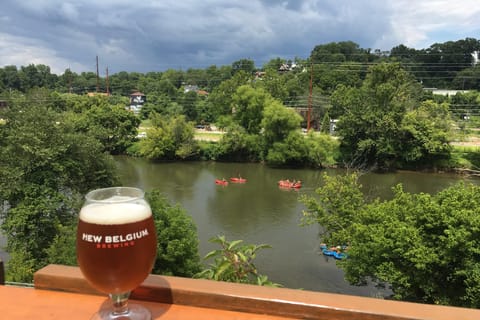
How Asheville came to eat the way it does: the people, migrations and accidents that shaped the plate.
Key eras
-
Before the 1830s, Cherokee foodways
The land that became Buncombe County was Cherokee territory. The Eastern Band of Cherokee Indians' foodways site describes crops of corn, beans and squash, ramps harvested in spring, and hunting for deer and bear, and its recipes include three sisters stew and chestnut bread.
-
1880, the railroad reaches Asheville
On October 3, 1880, the Western North Carolina Railroad finished its line from Salisbury to Asheville, the first rail line to reach the city, which now has a tourism-driven economy and a large creative sector.
-
1895, the Biltmore Estate
George Vanderbilt's chateau at Biltmore was completed in 1895, and Biltmore Village housed workers during construction. Today Antler Hill Village holds Biltmore Winery, a Tasting Room with a complimentary tasting included with admission, and the restaurants Cedric's Tavern, Village Social and the Bistro.
-
1994, Highland Brewing opens
Oscar Wong founded Highland Brewing on April 21, 1994, in a rented basement beneath what is now Barley's Taproom and Pizzeria, and the company calls it Asheville's first brewery since Prohibition. Asheville Brewing followed in 2005 as the first brewpub on the South Slope.
-
2009 to 2015, a new restaurant generation
Meherwan and Molly Irani opened Chai Pani in 2009, and Katie Button and Félix Meana founded Cúrate in 2011. Buxton Hall Barbecue opened on Banks Avenue in 2015 and closed after service on November 22, 2023. In 2022 the James Beard Foundation named Chai Pani Outstanding Restaurant and Cúrate Outstanding Hospitality.
-
2021, S and W Market
S and W Market opened on June 16, 2021, in the 1929 S and W Building at 56 Patton Avenue as Asheville's first food hall, developed with chef Meherwan Irani and anchored by a Highland Brewing taproom.
Taste it todayS and W Market -
2024 to 2025, Helene and the Michelin Guide
Helene struck in September 2024 and heavily damaged the River Arts District; Hi-Wire's RAD Beer Garden says it was hit hard and has reopened. The first Michelin Guide for the American South, in November 2025, recognised Asheville with one Green Star, three Bib Gourmands (Little Chango, Luminosa and Mother) and 12 Recommended restaurants.
Immigrant influences
- Cherokee (Eastern Band)
- The Eastern Band of Cherokee Indians keeps its foodways alive; its food site names corn, beans and squash, ramps and chestnut bread among them.
- Latin American
- Limones on Eagle Street serves seasonal Mexican- and Californian-inspired cooking, and Little Chango on Coxe Avenue calls itself a casual hispanic kitchen.
- South Asian
- Meherwan Irani's Chai Pani, which began on Battery Park Avenue in 2009 and now sits on Banks Avenue, won the 2022 James Beard Outstanding Restaurant award.Taste it todayChai Pani
- Black Appalachian
- Chef Ashleigh Shanti, whose work centres on African American foodways including Black Appalachian cuisine, is the chef behind Good Hot Fish, a counter service fish fry on Buxton Avenue.Taste it todayGood Hot Fish
Signature innovations
- Highland Brewing's 1994 opening, which the company calls Asheville's first brewery since Prohibition
- Asheville Brewing's 2005 opening as the first brewpub on the South Slope
- S and W Market, opened in June 2021 as Asheville's first food hallTaste it todayS and W Market
- Luminosa's 2025 Michelin Green Star, one of only three in the inaugural American South guideTaste it todayLuminosa
- Cúrate's 2022 James Beard Award for Outstanding HospitalityTaste it todayCúrate

