How Anchorage came to eat the way it does: the people, migrations and accidents that shaped the plate.
Key eras
-
Indigenous food culture (pre-1741)
Long before Russian or American contact, the Dena'ina Athabascan people of the Cook Inlet basin and Yupik peoples to the west ate salmon caught in the inlet, moose and caribou from the Chugach, foraged berries and made akutaq, the whipped-fat-and-berry dish often called Eskimo ice cream.
Taste it todayAkutaq (Yupik berry whip) -
Russian fur trade and Russian-American Company (1741-1867)
Vitus Bering's 1741 voyage opened Alaska to Russian fur traders, and the Russian-American Company chartered in 1799 ran the colony until the 1867 sale to the United States. Russian foodways introduced tea, sourdough culture and Orthodox church traditions, and pelmeni, piroshki and church bake sales still echo in Anchorage today.
-
Gold rush sourdough (1898-1910)
The Klondike and Nome gold rushes brought tens of thousands of prospectors to Alaska. Sourdough starter, kept warm in shirt pockets, became so essential that 'Sourdough' became the nickname for old-timers, and the loaves are still baked in Anchorage today.
-
Statehood and pipeline boom (1959-1980)
Alaska statehood in 1959 and the trans-Alaska pipeline 1974-1977 brought a prosperity wave to Anchorage. Hotel Captain Cook opened in 1965, its Crow's Nest rooftop dining room arrived with Tower III in the late 1970s, Simon and Seafort's opened in 1978 and Marx Bros. Cafe in 1979.
-
Modern craft era (1990-present)
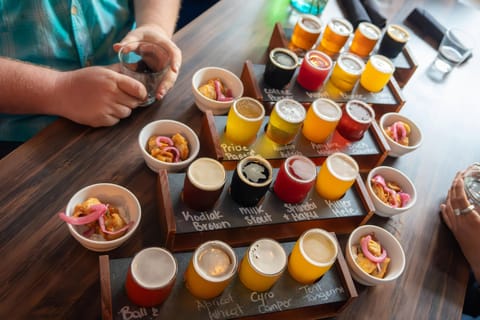
Midnight Sun Brewing opened 1995, Glacier BrewHouse and Moose's Tooth in 1996, and Anchorage Brewing Company in 2010. Fire Island Rustic Bakeshop, founded 2009 in South Addition, was a 2026 James Beard Award finalist for Outstanding Bakery.
Immigrant influences
- Russian-American
- Sourdough culture, tea-drinking traditions and Orthodox church bake sales (pelmeni, piroshki) carried from the 1741 Bering voyage onward through the Russian-American Company era.
- Filipino
- Anchorage holds one of the largest Filipino communities in any US state outside the lower 48, with pancit, lumpia and adobo staples at midtown markets and Filipino-owned counters.
- Korean
- Korean-American Anchorage families opened markets and restaurants from the 1980s onward, with kimchi and bulgogi appearing in midtown and South Anchorage menus, including the Pacific Rim-blended Ginger downtown.Taste it todayGinger
- Nepali and Tibetan
- The Himalayan diaspora opened Yak and Yeti and several other counters in the 2010s, bringing momos and tandoori to the midtown Northern Lights corridor.
- Indian
- Bombay Deluxe opened in 2006 as Anchorage's longest-running Indian restaurant, and The New Central Market stocks the city's pantry needs for the South Asian community.Taste it todayThe New Central Market
Signature innovations
- Reindeer sausage as Alaska street food, anchored by 4th Avenue cartsTaste it todayReindeer sausage
- Alderwood-fired Alaska salmon at Glacier BrewHouse since 1996
- Wild-ale brewing programme at Anchorage Brewing Company
- Akutaq (Yupik whipped berry-and-fat dish) as a still-living traditionTaste it todayAkutaq (Yupik berry whip)
- King crab cake Benedict (Kodiak Benedict) at Snow City Cafe
Book food experiences in Anchorage