
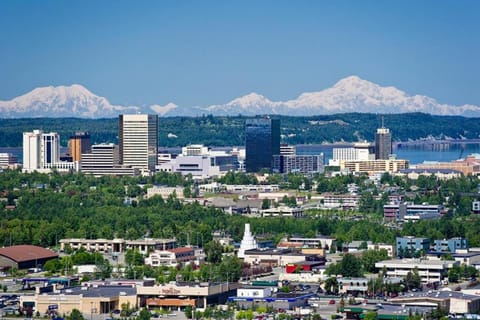
The plates that define Anchorage: what they are, where they came from, and where to eat the canonical version.
Signature dishes
-
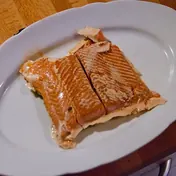
Copper River sockeye salmon ★ 4.9
Copper River sockeye salmon is Alaska's most-prized fishery, opening in mid-to-late May from the Copper River District and rushed by jet to Anchorage seafood counters within hours of the first catch.
Where to try it: Crow's Nest, Glacier BrewHouse, Simon and Seafort's, South Restaurant and Coffeehouse
Price: $32-48
The Copper River fishery is the first salmon to hit Alaska markets each year, traditionally celebrated with a 'first fish' ceremony. The 2026 fishery opened May 22 with a 12-hour drift gillnet period, and the sockeye harvest forecast was 728,000 fish on Copper River. Native Alaskan and commercial fleets have fished these waters for generations.
Watch out for: Fish
-
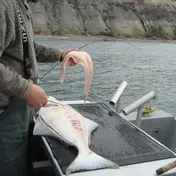
Pacific halibut ★ 4.8
Pacific halibut is Alaska's anchor white fish, sweet and firm with the largest fillet of any flatfish, served pan-seared, beer-battered or alderwood-fired across Anchorage seafood houses.
Where to try it: Glacier BrewHouse, Simon and Seafort's, Crow's Nest, South Restaurant and Coffeehouse
Price: $28-42
Pacific halibut has been a staple of Alaska Native diets for thousands of years; Homer 225 miles south of Anchorage claims the title of Halibut Capital of the World. The commercial fleet runs May through September. Glacier BrewHouse, opened 1996, has built its alderwood-fired halibut into Anchorage's most recognised plate.
Watch out for: Fish
-
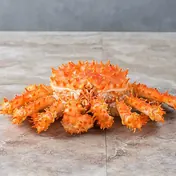
Alaska king crab ★ 4.7
Red king crab from Bristol Bay is Alaska's signature winter shellfish, harvested briefly in October and served whole steamed or split with melted butter at downtown anchors.
Where to try it: Crow's Nest, The Whale's Tail, Glacier BrewHouse, Snow City Cafe
Price: $70-110 (whole legs); $24-32 (king crab cake)
The Bristol Bay red king crab fishery opens in October when stocks allow, with quotas set annually by the Alaska Department of Fish and Game. The Whale's Tail at Hotel Captain Cook and Crow's Nest stock king crab through winter, and Snow City Cafe's signature Kodiak Benedict pairs a king crab cake with poached eggs and hollandaise on an English muffin year-round.
Watch out for: Shellfish
Book food experiences in Anchorage


-
Reindeer sausage ★ 4.6
Reindeer sausage is Anchorage's signature street food, sold from yellow- and red-umbrella carts on 4th Avenue all summer and tucked into hoagie buns with grilled onions and yellow mustard.
Where to try it: Tia's Gourmet Sausage, Red Umbrella Reindeer, Fio's Reindeer Sausage, Snow City Cafe, Vagabond Blues
Price: $8-12
Reindeer were imported to Alaska from Siberia in the 1890s to support Inupiat herders. Today commercial reindeer farming supplies the Anchorage sausage trade, with Tia's Gourmet Sausage (4th and E Street), Fio's Reindeer and Red Umbrella Reindeer running the downtown summer carts. Snow City Cafe and other downtown breakfast spots run reindeer sausage as a breakfast meat.
Watch out for: Gluten (bun)
-
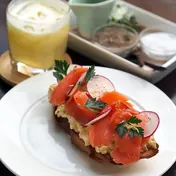
Smoked salmon candy ★ 4.5
Smoked salmon candy is Alaska's gift-shop and bar-snack staple: salmon cured with brown sugar, soy and salt, then slow-smoked to a sweet-savoury jerky that holds for weeks.
Where to try it: 49th State Brewing, F Street Station, Pioneer Bar, Anchorage Market Food Vendors
Price: $12-22 (4-6 oz)
Salmon candy traces its roots to Indigenous Alaska preservation methods, scaled up commercially after statehood. Alaska Sausage and Seafood Co supplies most of the city's bars and gift shops, and 49th State Brewing carries it as an Alaska bar bite. The Tlingit and Haida peoples of Southeast Alaska have smoked sweet-salt salmon for centuries, the modern brown-sugar-and-maple glaze a 20th-century commercial adaptation.
Watch out for: Fish, Soy
-
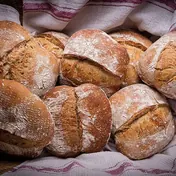
Alaskan sourdough bread ★ 4.7
Alaska sourdough loaves descend from the 1898 gold rush, when prospectors carried starters inside their shirts to keep them alive in the cold.
Where to try it: Fire Island Rustic Bakeshop, Fire Island Rustic Bakeshop Airport Heights, Great Harvest Bread Co Anchorage, Middle Way Cafe
Price: $8-14 per loaf
Klondike and Nome gold rush prospectors so relied on sourdough starter that old-timers became known as 'Sourdoughs' across Alaska. Fire Island Rustic Bakeshop opened in 2009 and was named a 2026 James Beard Award finalist for Outstanding Bakery. Their crusty levain breads are the Anchorage benchmark.
Watch out for: Gluten
-
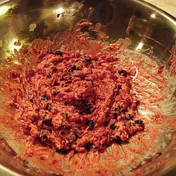
Akutaq (Yupik berry whip) ★ 4.4
Akutaq, sometimes called Eskimo ice cream, is a traditional Yupik dish of whipped animal fat folded with wild berries, served at Alaska Native potlatches and Heritage Center demonstrations in Anchorage.
Where to try it: Spenard Farmers Market, Anchorage Market and Festival
Price: Cultural dish; rarely on restaurant menus
Akutaq has been made for centuries by Yupik and Inupiat peoples in western and northern Alaska, traditionally with whipped caribou fat or seal oil folded with crowberries, blueberries or salmonberries. The dish remains a regular part of Alaska Native potlatches and is honoured at the Alaska Native Heritage Center in Anchorage.
Watch out for: Tree nuts (in modern adaptations)
-
Alderwood-fired Alaska salmon ★ 4.6
Alderwood-fired salmon is Glacier BrewHouse's signature plate: a sockeye or king fillet finished on a wood-burning grill over alder, the canonical Alaska smoke wood.
Where to try it: Glacier BrewHouse, Simon and Seafort's, F Street Station
Price: $32-44
Glacier BrewHouse opened in 1996 on West 5th Avenue with an alderwood-fired kitchen as its hallmark. Alder is the Pacific Northwest and Alaska traditional smoke wood for salmon; the technique echoes both Indigenous and 19th-century commercial smokehouses. The brewpub side gives it a wood-and-hops note unique in Anchorage.
Watch out for: Fish
-
Kodiak Benedict (king crab cake Benedict) ★ 4.7
Snow City Cafe's Kodiak Benedict is downtown Anchorage's signature brunch plate: a panko-breaded king crab cake on a toasted English muffin, topped with poached eggs and hollandaise.
Where to try it: Snow City Cafe, Glacier BrewHouse
Price: $22-28
Snow City Cafe opened in 1998 on 4th Avenue and named its signature Benedict after the Kodiak Island fishing community. The dish pairs Alaska king crab from the Bristol Bay fishery with panko-breaded crab cakes, poached eggs and house hollandaise. It's the most-photographed plate downtown, lauded by Food Network's Diners, Drive-Ins and Dives feature in 2007.
Watch out for: Shellfish, Egg, Gluten, Dairy
-
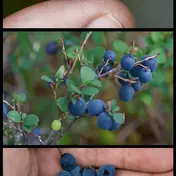
Wild Alaska blueberries ★ 4.5
Wild Alaska blueberries grow on low-bush shrubs across the Chugach foothills and the Mat-Su Valley, smaller and more intense than commercial cultivars.
Where to try it: Sweet Caribou, Fire Island Rustic Bakeshop, Spenard Farmers Market
Price: $8-14 (per pint at farmers markets)
Alaska Native peoples have foraged wild blueberries for millennia, and the picking tradition continues each July and August. Today the berries appear at Anchorage and Spenard farmers markets, in Sweet Caribou macarons and in pies baked at Fire Island Rustic Bakeshop. The bog blueberry (Vaccinium uliginosum) and the alpine blueberry are the two canonical Alaska species, both far smaller and more intense than commercial Maine or Michigan stock.
Watch out for: Tree nut traces if processed at the same bakery
-
Spruce tip preserve ★ 4.2
Spruce tip preserve is Alaska's foraged spring condiment, made from the tender young spruce shoots harvested in April-May and turned into syrups, jellies and pickles for Anchorage fine-dining garnishes year-round.
Where to try it: South Restaurant and Coffeehouse, Crow's Nest
Price: $8-14 (per jar at farmers markets)
Indigenous Alaska peoples harvested young spruce shoots for centuries as a vitamin C source and a seasoning, traded along the coastal trade routes from Sitka to Anchorage. Modern Anchorage chefs use spruce tip syrup, jelly and pickle as a foraged garnish. The Backcountry Eats and Foraging Treats day trip teaches identification and preserving methods through May and June each year.
Signature Dishes in Anchorage, FAQ
What food is Anchorage known for?
Anchorage's signature dishes include Copper River sockeye salmon, Pacific halibut, Alaska king crab, Reindeer sausage, Smoked salmon candy. See our signature dishes chapter for where to eat each.