
The plates that define Albuquerque: what they are, where they came from, and where to eat the canonical version.
Signature dishes
-
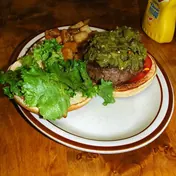
Green chile cheeseburger ★ 4.9
A beef patty with melted cheese and whole or chopped green chile, widely taken as the New Mexican cheeseburger. The state's Green Chile Cheeseburger Trail was introduced in 2009.
Where to try it: The Owl Cafe, Sadie's of New Mexico, 66 Diner
No one can say for certain who first put green chile and cheese on a hamburger. The Owl Bar and Cafe in San Antonio, New Mexico, which began in 1945, has one of the most convincing claims, and the Buckhorn Tavern across the street also served green chile hamburgers in the 1940s. Cheryl Alters Jamison created the state's Green Chile Cheeseburger Trail, introduced in 2009. In Albuquerque, The Owl Cafe on Eubank lists green chile cheeseburgers as its famous dish, Sadie's of New Mexico serves an award winning one on toasted French bread, and 66 Diner lists green chile burgers among what it is known for.
Watch out for: Gluten, Dairy
-
Carne adovada ★ 4.9
Cubes of pork marinated and slow cooked in red chile sauce, garlic and oregano. The James Beard Foundation named Mary and Tito's Cafe an America's Classic in 2010, citing its carne adovada.
Where to try it: Mary and Tito's Cafe, Sadie's of New Mexico, El Pinto, Papa Felipe's Mexican Restaurant, Los Cuates de New Mexico
Carne adovada is pork marinated and slow cooked in red chile sauce, garlic and oregano, one of the signature dishes of New Mexican cooking. In 2010 the James Beard Foundation wrote that it might be the most characteristic of New Mexico's dishes, that New Mexicans argue the merits of different preparations, and that aficionados nearly always rank Mary and Tito's tops. The Gonzales family serves the fork tender meat as the centerpiece of a plate, in overstuffed burritos and as a filling for enchiladas and empanadas. Papa Felipe's, Los Cuates, Sadie's and El Pinto also put it on their menus.
-
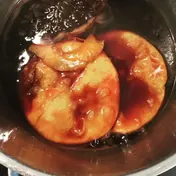
Sopaipillas ★ 4.7
A puffed fried quick bread with a flavor like Indian fry bread. The New Mexico version is very large and is the standard table bread at New Mexican restaurants, served with honey.
Where to try it: Sadie's of New Mexico, El Pinto, Papa Felipe's Mexican Restaurant, Cervantes Restaurant and Lounge, El Modelo Mexican Foods
The sopaipilla is a puffed fried quick bread with a flavor similar to Indian fry bread, and the New Mexico version is very large. It serves as a standard table bread at New Mexican restaurants, with a squeeze bottle of honey or honey butter. Before the 1930s sopaipillas were served with jelly or jam, and honey became the traditional accompaniment from the Great Depression on. They can also be stuffed: El Pinto, Cervantes and El Modelo list stuffed sopaipillas, Sadie's makes sopaipilla sliders, and Papa Felipe's gives free fresh sopapillas at the end of the meal.
Watch out for: Gluten
-
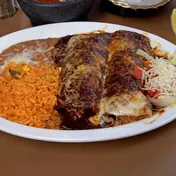
Stacked enchiladas with fried egg ★ 4.7
Corn tortillas layered flat instead of rolled, covered with red or green chile sauce and cheese, and optionally topped with a fried egg. In New Mexican cooking they are called enchiladas montadas.
Where to try it: Sadie's of New Mexico, Cervantes Restaurant and Lounge
New Mexican enchiladas are either rolled or stacked, and covered with chile sauce and cheese. The stacked kind, called enchiladas montadas, is usually covered with red or green chile sauce and optionally topped with a fried egg, and it is also common with blue corn tortillas. In Albuquerque, Sadie's of New Mexico lists cheese enchiladas of two or three corn tortillas stacked or rolled, and Cervantes serves its ground beef enchilada plate rolled or flat.
Watch out for: Dairy, Egg
-
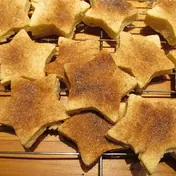
Biscochitos ★ 4.7
An anise flavored cookie sprinkled with cinnamon sugar and traditionally made with lard, the official New Mexico state cookie since 1989 and a traditional Christmas cookie.
Where to try it: Celina's Biscochitos, Golden Crown Panaderia, Garcia's Kitchen Fourth Street
The biscochito developed in New Mexico over the centuries from the baking of the first Spanish colonists. In 1989 New Mexico made it the official state cookie, the first state to name one, to help keep traditional home baking alive. Biscochitos may sometimes be found at any time of year, but they are a traditional Christmas cookie. In Albuquerque, Celina's Biscochitos sells them from Grandma Maggie's recipe, Golden Crown Panaderia lists biscochitos among what it sells, and Garcia's Kitchen sells them packaged as gifts.
Watch out for: Gluten, Dairy
-
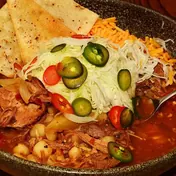
Posole ★ 4.6
A thick stew of hominy and pork, simmered for hours with red or green chile, onion, garlic and oregano. In New Mexico it is typically served on New Year's Eve.
Where to try it: Indian Pueblo Kitchen, Sadie's of New Mexico, El Pinto
Posole is the New Mexican form of pozole, a hominy stew known in Mesoamerica since the pre-Columbian era and common among the Pueblo peoples along the Rio Grande. The New Mexican stew is made with hominy and pork, or chicken, simmered for hours and combined with red or green chile, onion, garlic and oregano, and it is typically served on New Year's Eve. In Albuquerque, Indian Pueblo Kitchen lists a red chile beef bone posole and was voted Best Posole in the Best of the City Awards of Albuquerque the Magazine, Sadie's of New Mexico serves pork posole, and El Pinto serves it with Hatch red chile.
-
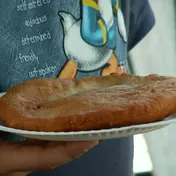
Frybread (Navajo taco) ★ 4.5
A thick flatbread of deep fried dough, developed by the Navajo people after the Long Walk, served with honey or as the base of an Indian taco topped with beans, meat, cheese and chile.
Where to try it: Indian Pueblo Kitchen
Frybread is a thick flatbread of deep fried dough developed by the Navajo people after the Long Walk, when they were forcibly relocated to Bosque Redondo, New Mexico. It is served as a snack with honey or as the base of a Navajo taco, and the New Mexico sopaipilla is a variant of it. Indian Pueblo Kitchen at the Indian Pueblo Cultural Center serves an Indian taco on house made frybread with Pueblo beans, cheese, lettuce, tomato, onion and chile, and sells frybread as a side. The New Mexico State Fair food guide names Navajo tacos and fry bread among the fair's staples.
Watch out for: Gluten, Dairy
-
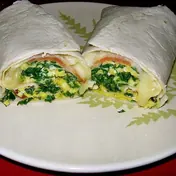
Albuquerque breakfast burrito ★ 4.6
A flour tortilla filled with scrambled eggs, potatoes, red or green chile and cheese, sometimes with bacon or sausage, often smothered in chile in the New Mexican way.
Where to try it: The Frontier Restaurant, El Modelo Mexican Foods, Garcia's Kitchen Fourth Street, Indian Pueblo Kitchen
The breakfast burrito originated in Santa Fe, New Mexico, and is typically made with scrambled eggs, potatoes, red or green chile and cheese, sometimes with bacon or sausage. In Albuquerque, The Frontier Restaurant, across from the University of New Mexico and open since 1971, serves burritos on house made tortillas; the Michelin Guide describes one filled with hash browns, scrambled eggs and a protein such as carne adovada or green chili stew. El Modelo Mexican Foods, Garcia's Kitchen and Indian Pueblo Kitchen also list breakfast burritos.
Watch out for: Gluten, Dairy, Egg
-
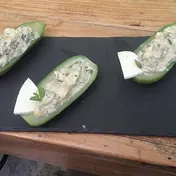
Calabacitas ★ 4.4
Chopped summer squash sauteed in oil with onion, garlic, yellow corn and green chile, a traditional New Mexican side dish found on many Albuquerque menus.
Where to try it: Sadie's of New Mexico, El Pinto, Indian Pueblo Kitchen
Calabacitas is a New Mexican dish of chopped summer squash sauteed with onions, garlic, yellow corn and green chile. The corn and squash in it are among the native ingredients that Pueblo and Spanish cooking brought together in New Mexican cuisine. In Albuquerque, Sadie's of New Mexico lists calabacitas as a side, El Pinto offers it among its choice of sides, and Indian Pueblo Kitchen serves calabacitas as a side and with its blue corn enchiladas.
Watch out for: Dairy
-
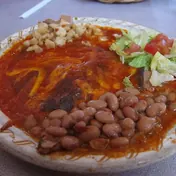
Blue corn dishes ★ 4.5
Blue corn is used in New Mexico for atole, tortillas, enchiladas and baking. Indian Pueblo Kitchen lists blue corn enchiladas, blue corn onion rings and an atole of blue corn porridge.
Where to try it: Indian Pueblo Kitchen, El Pinto, Sadie's of New Mexico, Cocina Azul
Corn is a staple grain in New Mexico, and the blue and red flint varieties are used for specialties such as atole, a thick hot gruel made from blue corn meal. Stacked enchiladas are also common with blue corn tortillas. Indian Pueblo Kitchen lists blue corn enchiladas, blue corn onion rings, an atole of blue corn porridge and blue corn muffins; El Pinto sells blue corn tortillas as a side; Sadie's of New Mexico and Cocina Azul offer to add blue corn to their plates.
Watch out for: Dairy
-
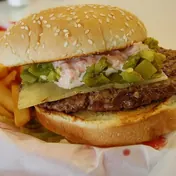
Hatch green chile ★ 4.9
Green chile grown in and around the Hatch Valley and along the Rio Grande, roasted, peeled and frozen each late summer. Hatch names the growing area, not one variety.
Where to try it: El Pinto, Indian Pueblo Kitchen, The Frontier Restaurant
Hatch is a place, not a variety: the Chile Pepper Institute at New Mexico State University says the name marks the area where the chile is grown, about 40 miles north of the university, where the New Mexican pod type was first commercially grown. The pod type was bred at NMSU by Dr. Fabian Garcia, whose New Mexico No. 9 was released in 1913. Green chile is harvested from August through the middle of October and is typically roasted, peeled and frozen for the year ahead. El Pinto cooks with fresh roasted Hatch chile, and Indian Pueblo Kitchen's green chile stew uses roasted Hatch green chile.
-
Red chile sauce ★ 4.8
The fully ripened New Mexico chile, dried and blended to a puree and cooked with garlic, salt and oregano into the red chile sauce behind carne adovada, enchiladas and posole.
Where to try it: Mary and Tito's Cafe, Sadie's of New Mexico, El Pinto, Cervantes Restaurant and Lounge
New Mexico red chile is the fully ripened green chile pepper: it turns orange and then red as it ripens, and for the pepper to be enjoyed it must first be dried and blended to a puree. The puree is cooked with garlic and salt, and sometimes oregano, into red chile sauce, and discerning New Mexicans prefer sun dried to oven dried chile. It is the sauce in carne adovada, which the James Beard Foundation credited to Mary and Tito's in 2010. El Pinto cooks with Hatch red chile, Sadie's serves red chile on its plates, and Cervantes sells sun dried red chile sauce.
-
The Frontier sweet roll ★ 4.6
A cinnamon roll heated to order and slathered with rich, creamy frosting at The Frontier Restaurant across from the University of New Mexico, which serves from 5 am to midnight.
Where to try it: The Frontier Restaurant
The Frontier Restaurant has served the Albuquerque area and the University of New Mexico community since 1971 from 2400 Central Avenue SE. The Michelin Guide, which gives it a Bib Gourmand, says people flock there from 5 am to midnight for endless coffee, burritos on house made tortillas and cinnamon rolls heated to order and slathered with rich and creamy frosting. The restaurant's own site says it is open from 5 am until midnight, seven days a week.
Watch out for: Gluten, Dairy, Egg
-
Chicos ★ 4.4
Dried kernels of sweet corn made by steaming whole ears in the husk, traditionally in an outdoor adobe horno, then drying them, and cooked into stews with meat, onion and chile.
New Mexico Magazine describes chicos, Spanish for small, as a staple of Southwest cooking since the days of the Ancestral Puebloans. Farmers lay ears of white sweet corn in the husk in a large horno, cover them with wet sacks and steam them overnight under a wood fire, which gives chicos their smoky flavor, then pull the husks back and hang the ears to sun dry for at least a week. Unlike posole, which is made from hulled kernels, chicos are made from whole ears. They go into stews with meat, onion and chile, and are sold at farmers' markets, local supermarkets and co-ops.
-
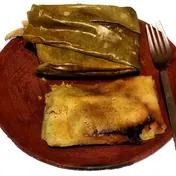
Red chile pork tamales ★ 4.6
Masa filled with pork marinated in red chile and steamed in corn husks. El Modelo Mexican Foods is known for its handmade tamales, and Sadie's, Cervantes and El Pinto also list tamales.
Where to try it: El Modelo Mexican Foods, Sadie's of New Mexico, Cervantes Restaurant and Lounge, El Pinto
Tamales are one of the traditional New Mexican dishes, alongside enchiladas, tacos, posole and sopaipillas. Sadie's of New Mexico fills its tamales with pork marinated in Sadie's red chile and cooked inside traditional corn masa, and Cervantes makes its tamales homemade. El Modelo Mexican Foods, which began in 1929 in a three room home at 1715 2nd Street, says it is known for its handmade tamales, and El Pinto includes a tamale in its combination plates.
Watch out for: Gluten
Signature Dishes in Albuquerque, FAQ
What food is Albuquerque known for?
Albuquerque's signature dishes include Green chile cheeseburger, Carne adovada, Sopaipillas, Stacked enchiladas with fried egg, Biscochitos. See our signature dishes chapter for where to eat each.