Signature dishes
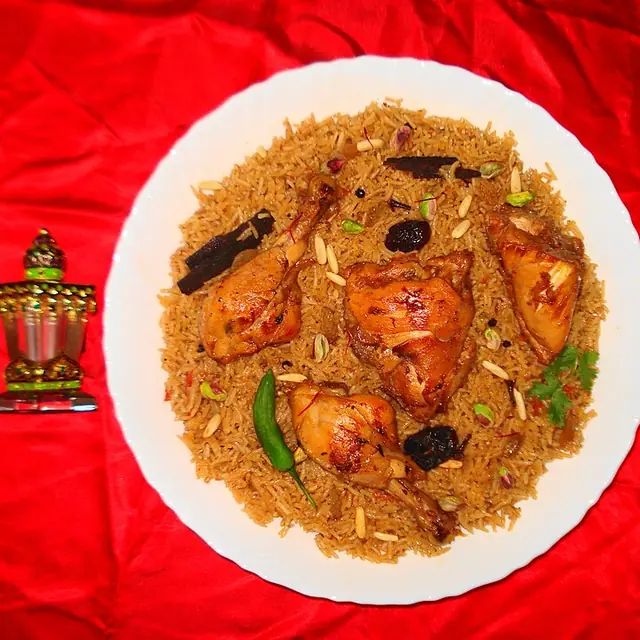
Machboos is the Emirati rice dish at the centre of every Dubai family lunch: long grain rice cooked in the stock of the meat, stained with loomi and bezar spice.
Where: Al Fanar Restaurant & Cafe, Al Khayma Heritage Restaurant & Cafe
Price: AED 55 to 95
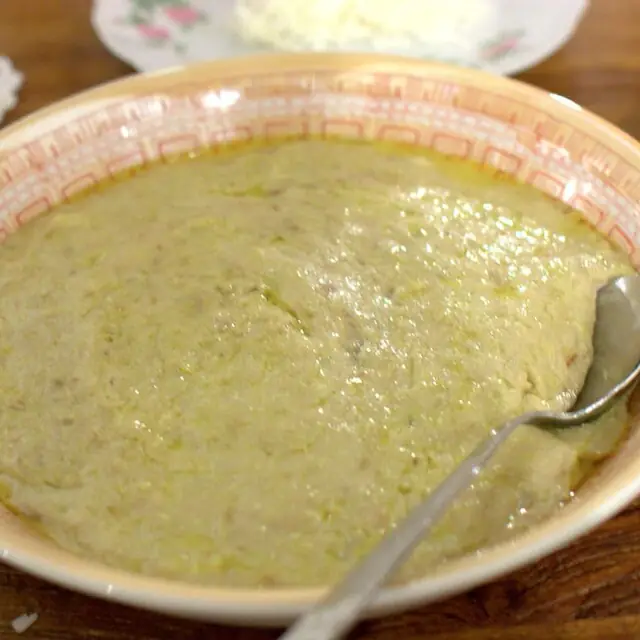
Harees is cracked wheat and meat beaten together for hours into a savoury porridge, salted, topped with ghee, and eaten in Dubai at Ramadan and at weddings.
Where: Al Fanar Restaurant & Cafe, Arabian Tea House
Price: AED 30 to 45
Luqaimat are yeasted saffron and cardamom dough balls fried until the shell cracks, then drowned in date syrup. They close almost every Emirati meal in Dubai.
Where: Al Fanar Restaurant & Cafe, Al Khayma Heritage Restaurant & Cafe
Price: AED 22 to 40
Chebab is the Emirati breakfast pancake: a saffron and turmeric batter poured thin on a hot plate, lacy at the edges, folded around cream cheese and date syrup.
Where: Al Fanar Restaurant & Cafe, Arabian Tea House
Price: AED 25 to 45
Khameer is the Emirati date bread: a yeasted, slightly sweet round enriched with milk and dates, dimpled with nigella seed and split open while hot for cheese and honey.
Where: Arabian Tea House
Price: AED 18 to 35
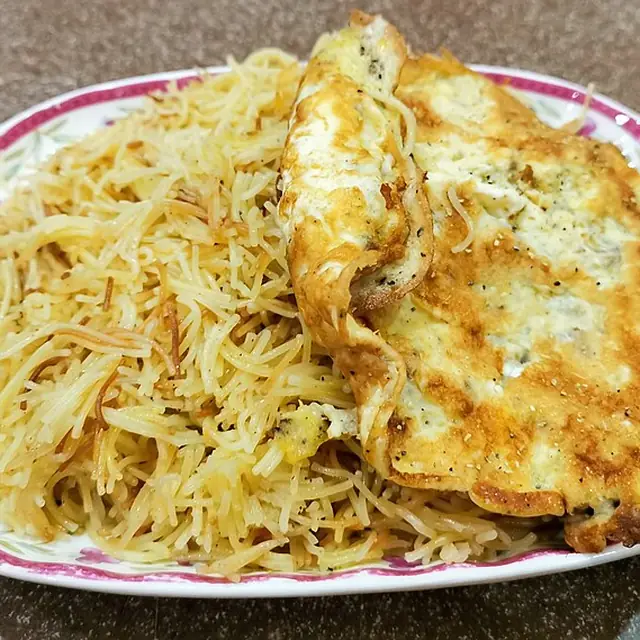
Balaleet is the Emirati breakfast of sweet cardamom and saffron vermicelli laid under a thin savoury omelette, the salt and sugar eaten together in one spoonful.
Where: Arabian Tea House
Price: AED 28 to 45
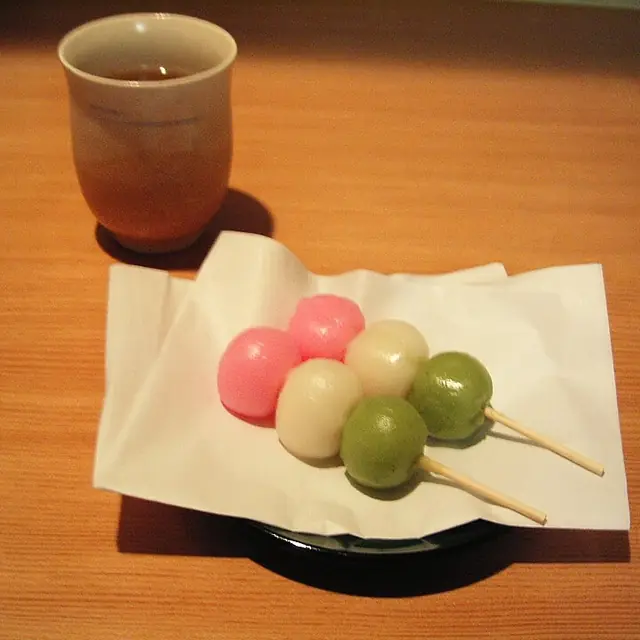
Dango is boiled chickpeas tossed hot with cumin, chilli and lime, sold in paper cones and served in Dubai's heritage houses as the snack that opens an Emirati meal.
Where: Al Khayma Heritage Restaurant & Cafe, Arabian Tea House
Price: AED 12 to 25
Khubz regag is the paper thin Emirati flatbread cooked on a domed iron plate, folded around cream cheese, egg or fish sauce and eaten from the hand in Dubai.
Where: Al Khayma Heritage Restaurant & Cafe
Price: AED 6 to 18
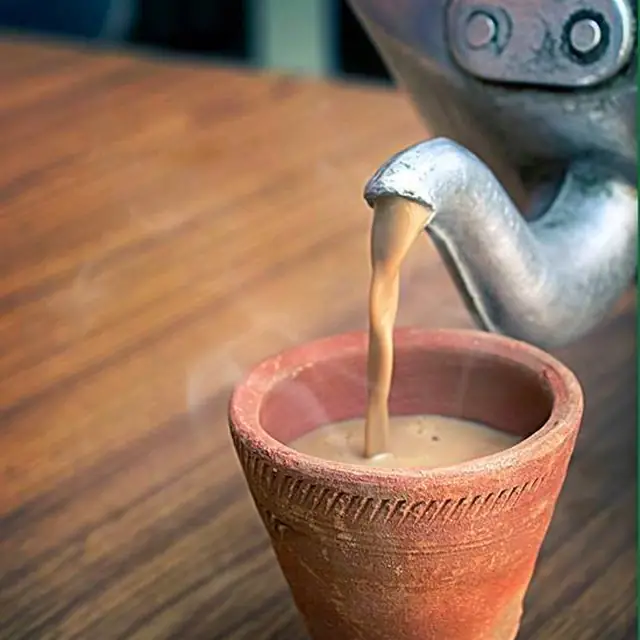
Karak chai is Dubai's default drink: black tea boiled hard with evaporated milk, sugar and cardamom, poured from a height into a small cup and sold for a few dirhams.
Where: Al Farwania Restaurant, Al Ijaza Cafeteria, Arabian Tea House
Price: AED 1 to 8
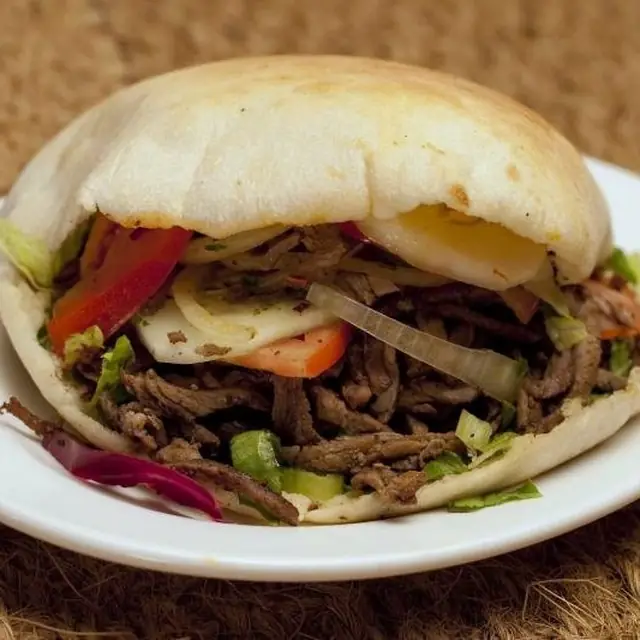
Dubai shawarma is the Levantine wrap rebuilt for the Gulf: chicken off the spit, garlic toum, pickles and a handful of french fries rolled into thin Arabic bread.
Where: Al Mallah, Zaroob SZR, Allo Beirut, Al Shami Restaurant
Price: AED 8 to 22
Zaatar manoushe is the Levantine morning flatbread that Dubai adopted whole: thyme, sumac and sesame in olive oil, baked on a thin base and folded straight off the tray.
Where: Mama'esh, Man'oushe Street, Karam Beirut
Price: AED 7 to 25
Biryani in Dubai splits three ways: Hyderabadi dum with saffron layers, Malabar thalassery with short grain kaima rice, and Pakistani Sindhi biryani heavy on potato.
Where: Hyderabadi Biryani House, Calicut Paragon, Ravi Restaurant
Price: AED 15 to 45
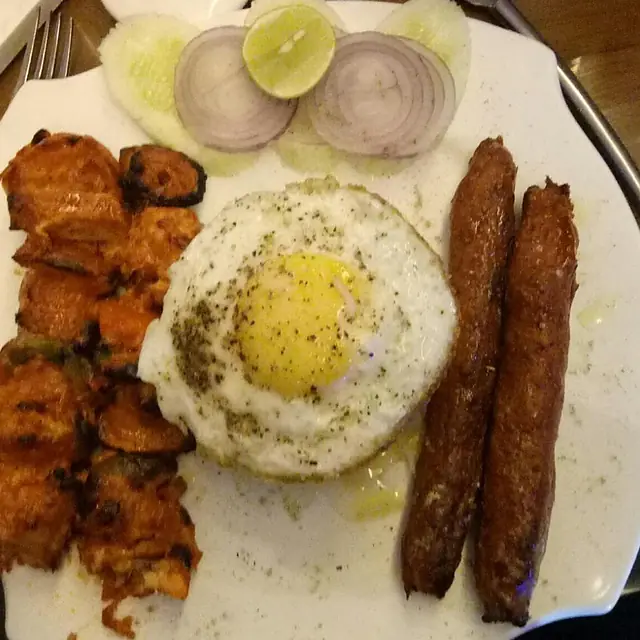
Chelo kebab is Dubai's Iranian staple: minced koobideh and saffron chicken skewers grilled over coals, served on buttered saffron rice with a grilled tomato.
Where: Al Ustad Special Kabab, Special Kabab Iranian Restaurant
Price: AED 30 to 75
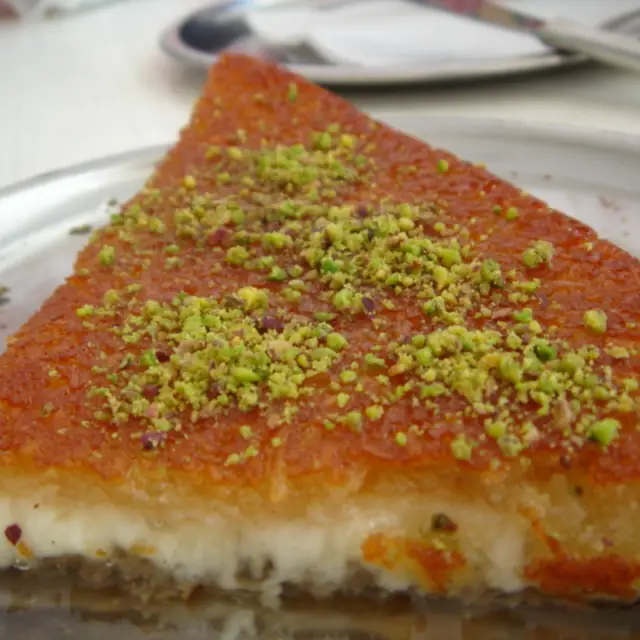
Knafeh in Dubai is the Levantine cheese pastry served hot by the slice: shredded kunafa strands over stretchy sweet cheese, soaked in sugar syrup and dusted with pistachio.
Where: Al Safadi Restaurant, Aroos Damascus, Karam Beirut
Price: AED 20 to 45
Fried hammour is Dubai's fishing village dish: reef grouper rubbed with masala, deep fried whole, weighed at the counter and served with rice and tamarind curry sauce.
Where: Bu Qtair, Waterfront Market
Price: AED 35 to 90
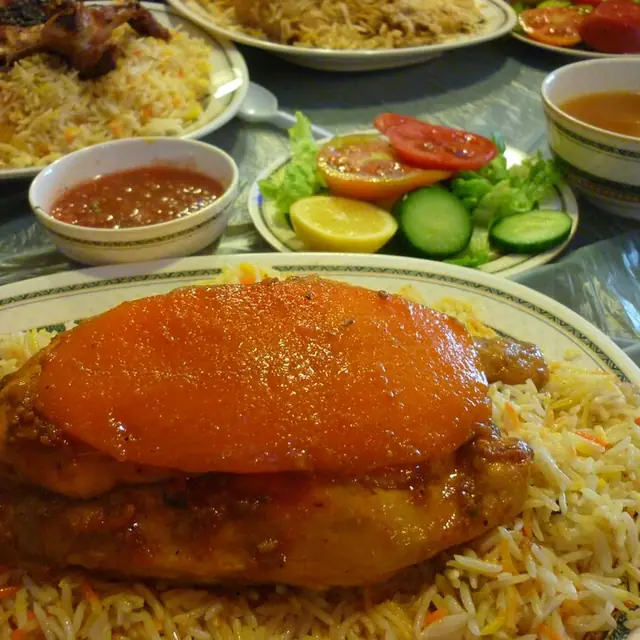
Mandi is the Yemeni pit roast that Dubai eats on sharing trays: lamb or chicken smoked over charcoal above long grain rice cooked in the dripping meat stock.
Where: Al Yemen Mandi, Zam Zam Mandi
Price: AED 25 to 70
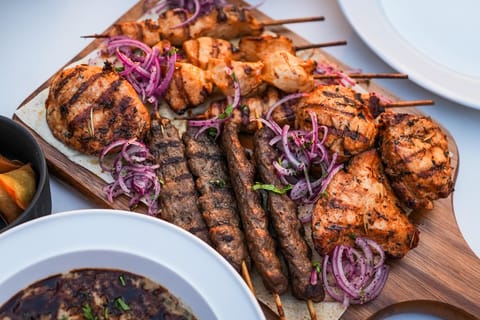
Mashawi is the Levantine mixed grill that anchors a Dubai group dinner: lamb kofta, shish tawook and lamb cubes off the coals, landing with mezze and hot bread.
Where: Aroos Damascus, Al Safadi Restaurant, Automatic Restaurants & Grill
Price: AED 85 to 180
Machboos
Machboos is the Emirati rice dish at the centre of every Dubai family lunch: long grain rice cooked in the stock of the meat, stained with loomi and bezar spice.
History: Machboos belongs to the wider Khaleeji family of spiced rice dishes that reached the Gulf coast on the same dhow routes that carried Indian pepper and Persian rice into the creek. The Emirati version is defined by two ingredients: bezar, a house blend of cumin, coriander, turmeric, cinnamon and dried chilli, and loomi, the black dried lime whose sourness cuts the fat of the lamb. Pearl divers ate it out of a shared platter because one pot fed a boat crew, and the communal tray is still how it arrives in Dubai's heritage restaurants.
Where to try it: Al Fanar Restaurant & Cafe, Al Khayma Heritage Restaurant & Cafe
Watch out for: None typical
Harees
Harees is cracked wheat and meat beaten together for hours into a savoury porridge, salted, topped with ghee, and eaten in Dubai at Ramadan and at weddings.
History: Harees is one of the oldest dishes still cooked in the UAE, recorded across the Arabian Peninsula long before the pearl trade and shared with Armenian harissa and Levantine hareesa. Wheat and meat go into the same pot with water and nothing else, then cook for three to five hours until the grain collapses and the two can be beaten with a wooden pestle into a single smooth mass. The labour is the recipe, which is why it belongs to occasions rather than weeknights: Ramadan iftar, Eid, weddings and condolence gatherings. Dubai households still send trays of it to neighbours, and the only seasoning at the table is salt, ghee and sometimes a spoonful of sugar or cinnamon.
Where to try it: Al Fanar Restaurant & Cafe, Arabian Tea House
Watch out for: Gluten, Milk
Luqaimat
Luqaimat are yeasted saffron and cardamom dough balls fried until the shell cracks, then drowned in date syrup. They close almost every Emirati meal in Dubai.
History: Luqaimat means small bites, and the recipe travelled the Indian Ocean under a dozen names: lokma in Turkey, gulab jamun's cousin in South Asia, and awameh in the Levant. The Emirati version leans on two local ingredients, saffron carried up from Iran through the creek and dibs, the thick date molasses pressed from the Gulf's own palms. They are the dish of Ramadan: fried in batches at home after the fast breaks, stacked on trays for the majlis, and sold from carts at iftar markets. A good luqaimah is crisp enough to shatter, hollow inside, and never soaked long enough to go soft.
Where to try it: Al Fanar Restaurant & Cafe, Al Khayma Heritage Restaurant & Cafe
Watch out for: Gluten, Milk, Sesame
Chebab
Chebab is the Emirati breakfast pancake: a saffron and turmeric batter poured thin on a hot plate, lacy at the edges, folded around cream cheese and date syrup.
History: Chebab is the Gulf answer to a pancake, leavened with yeast rather than baking powder and coloured yellow by turmeric and saffron rather than egg. It was cooked on a flat iron tawa over coals, which is why the underside carries the pitted, lacy look of a crumpet and the top stays pale. Fennel or cardamom goes into the batter depending on the household. In Dubai it is breakfast food sold beside khameer bread and balaleet, served with cream cheese, honey or dibs. Modern Emirati cafes have pushed it into all day menus.
Where to try it: Al Fanar Restaurant & Cafe, Arabian Tea House
Watch out for: Gluten, Egg, Milk
Khameer bread
Khameer is the Emirati date bread: a yeasted, slightly sweet round enriched with milk and dates, dimpled with nigella seed and split open while hot for cheese and honey.
History: Khameer takes its name from the Arabic for leaven, and it is the everyday bread of the Emirati household as opposed to the paper thin regag of the street. The dough carries powdered milk, sugar and sometimes mashed dates, which is why it stays soft for a day and browns fast. Traditionally it baked in a tandoor sunk into the ground or on a domed griddle, and the black nigella seeds pressed into the top are both decoration and digestive. In Dubai it arrives on every Emirati breakfast tray next to chebab and balaleet, and the standard order is to split one, fill it with cream cheese and pour over date syrup.
Where to try it: Arabian Tea House
Watch out for: Gluten, Milk, Sesame
Balaleet
Balaleet is the Emirati breakfast of sweet cardamom and saffron vermicelli laid under a thin savoury omelette, the salt and sugar eaten together in one spoonful.
History: Balaleet reached the Gulf with the vermicelli trade out of the Indian subcontinent and became the UAE's canonical breakfast, cooked the same way in Bahrain, Kuwait and Qatar. Fine sha'ariya noodles are boiled, drained and fried in butter with sugar, cardamom, saffron and often rose water, then a plain egg omelette is set on top as a lid. Eaten together the dish sits on the line between dessert and breakfast, which is exactly the point, and in Ramadan it doubles as a suhoor dish because it holds well. Emirati households disagree loudly about whether the omelette is folded over the noodles or laid flat.
Where to try it: Arabian Tea House
Watch out for: Gluten, Egg, Milk
Dango
Dango is boiled chickpeas tossed hot with cumin, chilli and lime, sold in paper cones and served in Dubai's heritage houses as the snack that opens an Emirati meal.
History: Dango is the Emirati street snack that predates the street food label: soaked chickpeas boiled soft, drained, then dressed with cumin, salt, dried chilli and a squeeze of lime while still steaming. The word comes from the Persian for grain, one more marker of the trade that shaped Dubai's kitchen across the Gulf from Bandar Lengeh and Bushehr. It was the food of school gates and majlis gatherings, eaten from newspaper cones, and in Ramadan it appears on the iftar tray alongside soup because it rehydrates and fills without weight. Heritage restaurants in Al Fahidi now serve it in a small bowl as the opening course.
Where to try it: Al Khayma Heritage Restaurant & Cafe, Arabian Tea House
Watch out for: None typical
Khubz regag
Khubz regag is the paper thin Emirati flatbread cooked on a domed iron plate, folded around cream cheese, egg or fish sauce and eaten from the hand in Dubai.
History: Regag is baked by trailing a loose batter across a saj, the convex iron dome heated over gas or coals, so the sheet dries in seconds into something closer to a crisp than a bread. It was the working bread of the coast, cheap and fast, and the fillings record what was to hand: cream cheese and egg, or mehyawa, the fermented anchovy sauce that Emirati and Bastaki households brought from the Persian side of the Gulf. Dubai's regag counters cluster on Jumeirah Road and in Satwa, often beside a karak window, and the standard pairing of a regag roll with a sweet cup of tea has outlasted every restaurant trend in the city.
Where to try it: Al Khayma Heritage Restaurant & Cafe
Watch out for: Gluten, Egg, Milk, Fish
Karak chai
Karak chai is Dubai's default drink: black tea boiled hard with evaporated milk, sugar and cardamom, poured from a height into a small cup and sold for a few dirhams.
History: Karak arrived with South Asian workers who brought masala chai to the Gulf, then adapted it to what the cafeterias stocked: strong dust grade tea, evaporated or condensed milk instead of fresh, heavy sugar and a bruised cardamom pod. The word means strong. It spread from labour camps and roadside cafeterias into every layer of the city, and the ritual of queueing by car outside a window on Jumeirah Road while a waiter brings the cups to the car is a Dubai institution rather than a novelty. Prices stayed near a dirham for decades, which is part of why karak became the one thing the whole city drinks the same way.
Where to try it: Al Farwania Restaurant, Al Ijaza Cafeteria, Arabian Tea House
Watch out for: Milk
Dubai shawarma
Dubai shawarma is the Levantine wrap rebuilt for the Gulf: chicken off the spit, garlic toum, pickles and a handful of french fries rolled into thin Arabic bread.
History: Shawarma came to Dubai with Lebanese, Syrian and Palestinian cooks from the 1970s onward and settled into a local version that a Beirut purist would query. The chicken is marinated in vinegar, garlic and seven spice rather than yoghurt, the bread is the thin saj round rather than pita, the sauce is toum, and the fries go inside the wrap instead of beside it. Satwa's Al Mallah made the format famous from 1979 with pavement tables facing Al Diyafah Street, and the standard Dubai order remains a chicken shawarma with a fresh juice. The city now eats it at every hour, with the busiest counters running past midnight.
Where to try it: Al Mallah, Zaroob SZR, Allo Beirut, Al Shami Restaurant
Watch out for: Gluten, Sesame
Zaatar manoushe
Zaatar manoushe is the Levantine morning flatbread that Dubai adopted whole: thyme, sumac and sesame in olive oil, baked on a thin base and folded straight off the tray.
History: Manoushe is Lebanese and Palestinian breakfast bread, dough rolled thin and smeared with a paste of dried wild thyme, sumac, toasted sesame and olive oil before it goes into the oven. Dubai's version is a direct import that then multiplied: Palestinian bakeries in Business Bay, Lebanese chains along Sheikh Zayed Road and 24 hour counters in Deira and Satwa all bake it, and the city added cheese, labneh and cocktail sausage variants to the traditional zaatar and jibneh pair. The correct way to eat it is folded in half within a minute of leaving the oven, with mint leaves, tomato and olives tucked inside and a glass of sweet tea beside it.
Where to try it: Mama'esh, Man'oushe Street, Karam Beirut
Watch out for: Gluten, Sesame
Dubai biryani
Biryani in Dubai splits three ways: Hyderabadi dum with saffron layers, Malabar thalassery with short grain kaima rice, and Pakistani Sindhi biryani heavy on potato.
History: No dish records Dubai's demographics more precisely than biryani. Malabar cooks from Kerala brought thalassery biryani with its short grain kaima rice and fried onion crown; Hyderabadi cooks brought the raw marinade dum method sealed under dough; Karachi kitchens brought the sour, potato heavy Sindhi style with plum and yoghurt. All three are cooked within a few streets of each other in Al Karama and Meena Bazaar, and each community keeps its own version rather than blending them. The city's restaurants serve it by the kilo for family orders.
Where to try it: Hyderabadi Biryani House, Calicut Paragon, Ravi Restaurant
Watch out for: Milk, Nuts
Chelo kebab
Chelo kebab is Dubai's Iranian staple: minced koobideh and saffron chicken skewers grilled over coals, served on buttered saffron rice with a grilled tomato.
History: Iranian cooks have fed Dubai since merchants from the Persian coast settled Bastakiya, and chelo kebab is the dish that community serves the whole city. Chelo is the rice, steamed then finished with butter and saffron so the base forms a crust, and the kebab is either koobideh, minced lamb and beef pressed onto a flat sword skewer, or joojeh, chicken marinated in saffron, lime and onion juice. The accompaniments are fixed: a blistered tomato, raw onion, sumac and a knob of butter stirred through the rice at the table. Al Ustad Special Kabab has served it near Al Fahidi since 1978 under walls of photos of its famous patrons.
Where to try it: Al Ustad Special Kabab, Special Kabab Iranian Restaurant
Watch out for: Milk
Knafeh
Knafeh in Dubai is the Levantine cheese pastry served hot by the slice: shredded kunafa strands over stretchy sweet cheese, soaked in sugar syrup and dusted with pistachio.
History: Knafeh belongs to Nablus and Damascus, and Dubai's Syrian and Palestinian restaurants brought both versions: khishneh, made with coarse shredded pastry, and na'ameh, made with fine semolina crumb dyed orange. Underneath is akkawi or nabulsi cheese, desalted overnight so it melts sweet rather than salty, and the whole tray is flipped out hot and drenched in attar syrup scented with orange blossom. The city's late night Levantine dining rooms sell it by the slice until the small hours. Dubai's viral pistachio and kunafa chocolate bar borrowed the same shredded pastry and sent the ingredient worldwide.
Where to try it: Al Safadi Restaurant, Aroos Damascus, Karam Beirut
Watch out for: Gluten, Milk, Nuts
Fried hammour
Fried hammour is Dubai's fishing village dish: reef grouper rubbed with masala, deep fried whole, weighed at the counter and served with rice and tamarind curry sauce.
History: Hammour is the Gulf's grouper, the fish that fed the coast before the towers, and the way Dubai eats it comes from the fish shacks beside the Jumeirah fishing harbour. The fish is scored, rubbed with a wet paste of chilli, turmeric, ginger and garlic, and dropped into hot oil so the crust seals in minutes. It is sold by weight rather than by portion, eaten with the fingers off a paper plate with rice and a thin sour curry,. Stocks have fallen far enough that the UAE now limits hammour fishing, so many kitchens substitute sherry or pomfret.
Where to try it: Bu Qtair, Waterfront Market
Watch out for: Fish
Mandi
Mandi is the Yemeni pit roast that Dubai eats on sharing trays: lamb or chicken smoked over charcoal above long grain rice cooked in the dripping meat stock.
History: Mandi comes from Hadhramaut in eastern Yemen, where the meat hangs inside a clay tandoor sunk into the ground and the rice cooks underneath, catching the fat as it falls. The name traces to nada, the Arabic for dew, for the moisture the sealed pit keeps in. Yemeni restaurants in Hor Al Anz, Al Muraqqabat and Al Karama brought it to Dubai and serve it the original way: one tray on the floor or table for the whole group, hands only, with a fiery green sahawiq chilli relish and a bowl of broth. Portions are calibrated to families, so two people ordering a full mandi will leave with a box.
Where to try it: Al Yemen Mandi, Zam Zam Mandi
Watch out for: None typical
Mashawi mixed grill
Mashawi is the Levantine mixed grill that anchors a Dubai group dinner: lamb kofta, shish tawook and lamb cubes off the coals, landing with mezze and hot bread.
History: The mashawi platter is how Dubai's Lebanese and Syrian dining rooms feed a table. Three skewers define it: kafta of minced lamb with parsley and onion, shish tawook of yoghurt and garlic marinated chicken, and lahm meshwi of cubed lamb. It arrives after a spread of cold and hot mezze, which is the real reason the meal runs to three hours. The format came with restaurateurs who left Beirut through the 1970s and 1980s and rebuilt on Sheikh Zayed Road and in Deira, and the biggest rooms still turn tables past 01:00 seven nights a week.
Where to try it: Aroos Damascus, Al Safadi Restaurant, Automatic Restaurants & Grill
Watch out for: Gluten, Milk, Sesame