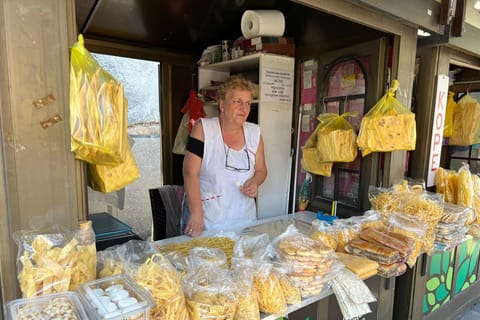

The plates that define Belgrade: what they are, where they came from, and where to eat the canonical version.
Signature dishes
-
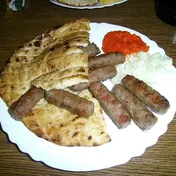
Cevapi ★ 4.8
Cevapi are grilled finger-shaped minced beef-lamb skewers, the Serbian Balkan icon. Served in a half-lepinja bread with raw onion, kajmak cream cheese and ajvar relish.
Where to try it: Walter Sarajevski Cevap Bulevar Mihajla Pupina, Walter Sarajevski Cevap Vojislava Ilica, Manufaktura, Tri Sesira
Price: 600-900 RSD
Cevapi reach Belgrade through Ottoman lineage, then sharpen into the Sarajevski style of the 19th-20th century Yugoslavia and travel as economic-migration cuisine across the Balkans. The Sarajevski cut (smaller, denser, beef-lamb without seasoning visible) is the canonical form on Belgrade grills; Walter Sarajevski cevap has been the Belgrade benchmark for decades.
Watch out for: Gluten
-
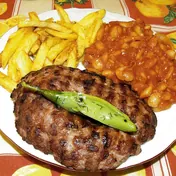
Pljeskavica ★ 4.7
Pljeskavica is the Serbian burger-patty, a flat grilled disc of minced pork and beef the diameter of the lepinja bread it sits in. Topped with kajmak, raw onion and ajvar.
Where to try it: Stara Hercegovina, Z Burger, Manufaktura, Walter Sarajevski Cevap Bulevar Mihajla Pupina
Price: 550-1100 RSD
Pljeskavica codified in 20th-century Yugoslavia as the Serbian alternative to Bosnian cevapi: same Ottoman-grilled-meat lineage but pressed into a disc. The Leskovacka pljeskavica from southern Serbia is the canonical regional anchor. The Belgrade Burger Festival at Kalemegdan matches the contemporary version each May.
Watch out for: Gluten
-
Karadjordjeva snicla ★ 4.6
Karadjordjeva snicla is a Belgrade invention: a thin pork or veal cutlet rolled around kajmak, breaded and pan-fried until golden. Named for the Karadjordjevic royal house.
Where to try it: Madera, Manufaktura, Sesir Moj, Stara Hercegovina
Price: 1600-2800 RSD
Karadjordjeva snicla was created in the 20th century by Belgrade chef Mica Stojanovic at the Hotel Golf after a deep-frozen chicken Kiev wasn't available; he rolled the available veal around kajmak instead and named it for the Karadjordjevic royal dynasty. Sometimes called Maiden's Dream for its long shape.
Watch out for: Gluten, Dairy, Egg
Book food experiences in Belgrade


-
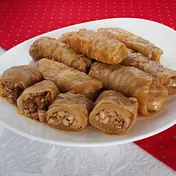
Sarma ★ 4.7
Sarma is the Serbian stuffed cabbage roll: minced pork, beef and rice rolled in a soured cabbage leaf, slow-cooked in tomato and paprika stock until the meat melts.
Where to try it: Tri Sesira, Sesir Moj, Ima Dana, Stara Hercegovina
Price: 1100-1800 RSD
Sarma reached Belgrade through Ottoman rule (the Turkish sarma means rolled), then took the Serbian form: soured (kiseli kupus) rather than fresh cabbage leaves, minced pork and beef rather than lamb, slow-cooked through Christmas Eve for the Serbian Slava feast. Every Belgrade kafana has its house version.
Watch out for: None unless served with bread
-
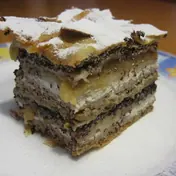
Gibanica ★ 4.7
Gibanica is the Serbian filo-and-cheese pie. Layers of phyllo are folded around a custard of sirene cheese, eggs and yoghurt, baked until the top sheets blister.
Where to try it: Pekara Trpkovic Slavija, Manufaktura, Stara Hercegovina, Tri Sesira
Price: 180-400 RSD
Gibanica is the canonical Serbian breakfast and Slava feast pie. The Pirot region of southern Serbia claims the original recipe, with documentation in 19th-century Serbian cookbooks. Belgrade kafane have served the cheese version (sa sirom) since the 19th century; the Skadarlija bohemian quarter rooms (Tri Šešira, Dva Jelena) standardised the modern breakfast format. Variations include gibanica sa spanaćem (spinach), sa mesom (meat) and sa pečurkama (mushroom). The Slava feast (the family saint's day, every Serbian Orthodox family's largest annual celebration) is incomplete without a freshly baked gibanica at the centre.
Watch out for: Gluten, Dairy, Egg
-
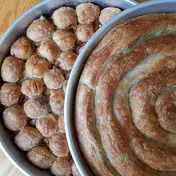
Burek ★ 4.7
Burek is the Balkan filo spiral, baked in a wide circular tray. Belgrade and Serbia favor cheese (sa sirom), meat (sa mesom) and potato (sa krompirom) fillings.
Where to try it: Pekara Trpkovic Slavija, Pekara Trpkovic Dusanovac, Pekara Trpkovic Zvezdara, Pekara Sava Petrovic Zemun
Price: 180-280 RSD per slice
Burek arrived in Belgrade with Ottoman rule in the 15th century and has held its place as the morning bakery counter staple ever since. The Bosnian convention is meat-only and uses a hand-stretched filo; Serbian convention extends to cheese, potato, spinach and pumpkin (sa tikvama) fillings and accepts shop-bought filo. Pekara Trpkovic on Nemanjina has anchored the Belgrade burek queue for over 100 years and remains a 24-hour reference counter for the city's defining breakfast plate. The standard accompaniment is a glass of yoghurt or kefir, and the morning ritual is to eat it standing at the counter; takeaway servings are wrapped in butcher paper.
Watch out for: Gluten, Dairy, Egg
-
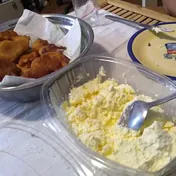
Kajmak ★ 4.6
Kajmak is the Serbian fresh cream cheese, made by slow-skimming the cream from heated milk and folding the layers into a thick spread. Eaten with bread, cevapi or pljeskavica.
Where to try it: Tri Sesira, Sesir Moj, Manufaktura, Mala fabrika ukusa
Price: 300-600 RSD per portion
Kajmak is the canonical Balkan dairy product, with documented Ottoman-era production across the wider region from the 16th century onward. Serbian kajmak from Čačak and Kraljevo holds protected designation of origin (PDO) status, recognised by both the Serbian Patent Office and the EU geographical indications register. The production technique is slow: milk is heated to 90 degrees Celsius, cooled overnight, and the cream skin (kajmak) gradually layered into wooden buckets across days. Belgrade kafane (Lorenzo and Kakalamba, Tri Šešira) serve it at the start of every grill platter and as the centerpiece of the meze; every Serbian household keeps a tub.
Watch out for: Dairy
-
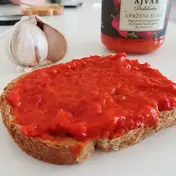
Ajvar ★ 4.6
Ajvar is the Serbian roasted red pepper relish, blended with aubergine, garlic and oil into a thick spread. The autumn pepper harvest into a year-round Balkan pantry staple.
Where to try it: Manufaktura, Stara Hercegovina, Walter Sarajevski Cevap Bulevar Mihajla Pupina, Kalenic Market
Price: 200-600 RSD per jar
Ajvar emerged from late-19th-century Belgrade pepper-preserve traditions, codified through 20th-century Yugoslav industrial canning. The Macedonian and southern Serbian (Leskovac) versions are the canonical recipes, built on Kapija pepper varieties roasted over wood fires, peeled by hand and slowly cooked down with garlic and oil across four to six hours. Belgrade home cooks gather to roast peppers each September in courtyard sessions, and the entire harvest of two to three hundred kilograms is processed in a single weekend by extended families. Commercial brands include Centroproizvod and Vitaminka; the Leskovac Ajvar PDO designation protects the southern Serbian production method.
Watch out for: None
-
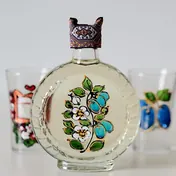
Sljivovica ★ 4.7
Sljivovica is the Serbian plum brandy, the national rakija. Twice-distilled from fresh plums, aged in oak, with a fruity edge that runs from clear to deep amber.
Where to try it: Tri Sesira, Sesir Moj, Kafana Question Mark, Manufaktura
Price: 200-400 RSD per shot
Sljivovica is Serbia's national spirit, protected as a geographic indication. The damson plum varieties of Sumadija and southern Serbia anchor the canonical style; every village holds its own distillery tradition. Belgrade Skadarlija kafane pour flights of regional sljivovica as the canonical Serbian opener.
Watch out for: None
-
Prokupac (Serbian indigenous wine) ★ 4.5
Prokupac is Serbia's flagship indigenous red grape, mostly from southern Serbia (Zupa and Toplica). Medium-bodied, sour cherry, herbal, increasingly the calling card of Serbian wine.
Where to try it: Vinoteka Decanter, Vinoteka Plavinci Natural Wine Shop and Bar, Wine Art Podrum, Iva New Balkan Cuisine
Price: 350-800 RSD per glass
Prokupac was the everyday Serbian house red through the 19th and 20th centuries before falling out of favour during Yugoslav-era state production. The 2010s revival, led by small producers in Zupa, Toplica and Tri Morave, repositioned Prokupac as the Serbian flagship at international competitions. Belgrade wine bars now pour Prokupac flights as a national signature.
Watch out for: Sulfites
-

Proja ★ 4.4
Proja is Serbian cornbread, a slab of polenta-style yellow batter baked with cheese, yoghurt and eggs. The Serbian breakfast bread, served with kajmak or sirene cheese.
Where to try it: Manufaktura, Iva New Balkan Cuisine, Stara Hercegovina, Saran
Price: 300-700 RSD
Proja is the southern Serbian cornbread, descended from Roman polenta traditions through 19th-century Serbian peasant kitchens. The Šumadija and Pirot regions claim canonical forms, with the southern Serbian variant adding sirene cheese, yoghurt and eggs to the cornmeal batter for a fluffier, near-cake texture. Belgrade kafane serve it for breakfast through brunch with thick yoghurt and a side of kajmak; the Vapor mehana on Cara Lazara serves the city's reference version with house-cured kulen sausage. Modern Belgrade bakeries (Trpković, Pekara Komšija) keep proja on the morning counter alongside burek, and family households bake fresh slabs each Sunday morning.
Watch out for: Dairy, Egg, Possible gluten if mixed flours used
Signature Dishes in Belgrade, FAQ
What food is Belgrade known for?
Belgrade's signature dishes include Cevapi, Pljeskavica, Karadjordjeva snicla, Sarma, Gibanica. See our signature dishes chapter for where to eat each.