Signature dishes
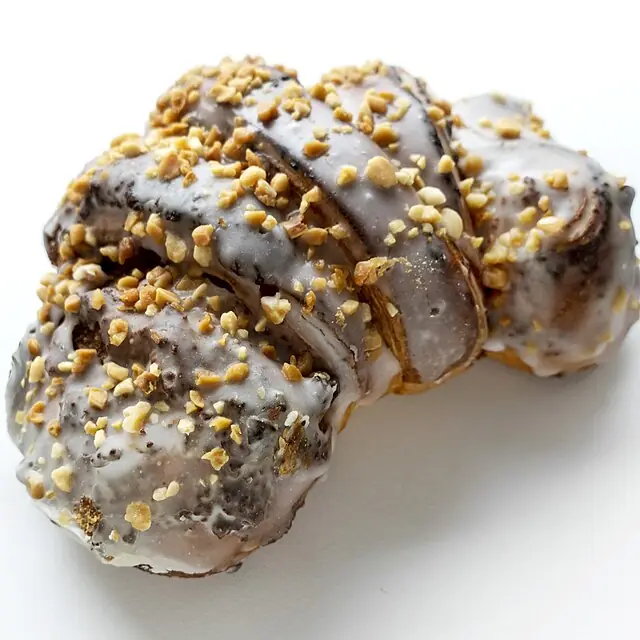
A semi-French pastry croissant filled with white poppy seed paste, walnuts, almond flavour, raisins and candied fruit, glazed with sugar and finished with crushed nuts.
Where: Cukiernia Kandulski, Fawor, Cukiernia Sowa
Price: 12-18 PLN per piece
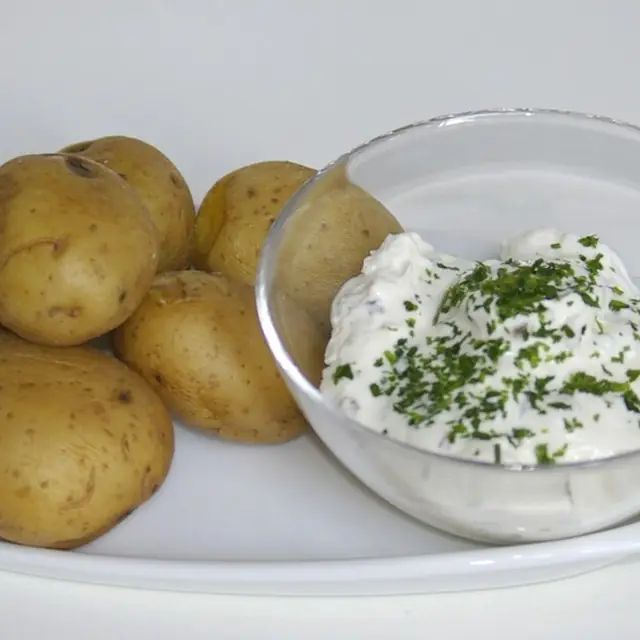
Boiled potatoes in their skins served with gzik, a Greater Poland curd cheese mixed with soured cream, onion, chives and parsley, eaten with a glass of buttermilk.
Where: Pyra Bar, Hyćka, Podkoziołek
Price: 15-25 PLN
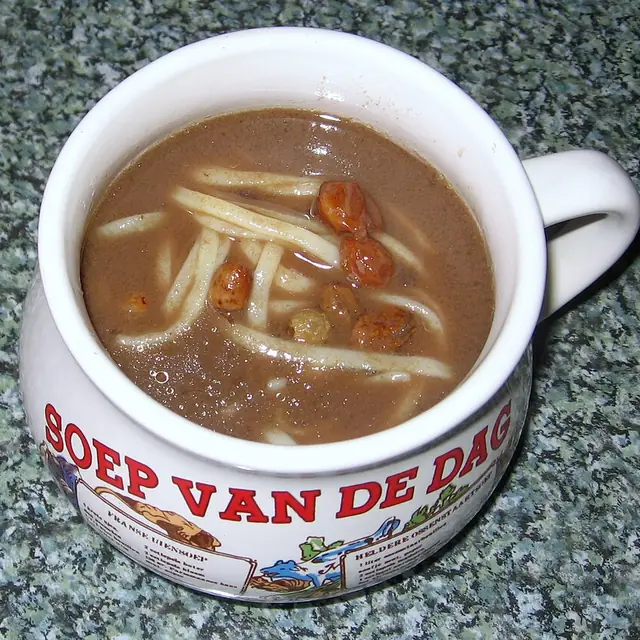
A Greater Poland soup of duck or goose broth thickened with the animal's blood, soured with vinegar and sweetened with dried fruit, served with kluski lane (egg noodles).
Where: Hyćka, Podkoziołek, Ratuszova
Price: 18-32 PLN
Greater Poland potato pancakes made from grated raw potato bound with egg and flour, fried in lard and served with mushroom sauce, soured cream or apple sauce.
Where: Podkoziołek, Hyćka, Pyra Bar
Price: 18-30 PLN
Slow-roast Greater Poland duck served with modra kapusta (braised red cabbage with apples and cloves) and either pyzy (steamed yeast dumplings) or pyry (potatoes).
Where: Modra Kuchnia, Ratuszova, Brovaria
Price: 55-90 PLN
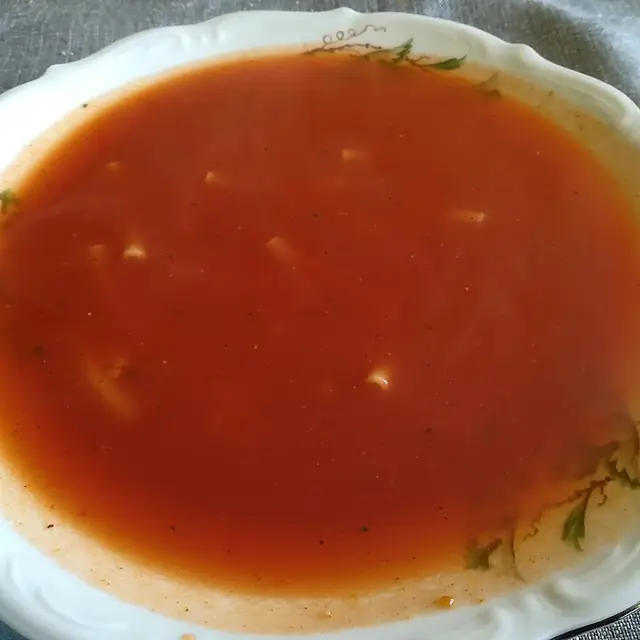
A Polish tomato soup made from fresh summer tomatoes or tomato passata, simmered with a meat or vegetable broth and finished with rice, makaron or kluski lane.
Where: Bar Mleczny Pod Arkadami, Pyra Bar
Price: 10-22 PLN
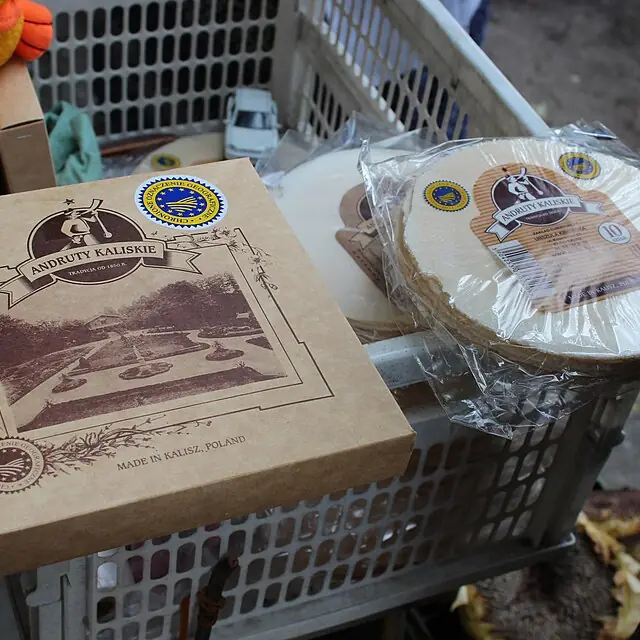
Thin round Greater Poland sugar wafers baked between hot iron plates, sweet and snap-crisp, eaten with coffee at every Poznań cake counter. The closest cousin to the kürtős and Italian pizzelle.
Where: Cukiernia Kandulski, Cukiernia Sowa, Cukiernia Pawlova
Price: 5-12 PLN per pack
Greater Poland grey dumplings made from a mix of raw grated potato and boiled mashed potato, finished with cracklings and onion. Heavier and chewier than other Polish dumplings.
Where: Modra Kuchnia, Hyćka, Podkoziołek
Price: 15-25 PLN
Greater Poland fried cheese: aged farmer's cheese melted slowly with butter, caraway and a pinch of soda until smooth, then poured into a dish and chilled to slice and spread on rye bread.
Where: Rynek Jeżycki, Food Hall Stary Browar, Podkoziołek
Price: 15-30 PLN per portion
Polish chicken broth in the Greater Poland style: long-simmered with chicken, vegetables and a roasted onion, finished with kluski lane (egg drop noodles) or thin makaron.
Where: Bar Mleczny Pod Arkadami, Ratuszova
Price: 12-22 PLN
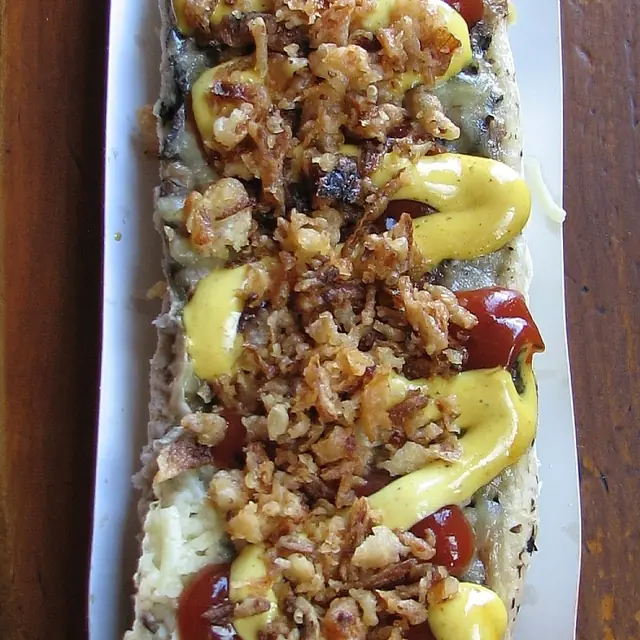
Polish open-faced toasted baguette topped with sauteed mushrooms, melted cheese and a drizzle of ketchup or mayonnaise. Poznań street-food canon from the 1970s socialist era.
Where: Bufet Truck Zapiekanki, Pyra Bar
Price: 12-22 PLN
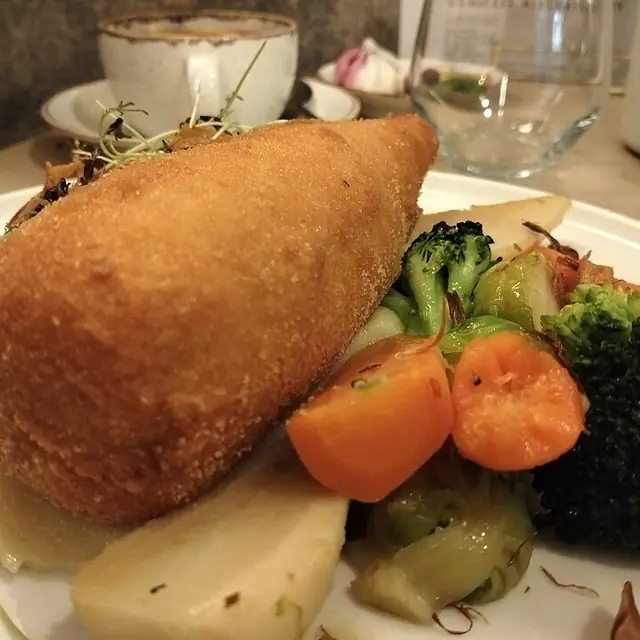
Polish breaded chicken roulade stuffed with garlic-parsley butter that bursts when cut. The Polish reading of Kiev cutlet, central to socialist-era restaurant menus and Sunday lunch.
Where: Ratuszova, Modra Kuchnia, Brovaria
Price: 35-65 PLN
Rogal świętomarciński
A semi-French pastry croissant filled with white poppy seed paste, walnuts, almond flavour, raisins and candied fruit, glazed with sugar and finished with crushed nuts.
History: Baked in Poznań since at least the 1860s, the rogal świętomarciński became the city's defining sweet symbol around the feast of St. Martin on 11 November. In 2008 the European Union entered the name on its Protected Geographical Indication register, meaning only pastries baked in a specific way in Greater Poland can use it. The Cech Cukierników i Piekarzy w Poznaniu certifies producers each year and the city eats between 250 and 400 tonnes annually.
Where to try it: Cukiernia Kandulski, Fawor, Cukiernia Sowa
Watch out for: Gluten, Nuts, Eggs, Dairy
Pyry z gzikiem
Boiled potatoes in their skins served with gzik, a Greater Poland curd cheese mixed with soured cream, onion, chives and parsley, eaten with a glass of buttermilk.
History: Pyry is the Greater Poland dialect word for potatoes; in Poznań it carries enough cultural weight that 'pyrlandia' is a colloquial name for the city itself. Gzik is the regional curd-cheese preparation, related to but distinct from the eastern-Polish twaróg. The dish is the canonical Greater Poland everyday lunch, served in milk bars, regional bistros and at Pyra Bar at fast-casual prices. The combination predates the partitions and is the city's clearest culinary link to its peasant Piast past.
Where to try it: Pyra Bar, Hyćka, Podkoziołek
Watch out for: Dairy
Czernina
A Greater Poland soup of duck or goose broth thickened with the animal's blood, soured with vinegar and sweetened with dried fruit, served with kluski lane (egg noodles).
History: Czernina is the most Wielkopolska of all dishes and the most polarising of all Polish soups. The dish dates to at least the 17th century, when blood-thickened soups were common across Slavic Europe, and survived in Greater Poland after they faded elsewhere. The sweet-sour balance from vinegar and dried plums or pears distinguishes the Poznań version. In folk tradition, a serving of czernina was the signal a suitor's marriage proposal had been declined.
Where to try it: Hyćka, Podkoziołek, Ratuszova
Watch out for: Gluten, Eggs
Plendze
Greater Poland potato pancakes made from grated raw potato bound with egg and flour, fried in lard and served with mushroom sauce, soured cream or apple sauce.
History: Plendze are the Greater Poland answer to the eastern placki ziemniaczane; the dialect word reflects the German-influenced Prussian-partition vocabulary that survived in Poznań kitchens. The dish is plainer than the eastern versions, focused on the texture of the grated potato, with mushroom sauce as the canonical accompaniment. Every regional Wielkopolska room in the city lists plendze alongside pyry z gzikiem as the two everyday plates.
Where to try it: Podkoziołek, Hyćka, Pyra Bar
Watch out for: Gluten, Eggs
Kaczka z modrą kapustą
Slow-roast Greater Poland duck served with modra kapusta (braised red cabbage with apples and cloves) and either pyzy (steamed yeast dumplings) or pyry (potatoes).
History: Greater Poland's duck dish gives Modra Kuchnia in Jeżyce its name; modra kapusta is the dialect word for red cabbage, and the duck-and-red-cabbage combination is the Sunday-lunch classic of the Wielkopolska canon. The duck is typically slow-roast for two to three hours and finished with stewed apples. The dish anchors menus at Ratuszova, Modra Kuchnia and the regional bistros around Stary Rynek.
Where to try it: Modra Kuchnia, Ratuszova, Brovaria
Watch out for: Gluten
Pomidorówka
A Polish tomato soup made from fresh summer tomatoes or tomato passata, simmered with a meat or vegetable broth and finished with rice, makaron or kluski lane.
History: Pomidorówka is one of the two great Polish soups (the other being rosół, chicken broth), and Wielkopolska's August tomato harvest gives it its peak season in Poznań. The Greater Poland version is typically thickened with rice rather than makaron and finished with a swirl of soured cream. Pomidorówka appears as the daily zupa on milk-bar boards and on bistro chalkboards from late July through September.
Where to try it: Bar Mleczny Pod Arkadami, Pyra Bar
Watch out for: Gluten, Eggs, Dairy
Andruty kaliskie
Thin round Greater Poland sugar wafers baked between hot iron plates, sweet and snap-crisp, eaten with coffee at every Poznań cake counter. The closest cousin to the kürtős and Italian pizzelle.
History: The andruty kaliskie tradition is documented in Greater Poland from at least 1873 in Kalisz, the regional town 130km south of Poznań. The European Union granted the wafers Protected Geographical Indication status in 2009 under the same scheme that protects rogal świętomarciński. The thin sugar-wafer format crossed into Poznań cake counters by the late 19th century and is now sold at Cukiernia Kandulski and Cukiernia Sowa alongside the croissants.
Where to try it: Cukiernia Kandulski, Cukiernia Sowa, Cukiernia Pawlova
Watch out for: Gluten, Eggs, Dairy
Szare kluski
Greater Poland grey dumplings made from a mix of raw grated potato and boiled mashed potato, finished with cracklings and onion. Heavier and chewier than other Polish dumplings.
History: Szare kluski (literally 'grey dumplings') take their name from the slightly grey colour of the raw-potato starch. The dialect dish belongs to the Wielkopolska peasant table, eaten across the Poznań countryside since the 19th century when potatoes settled into the regional staple. They appear on Modra Kuchnia and Hyćka chalkboards as the regional comfort food, often served alongside duck or kotlet schabowy with red cabbage.
Where to try it: Modra Kuchnia, Hyćka, Podkoziołek
Watch out for: Gluten, Eggs
Ser smażony wielkopolski
Greater Poland fried cheese: aged farmer's cheese melted slowly with butter, caraway and a pinch of soda until smooth, then poured into a dish and chilled to slice and spread on rye bread.
History: Ser smażony is a peasant cheese-preservation technique from Greater Poland that pre-dates refrigeration: aged cheese curd was melted with butter to extend shelf life into the cold months. The Poznań version carries Protected Geographical Indication application in the regional rural-products scheme. It is still made in farmhouses around the Wielkopolska countryside and sold at Rynek Jeżycki and the Stary Browar food hall. Eaten on rye bread with a dab of mustard.
Where to try it: Rynek Jeżycki, Food Hall Stary Browar, Podkoziołek
Watch out for: Dairy, Eggs
Rosół wielkopolski
Polish chicken broth in the Greater Poland style: long-simmered with chicken, vegetables and a roasted onion, finished with kluski lane (egg drop noodles) or thin makaron.
History: Rosół is the canonical Polish Sunday lunch first course and the broth that anchors every Polish wedding menu. The Greater Poland version uses a free-range or 'wiejska' farm chicken and finishes with hand-poured kluski lane. The dish is the second great Polish soup tradition (the other being zupa pomidorowa), and Poznań milk bars pour it daily under the noon zupa label. The roasted onion is the Wielkopolska signature, deepening colour and flavour.
Where to try it: Bar Mleczny Pod Arkadami, Ratuszova
Watch out for: Gluten, Eggs
Zapiekanka
Polish open-faced toasted baguette topped with sauteed mushrooms, melted cheese and a drizzle of ketchup or mayonnaise. Poznań street-food canon from the 1970s socialist era.
History: Zapiekanka was invented in 1970s socialist Poland as a cheap, filling lunch made from staples: a halved baguette, fried mushrooms, cheese and ketchup. It became the canonical Polish street food of the 1980s. Bufet Truck Zapiekanki on Plac Wolności is the city's named operator; the format also lives at every Stary Rynek night kiosk and the Poznań version comes loaded compared with the original. A late-night essential.
Where to try it: Bufet Truck Zapiekanki, Pyra Bar
Watch out for: Gluten, Dairy
Kotlet de volaille
Polish breaded chicken roulade stuffed with garlic-parsley butter that bursts when cut. The Polish reading of Kiev cutlet, central to socialist-era restaurant menus and Sunday lunch.
History: Kotlet de volaille entered Polish kitchens through 19th-century French haute cuisine influence at noble courts. The Polish name (literally 'chicken cutlet') stuck while the technique remained the Kiev-style stuffed roulade. Post-1945 socialist Poland made it a permanent fixture on restaurant cards, including at Poznań's Stary Rynek bistros. Ratuszova and Modra Kuchnia plate the canonical version with mashed potato and beetroot salad.
Where to try it: Ratuszova, Modra Kuchnia, Brovaria
Watch out for: Gluten, Eggs, Dairy