
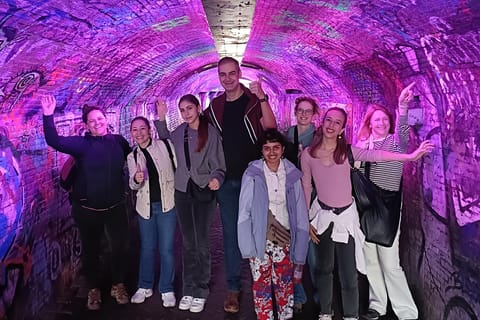
The plates that define Utrecht: what they are, where they came from, and where to eat the canonical version.
Signature dishes
-
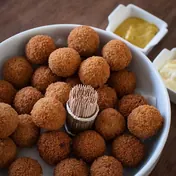
Bitterballen ★ 4.8
The Dutch deep-fried borrel snack: a crispy breadcrumbed ball with a molten ragout filling of beef or veal. Served hot with Dutch mustard at Utrecht's brown cafes.
Where to try it: Kafe Belgie, Ledig Erf, Stadsbrouwerij Utrechts Bier, Belgisch Biercafe Olivier, Biologische Boerenmarkt Vredenburg
Price: €4-€8 per portion
Bitterballen developed from the Dutch kroket in the late 19th century as a round portable version suited to standing borrel culture. The name references the bittergarnituur of drinks-side snacks served alongside Dutch jenever and beer. Utrecht's snack bars, brown cafes and werfkelders have served bitterballen continuously since the early 20th century; Kafe Belgie is the canonical late-night venue.
Watch out for: Gluten, Dairy, Egg
-
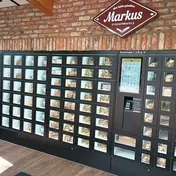
Stroopwafel ★ 4.7
Two thin waffle discs sandwiched with a caramelised sugar syrup filling. Held over a hot coffee cup so the steam softens the filling before eating.
Where to try it: Biologische Boerenmarkt Vredenburg, Twijnstraat Organic Market
Price: €1.50-€3 per wafel
The stroopwafel was developed by Gerard Kamphuisen, a baker in Gouda, in approximately 1810. A cheaper alternative to full waffles using leftover breadcrumbs with syrup, it spread across Dutch market towns and became a national biscuit. Utrecht's Boerenmarkt bakers produce fresh stroopwafel to order on cast-iron irons; the fresh version is fundamentally different from the packaged product.
Watch out for: Gluten, Dairy, Egg
-
Hollandse Nieuwe (Fresh Herring) ★ 4.6
Raw Dutch new herring held by the tail and eaten in one bite, or chopped and served with raw onion and pickles. The first catch of the season is a national event.
Where to try it: Boerenmarkt Snack Stalls, Biologische Boerenmarkt Vredenburg
Price: €3-€5 per haring
Dutch herring culture is medieval in origin; the Maatjesharing salt-curing technique was refined in the 14th century. The Hollandse Nieuwe season is declared annually when the fat content of the North Sea herring reaches 16 percent, usually late May or early June. Utrecht's Vismarkt sold fresh haring continuously from the medieval period; the stall tradition persists today.
Watch out for: Fish
Book food experiences in Utrecht

-
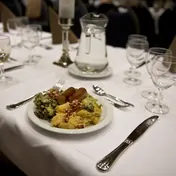
Stamppot ★ 4.5
Dutch mashed potato combined with a cooked vegetable: boerenkool (curly kale), hutspot (carrot and onion) or zuurkool (sauerkraut). Served with rookworst smoked sausage.
Where to try it: Ledig Erf, Belgisch Biercafe Olivier, Stadsbrouwerij Utrechts Bier
Price: €14-€18
Stamppot is Holland's defining cold-weather dish. Hutspot is said to date to the 1574 Siege of Leiden, though the present form developed in the 17th century. Boerenkool met worst became the standard winter dish across the Dutch working class by the 19th century. Utrecht brown cafes and traditional Dutch restaurants serve stamppot as a seasonal menu item from October through March.
Watch out for: Dairy
-
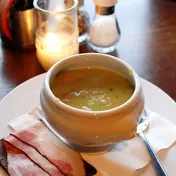
Erwtensoep (Dutch Split Pea Soup) ★ 4.5
Thick green split pea soup with rookworst, celery root and celeriac. Traditional Dutch winter food; must be thick enough to hold a spoon upright.
Where to try it: Biologische Boerenmarkt Vredenburg, Ledig Erf, Stadsbrouwerij Utrechts Bier
Price: €8-€12
Erwtensoep has been Dutch winter food since the medieval period. The canonical preparation uses split green peas slow-cooked with pork, rookworst smoked sausage and celery root until the soup is almost stew-like in consistency. The Dutch say it must be thick enough to hold a spoon standing upright. Utrecht market stalls serve fresh erwtensoep from October.
Watch out for: Gluten if served with rye bread
-
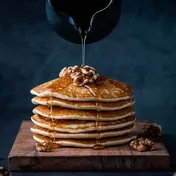
Dutch Pancakes (Pannekoeken) ★ 4.4
Large thin Dutch pancakes eaten sweet with stroop and powdered sugar, or savoury with ham and Dutch cheese. Larger and thinner than French crepes.
Where to try it: Rocking Chair, NODA Eetbar and Deli, De Bakkerswinkel
Price: €10-€16
Dutch pannekoeken have been eaten since at least the 17th century, depicted in Golden Age paintings. Unlike French crepes, Dutch pancakes are made with whole milk and often buckwheat; they are cooked one at a time in a large pan and eaten as a full plate-sized portion. Utrecht cafes and bakeries serve pannekoeken as a brunch and lunch staple.
Watch out for: Gluten, Dairy, Egg
-
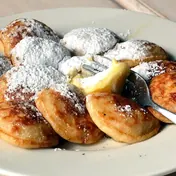
Poffertjes ★ 4.4
Mini Dutch yeast pancakes with buckwheat flour, cooked in a cast-iron poffertjesplaat pan. Served warm with a knob of butter and dusted with icing sugar.
Where to try it: Biologische Boerenmarkt Vredenburg, Boerenmarkt Snack Stalls
Price: €5-€8 per portion
Poffertjes have been a Dutch fair food since at least the 18th century. The batter uses yeast and buckwheat flour, cooked in small hemispherical moulds in a traditional cast-iron pan. Utrecht's Boerenmarkt and street stalls serve poffertjes as a Saturday morning staple; the street-stand version with fresh butter and icing sugar is the canonical preparation.
Watch out for: Gluten, Dairy, Egg
-
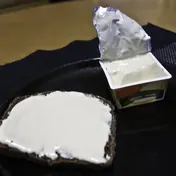
Dutch Cheese (Kaasplank) ★ 4.6
A Dutch cheese board centred on gouda in all ages: young (jong), medium-aged (belegen), old (oud) and extra-old (overjarig). Often paired with Dutch mustard and bread.
Where to try it: Biologische Boerenmarkt Vredenburg, De Zakkendrager, Maeve, Karel 5, VinVin
Price: €5-€18 per portion
Dutch cheese culture is medieval in origin; Gouda cheese was documented at the Gouda market from 1184. Utrecht is surrounded by Dutch dairy country and the city's Boerenmarkt features direct-from-farm cheese stalls with wheels of jong, belegen and oud gouda. Fine dining restaurants including Maeve and Karel 5 use Dutch aged cheeses in their tasting menus.
Watch out for: Dairy
-
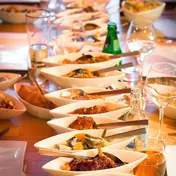
Rijsttafel ★ 4.5
A Dutch-Indonesian feast of 12 to 20 small dishes served with steamed rice. A legacy of the Dutch colonial period in Indonesia, now central to Utrecht multicultural dining.
Where to try it: Restaurant Blauw
Price: €20-€35 per person
Rijsttafel, literally rice table, was developed by Dutch colonial planters in the Dutch East Indies as a formal way to sample Indonesian regional dishes. After Indonesian independence in 1949, Dutch-Indonesian families repatriated to the Netherlands bringing the tradition. Utrecht's Lombok district, particularly Kanaalstraat, has the highest concentration of Indonesian restaurants in the city.
Watch out for: Gluten in soy sauce, Peanuts in satay sauce, Egg in some dishes
-
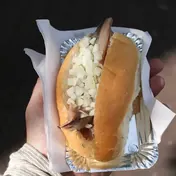
Broodje Haring ★ 4.5
Raw Dutch haring served in a soft white bread roll with raw onion and cornichons. The definitive Dutch street food lunch eaten at Utrecht's Vismarkt and Boerenmarkt stalls.
Where to try it: Biologische Boerenmarkt Vredenburg, Boerenmarkt Snack Stalls
Price: €4-€6
The broodje haring, or haring in a white roll, became the standard Dutch street lunch format in the 20th century, adapting the traditional raw-haring-with-onion eating custom into a portable meal. Utrecht's Vismarkt has sold broodje haring from its stalls for decades; the format is unchanged and the best versions are made with Hollandse Nieuwe in season.
Watch out for: Fish, Gluten
-
Jenever (Dutch Gin) ★ 4.3
The original Dutch distilled grain spirit, aged in oak barrels. Oude jenever is malt-forward and complex; jonge jenever is drier and cleaner. The basis of the Dutch borrel.
Where to try it: Kafe Belgie, Ledig Erf
Price: €3-€5 per shot
Jenever is the ancestor of modern gin, developed in the Netherlands in the 17th century from distilled grain spirit flavoured with juniper. Oude jenever retains significant malt wine content and is aged in small oak barrels; jonge jenever is a 20th-century lighter style. Utrecht's brown cafes serve jenever as the centrepiece of the borrel, the Dutch informal drinks culture that defines the city's cafe life.
Watch out for: Gluten in some malted varieties
Signature Dishes in Utrecht, FAQ
What food is Utrecht known for?
Utrecht's signature dishes include Bitterballen, Stroopwafel, Hollandse Nieuwe (Fresh Herring), Stamppot, Erwtensoep (Dutch Split Pea Soup). See our signature dishes chapter for where to eat each.