
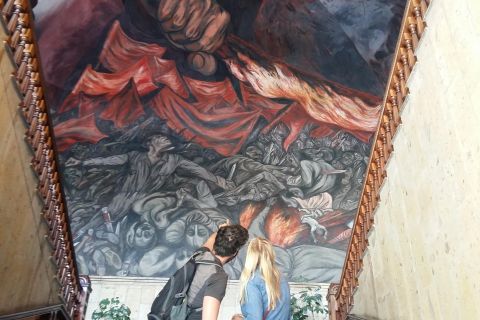
The plates that define Guadalajara: what they are, where they came from, and where to eat the canonical version.
Signature dishes
-
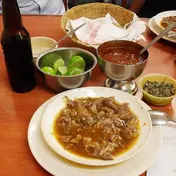
Birria ★ 4.9
Birria is the slow-cooked goat (or lamb) stew of Jalisco, marinated in adobo of dried chiles, garlic and spices, simmered in broth and served with consome and handmade tortillas.
Where to try it: Birrieria Las 9 Esquinas, Birrieria El Chololo, Casa Fuerte, El Parian
Price: $120 to $220 MXN per plate
Birria originated in Jalisco, where the term was first used in the 19th century for meats cooked in a pit or earth oven. Cuban scholar Felix Ramos y Duarte documented the term in 1898 as goat barbacoa, and historian Leovigildo Islas Escarcega confirmed its Jaliscan origin in 1945. The Nueve Esquinas plaza area of Centro Historico has been the canonical Guadalajara birria district for generations; Birrieria Las 9 Esquinas joined the row in 1986. In 1950 Guadalupe Zarate introduced beef birria with consome in Tijuana, and the quesabirria fusion exploded in North America in the 2010s.
Watch out for: Wheat (tortilla)
-
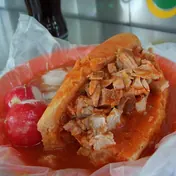
Torta ahogada ★ 4.9
Torta ahogada is the Guadalajara sandwich, a birote-salado roll stuffed with pulled pork carnitas, drowned in fiery chile-de-arbol salsa or milder tomato salsa, topped with onions, radish and lime.
Where to try it: Tortas Ahogadas Don Jose, Tortas Ahogadas El Principe Heredero, Las Ahogadas, Tortas Tono
Price: $50 to $100 MXN
Torta ahogada was invented in Guadalajara according to local lore when street vendor De La Torre at Tortas Ahogadas El Guerito accidentally dropped a sandwich into salsa. The birote salado bread is the structural key: a thick-crusted Mexican sourdough that holds the sauce without crumbling. The bread itself traces to French sergeant Camille Perrault in 1864, with locals shortening Perrault to birote. The canonical drowned-pork sandwich is now served at Tortas Ahogadas Don Jose on Calle Mexicaltzingo, El Principe Heredero and Las Ahogadas on Calzada Independencia.
Watch out for: Wheat (birote)
-
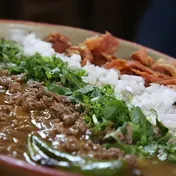
Carne en su jugo ★ 4.9
Carne en su jugo is the Guadalajara steamed-beef soup in its own broth, finely chopped beef with bacon, frijoles charros, onion, cilantro and chile in a clear consome served with handmade tortillas.
Where to try it: Karne Garibaldi, La Chata
Price: $160 to $240 MXN per bowl
Carne en su jugo was popularised by Dona Jita and Don Nestor when they opened Karne Garibaldi on the corner of Garibaldi and Jose Clemente Orozco in Santa Teresita in 1970. The dish is finely chopped beef cooked in its own juices with bacon, then served in a clear meat broth with frijoles charros (bean stew with bacon), chopped onion and cilantro. Karne Garibaldi later earned a Guinness World Record for fastest restaurant service. The dish is now ubiquitous across Guadalajara fondas.
Watch out for: Wheat (tortilla)
Book food experiences in Guadalajara


-
Pozole jalisciense ★ 4.8
Pozole jalisciense is the Jalisco hominy stew with chicken or pork in a clear broth (pozole blanco) or red chile broth (pozole rojo), topped with shredded lettuce, radish, onion, oregano and lime.
Where to try it: La Chata, Fonda Dona Gabina Escolastica, Casa Bariachi, Fonda del Recuerdo
Price: $140 to $220 MXN per bowl
Pozole is a pre-Hispanic stew of hominy and meat documented across central Mexico, with the Jalisco style (pozole jalisciense) running either blanco (clear) or rojo (red, with ancho and guajillo chiles). The dish is traditionally eaten on Mexican Independence Day (September 16), Christmas Eve (December 24) and during Day of the Dead. Tapatio fondas like La Chata on Avenida Corona have served the canonical version since 1942. The toppings (lettuce, radish, onion, oregano, lime, tostadas) are non-negotiable.
Watch out for: Wheat (tostada)
-
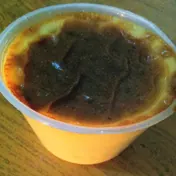
Jericalla ★ 4.7
Jericalla is the Guadalajara egg-and-milk custard dessert with a burnt-caramel top, the Tapatio answer to creme brulee, traditionally made with eggs, milk, sugar, cinnamon and vanilla.
Where to try it: Jericallas Mercado Corona, La Chata, Cafe Madrid
Price: $25 to $60 MXN per ramekin
Jericalla is a Guadalajara invention attributed to a 17th-century Spanish nun at the Hospicio Cabanas orphanage, who developed it as a nutritious dessert for malnourished children. The name derives from the Spanish region of Jerica in Castellon. The dish is custard set in individual ramekins, then torched on top for the caramelised crust. Mercado Corona and Mercado San Juan de Dios stalls have served the canonical version for decades; modern Tapatio bakeries and dessert counters also produce it daily.
Watch out for: Eggs, Dairy
-
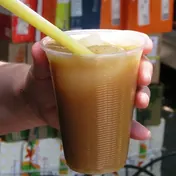
Tejuino ★ 4.5
Tejuino is the Guadalajara fermented-corn-masa drink, a tangy slightly-sweet refresco served cold with lime sorbet (nieve de limon), lime juice and a generous pinch of salt over ice.
Where to try it: Tejuino Mercado San Juan, Tejuino Mercado Corona
Price: $15 to $30 MXN per cup
Tejuino is a pre-Hispanic Mesoamerican drink that was popularised in Jalisco over the colonial period. It is made by fermenting fresh corn masa (the same dough used for tortillas) with piloncillo (Mexican brown sugar) for 24 hours, then diluting with water and serving cold with lime juice, salt and a scoop of lime sorbet on top. The drink is a Tapatio summer staple sold from carts and stalls across the city; the Mercado San Juan de Dios and Mercado Corona stalls are the canonical addresses.
Watch out for: Corn
-
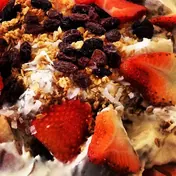
Bionico ★ 4.4
Bionico is the Guadalajara fruit cup, layered chopped tropical fruit with crema (Mexican cream), granola, raisins, honey and shredded coconut, the Tapatio breakfast-and-snack standard.
Price: $50 to $90 MXN per cup
Bionico was invented in Guadalajara in the 1990s as a healthier alternative to the heavily-sweetened fruit cups sold at street carts. The canonical version layers chopped banana, apple, papaya, melon and strawberry, then tops with Mexican crema (or sweetened condensed milk in some versions), granola, raisins, honey and shredded coconut. The dish has spread across Mexico but remains most associated with Tapatio street culture and the fruit-cart counters around Glorieta Chapalita and Avenida Chapultepec.
Watch out for: Dairy, Nuts (granola)
-
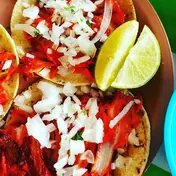
Tacos al pastor (Tapatio) ★ 4.7
Tacos al pastor are spit-roasted marinated pork tacos with pineapple, onion and cilantro on small corn tortillas, the Lebanese-Mexican fusion that grew from shawarma into a Tapatio late-night staple.
Where to try it: Tacos Providencia, Los Pinches Tacos
Price: $30 to $60 MXN per taco
Tacos al pastor descend from the shawarma tradition brought by Lebanese and Syrian immigrants to Mexico in the early 20th century. The Mexican adaptation replaced the lamb with achiote-marinated pork, kept the vertical trompo spit and added pineapple to the top of the cone. Mexico City claims invention in the 1960s, but Tapatio late-night taquerias developed their own style: smaller trompos, more chile-de-arbol salsa and a slice of pineapple per taco. Tacos Providencia and Los Pinches Tacos are the canonical Guadalajara late-night addresses.
Watch out for: Wheat (some tortillas)
-
Torta jalisciense ★ 4.4
Torta jalisciense is the Guadalajara baked sandwich, a birote-salado roll filled with beans, milanesa (breaded pork or chicken), avocado, tomato and pickled jalapenos, baked until crisp.
Where to try it: Cafe Madrid
Price: $60 to $120 MXN per sandwich
Torta jalisciense is a Guadalajara variation on the torta that emerged in the mid-20th century, distinguished from torta ahogada by being served dry and oven-baked rather than drowned. The bread is the same birote salado, the canonical Tapatio sourdough roll. Fillings are pressed and the whole sandwich is baked or griddled until crisp on the outside, soft inside. Cafe Madrid on Avenida Juarez and Los Bisquets Bisquets Obregon on Avenida Vallarta serve canonical versions.
Watch out for: Wheat, Eggs (milanesa)
-
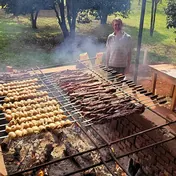
Pollo a las brasas ★ 4.4
Pollo a las brasas is the Guadalajara spit-roasted chicken, marinated in citrus and achiote, slow-roasted on a horizontal rotisserie and served with handmade tortillas and frijoles charros.
Price: $200 to $360 MXN per half chicken
Pollo a las brasas as a Tapatio specialty was popularised by Pollo Pepe, founded December 1979 by Jose Maria Hernandez Sedano and Lucy at Tepeyac and Nino Obrero in Chapalita, Zapopan, and grew into a Guadalajara chain. The chicken is marinated in orange juice, achiote, garlic and oregano, then spit-roasted on a horizontal wood-fired rotisserie. The dish is served with handmade flour tortillas, frijoles charros (beans with bacon and tomato) and grilled onions on the side.
Watch out for: Wheat (tortilla)
-
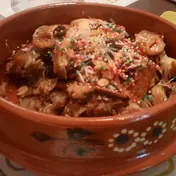
Capirotada ★ 4.3
Capirotada is the Mexican bread pudding eaten during Lent and Holy Week, with stale birote bread soaked in piloncillo-and-cinnamon syrup, layered with raisins, peanuts, queso fresco and topped with sprinkles.
Where to try it: La Chata, Fonda del Recuerdo, Fonda Dona Gabina Escolastica
Price: $70 to $130 MXN per serving
Capirotada has Spanish roots in a medieval dish called capirotada de capirote (the layered Lenten pudding from Castile), brought to Mexico in the 16th century by Spanish nuns. The Tapatio version uses stale birote bread, piloncillo syrup with cinnamon and cloves, raisins, peanuts and queso fresco, with multicoloured sugar sprinkles (grageas) on top. The dish is symbolic of the Passion of Christ in Catholic Mexico; each ingredient represents an element of the crucifixion. It appears across Guadalajara fondas through March and April.
Watch out for: Wheat, Dairy, Peanuts
-
Carnitas tapatio ★ 4.6
Carnitas tapatio is the Jalisco-style slow-cooked pork, shoulder cuts confit in lard with orange peel, milk and herbs until tender, then crisped and served with tortillas, salsa verde and onion.
Where to try it: El Carnal, Casa Fuerte, Los Famosos Equipales
Price: $220 to $360 MXN per kilo
Carnitas is a colonial Mexican dish with origins in Michoacan, where pork was confit in lard in massive copper cazos. The Jalisco-style carnitas tapatio adds milk and orange peel to the cooking liquid, softening the pork and adding a slightly sweet caramelised note. The technique is widely practiced across Guadalajara fondas; El Carnal in Tlaquepaque, Casa Fuerte and Los Famosos Equipales serve canonical Tapatio versions. The Sunday-lunch tradition is buying carnitas by the kilo from a local fonda and bringing home tortillas, salsa verde and chopped onion.
Watch out for: Wheat (tortilla)
Signature Dishes in Guadalajara, FAQ
What food is Guadalajara known for?
Guadalajara's signature dishes include Birria, Torta ahogada, Carne en su jugo, Pozole jalisciense, Jericalla. See our signature dishes chapter for where to eat each.