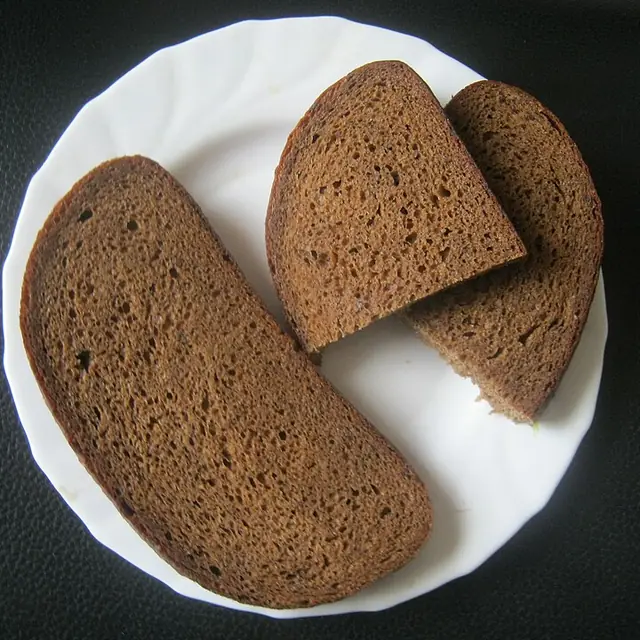

The dense, slow-fermented dark rye loaf that anchors every Latvian table, baked from a sourdough starter and sometimes flavoured with caraway, malt and honey.

Rupjmaize has been the staple bread of Latvian peasants since the medieval era, with families maintaining their own sourdough starters across generations. The dense rye loaves keep for two weeks without preservatives, a critical feature in pre-refrigeration Baltic agriculture. The Lāči bakery outside Riga revived traditional brick-oven rye baking and is still the country's anchor producer; Liepkalni runs a chain of city bakeries pushing the same heritage. A dense, sour rupjmaize is the test of any Latvian bakery's seriousness.

Where to eat Rupjmaize (Latvian dark rye bread) in Riga

4 editor picks for Rupjmaize (Latvian dark rye bread) in Riga, ranked by editorial score. All Riga signature dishes · Rupjmaize (Latvian dark rye bread) across every city.

Book food experiences in Riga

See all 797 food experiences in Riga

Make it at home

Serves 124 hrIntermediate

Ingredients

  • 500g dark rye flour
  • 150g whole-wheat flour
  • 300ml warm water
  • 150g active sourdough starter
  • 2 tablespoons caraway seeds
  • 2 tablespoons malt syrup
  • 1 tablespoon honey
  • 2 teaspoons sea salt

Method

  1. Combine the sourdough starter with warm water and malt syrup in a large bowl, whisking until smooth.
  2. Add both flours, caraway, honey and salt. Mix to a thick, sticky dough; rye dough never forms a smooth ball.
  3. Cover the bowl and let rest at room temperature for 4 to 6 hours until doubled and bubbly.
  4. Turn the dough into an oiled loaf tin, smoothing the top with a wet hand. Cover and let prove for 2 to 4 more hours.
  5. Preheat the oven to 220 degrees Celsius. Bake for 15 minutes, then reduce to 180 and bake for 50 to 60 more minutes until the loaf sounds hollow when tapped.
  6. Cool fully on a rack before slicing, ideally resting overnight. The loaf improves over two to three days.

Editor tip. Rye dough does not develop gluten the way wheat does. Don't try to knead it; the long fermentation does the work.

Common allergens: Gluten.