Signature dishes
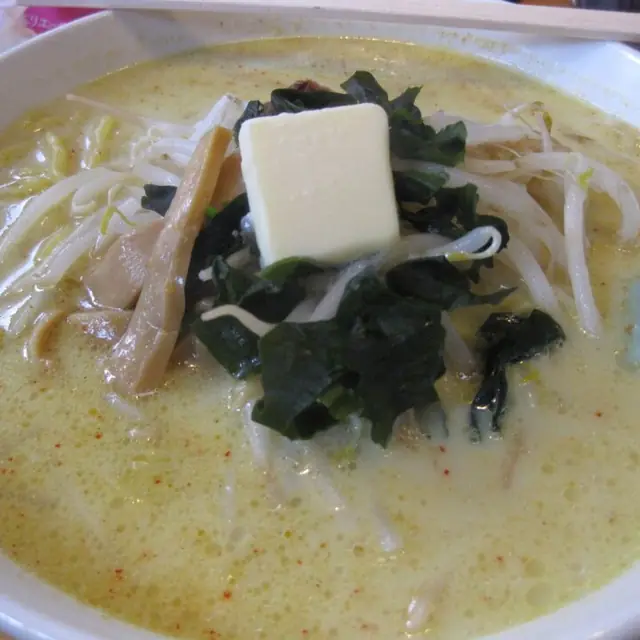
The defining bowl of Sapporo: rich red-miso broth, alkaline curly noodles, ground pork, bean sprouts, butter and sweet corn, sealed under a heat-stable lard cap.
Where: Aji no Sanpei, Menya Saimi, Sumire Nakanoshima Honten, Keyaki Susukino Honten, Ramen Shingen Minami 6-jo
Price: ¥850-1,400
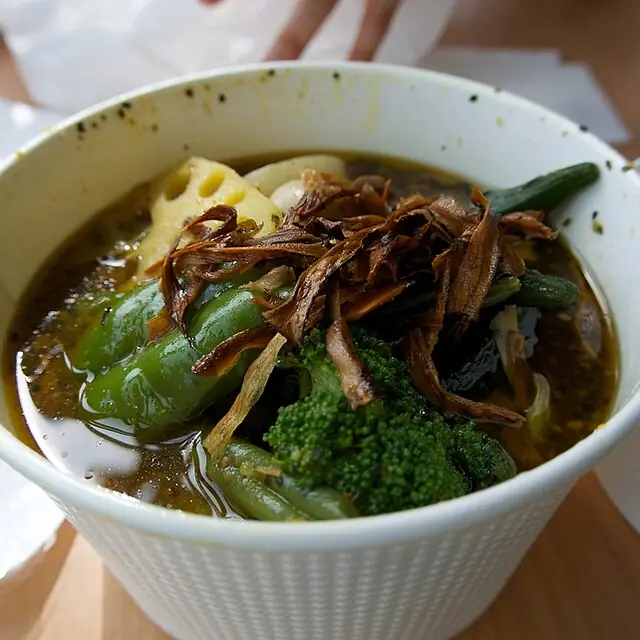
A light spice broth (not a thick curry) packed with flash-fried Hokkaido vegetables and a single large protein, served alongside rice in a two-bowl plating.
Where: Magic Spice Sapporo Honten, Soup Curry Suage+, Soup Curry Garaku Sapporo Honten, Picante Kita 13-jo Honten, Curry Shop S
Price: ¥1,200-2,000
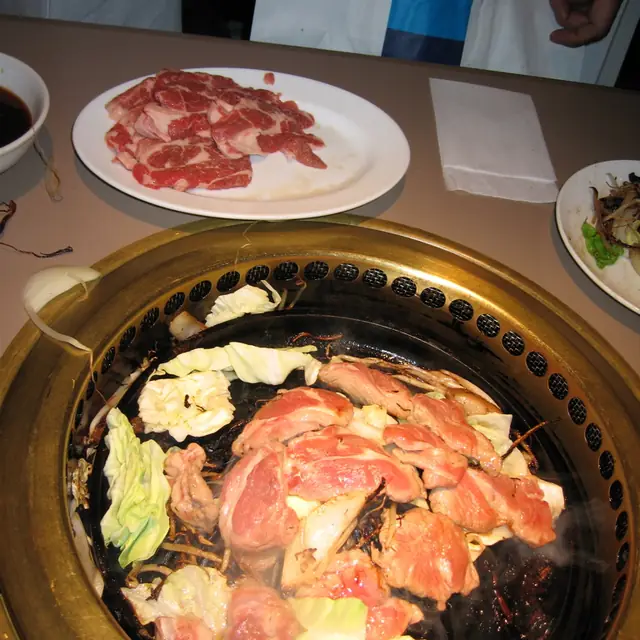
Hokkaido grilled lamb at a dome-shaped grill (the namesake helmet shape), served with raw vegetables and a soy-and-fruit dipping sauce, eaten Sapporo-style by dipping after grilling.
Where: Jingisukan Daruma Honten, Jingisukan Daruma 4-4 Ten, Matsuo Jingisukan Kita 19-jo Higashi, Sapporo Beer Garden
Price: ¥2,500-5,500
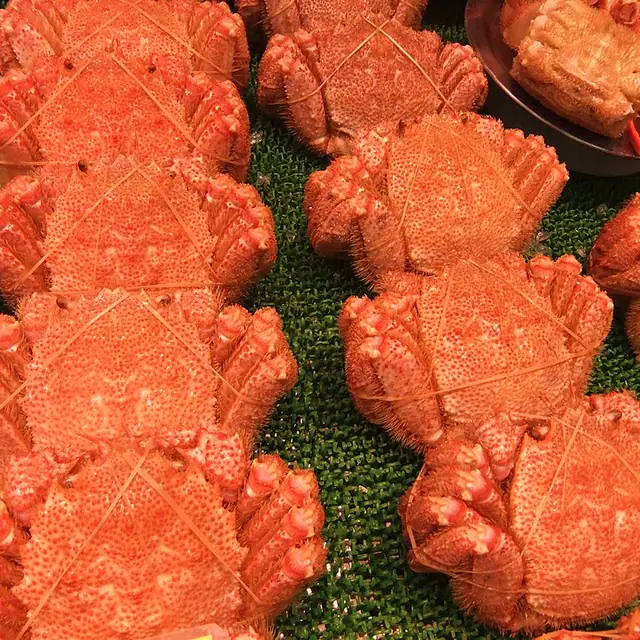
Hokkaido's premium hairy crab, steamed whole and served with the orange-coloured kani-miso (crab tomalley) inside the shell. The autumn-to-winter Sapporo signature.
Where: Sapporo Kani Honke Honten, Hokkaido Kani Shogun, Nijo Ichiba Ohiso
Price: ¥4,500-12,000 per crab
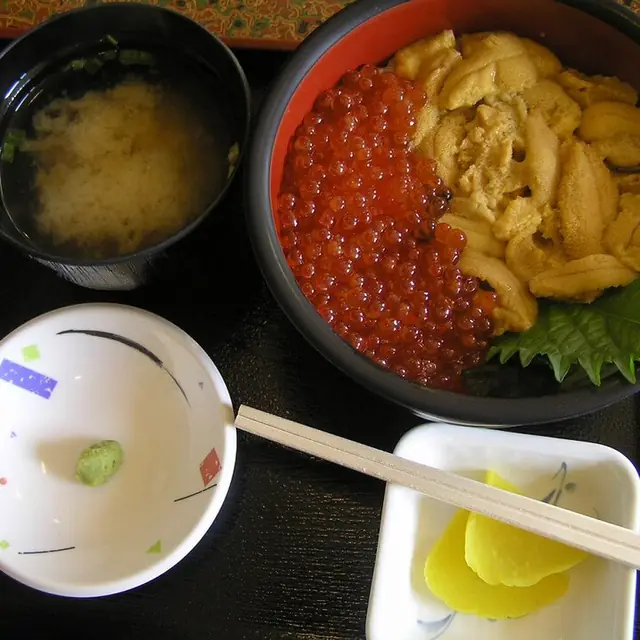
Hokkaido bafun sea urchin (from Rishiri and Rebun islands) heaped over sushi rice. The summer signature of Sapporo's market shops; June through August is the season.
Where: Nijo Ichiba Ohiso, Sushi Miyakawa, Sushiya no Saito, Sushi Hidetaka
Price: ¥3,500-9,500
Hokkaido's take on karaage. Bone-in chicken marinated overnight in garlic, soy, ginger and a touch of sesame oil, then double-fried for a crisp shell and juicy interior.
Where: Sapporo Zangi Honpo, Chinese Ryouri Hotei Honten, Zangi Ichiban
Price: ¥700-1,400
A loaf of soft bread baked around a tube of chikuwa fish cake stuffed with tuna-mayo salad and topped with more mayo. The Sapporo bakery icon, invented 1983 at Donguri.
Where: Donguri Odori, Donguri Susukino
Price: ¥220-280
Two crisp biscuits filled with butter cream, raisins and rum, made by Hokkaido confectioner Rokkatei since 1977. The Hokkaido souvenir buy and a Sapporo standard.
Where: Rokkatei Maruyama Shop, Ishiya Shop Sapporo Station, Daimaru Sapporo Depachika
Price: ¥120-180 per sandwich
A Sapporo morning bowl of vinegared rice topped with the day's Hokkaido seafood, typically a three-colour stack of king crab, sea urchin and salmon ikura.
Where: Nijo Ichiba Ohiso, Sapporo Kani Honke Honten, Hokkaido Kani Shogun
Price: ¥2,200-4,500
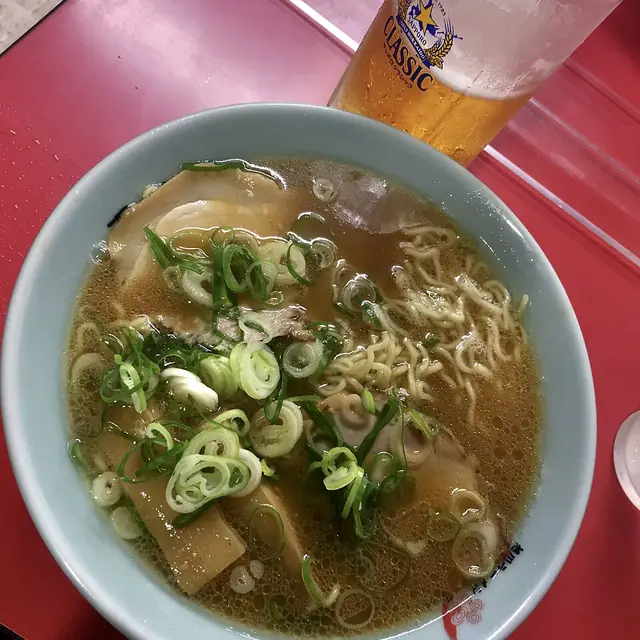
A Hokkaido shoyu (soy sauce) ramen variant from Asahikawa, the sister city 90 minutes east of Sapporo. Curly noodles in a dashi-and-soy broth with a lard layer to keep heat through winter.
Where: Aji no Sanpei, Menya Saimi
Price: ¥900-1,400
Hokkaido scallops from Funka Bay and the Okhotsk Sea, served raw as sashimi, grilled with butter at jingisukan rooms or sliced into kaisendon bowls.
Where: Sushi Saiko, Sushiya no Saito, Nijo Ichiba Ohiso, Sushi Miyakawa
Price: ¥600-1,500 per piece (nigiri)
A simple soft serve made from Hokkaido's high-fat dairy milk, the lightest dessert in any Sapporo summer. Sold at the Hokudai dairy stand, Rokkatei and almost every cafe.
Where: Hokkaido University Marche Cafe and Labo, Hokudai Soft Cream Stand, Rokkatei Maruyama Shop
Price: ¥350-600
Sapporo Miso Ramen
The defining bowl of Sapporo: rich red-miso broth, alkaline curly noodles, ground pork, bean sprouts, butter and sweet corn, sealed under a heat-stable lard cap.
History: Founder Morito Omiya created Sapporo miso ramen at Aji no Sanpei in 1955, blending three types of miso into a thick pork-bone broth that locals carried home through Sapporo's winters. The bowl spread first through Ramen Yokocho, the 1951-founded alley just south of Susukino, then nationally; today nearly every prefecture's ramen kitchens serve a Sapporo miso variant. Aji no Sanpei still pours the original recipe from a counter inside Daimaru Fujii Central on Minami 1-jo Nishi 3.
Where to try it: Aji no Sanpei, Menya Saimi, Sumire Nakanoshima Honten, Keyaki Susukino Honten, Ramen Shingen Minami 6-jo
Watch out for: Gluten, Soy, Pork
Sapporo Soup Curry
A light spice broth (not a thick curry) packed with flash-fried Hokkaido vegetables and a single large protein, served alongside rice in a two-bowl plating.
History: Sapporo soup curry traces to a mid-1970s kissaten called Ajanta that served a curry-spiced medicinal chicken broth. The dish was named soup curry in 1993 at Magic Spice, founded by Taizan Shimomura, who drew on Indonesian soto ayam and Pakistani spice traditions. By the late 2000s, the city had hundreds of dedicated soup curry shops and the dish was the second signature bowl of Sapporo (after miso ramen). Magic Spice, Suage and Garaku all keep the original spice profile and the su-age vegetable frying technique that distinguishes Sapporo-style from Tokyo's curry sauces.
Where to try it: Magic Spice Sapporo Honten, Soup Curry Suage+, Soup Curry Garaku Sapporo Honten, Picante Kita 13-jo Honten, Curry Shop S
Watch out for: Gluten (some shops), Dairy (some shops)
Jingisukan (Genghis Khan Lamb)
Hokkaido grilled lamb at a dome-shaped grill (the namesake helmet shape), served with raw vegetables and a soy-and-fruit dipping sauce, eaten Sapporo-style by dipping after grilling.
History: Jingisukan came to Hokkaido in the 1930s as the Japanese government tried to encourage wool production by promoting lamb-eating. By the 1950s, Sapporo Brewery was serving the dish at its company picnics. Daruma opened in 1954 with the Sapporo atozuke (dip-after-grill) style; Matsuo Jingisukan, founded 1956 in Takikawa, runs the marinade-first style. The Sapporo Beer Garden opened to the public 1976, marrying jingisukan with the brewery's draft as the city's defining group meal. The two styles still split Sapporo: Daruma's plain-cut atozuke versus Matsuo's pre-marinated aizome.
Where to try it: Jingisukan Daruma Honten, Jingisukan Daruma 4-4 Ten, Matsuo Jingisukan Kita 19-jo Higashi, Sapporo Beer Garden
Watch out for: Soy, Gluten (in tare sauce)
Kegani (Hokkaido Hairy Crab)
Hokkaido's premium hairy crab, steamed whole and served with the orange-coloured kani-miso (crab tomalley) inside the shell. The autumn-to-winter Sapporo signature.
History: Hokkaido hairy crab fisheries date to the late nineteenth century, but the dish entered Sapporo restaurants seriously in the 1960s as the city's crab houses grew around the Susukino entertainment district. Kani Honke opened its Honten in 1964; the seven-storey building became a tourist landmark in the 1970s. Today, kegani peaks September through November, with the densest tomalley in the autumn months; Kani Honke and Kani Shogun lead the Susukino crab kaiseki rooms.
Where to try it: Sapporo Kani Honke Honten, Hokkaido Kani Shogun, Nijo Ichiba Ohiso
Watch out for: Shellfish
Hokkaido Uni-Don (Sea Urchin Bowl)
Hokkaido bafun sea urchin (from Rishiri and Rebun islands) heaped over sushi rice. The summer signature of Sapporo's market shops; June through August is the season.
History: Hokkaido has fished sea urchin for over a century along its Rishiri and Rebun coastlines off the northern tip of the island. Sapporo's uni-don bowl rose as a market-shop format at Nijo Market and the Curb Market through the 1980s and 1990s; today the city's market kaisendon bowls stack uni, ikura and crab in three-colour configurations. Sushi Miyakawa and Sushiya no Saito use Rishiri bafun uni as the centrepiece of their summer omakase nigiri.
Where to try it: Nijo Ichiba Ohiso, Sushi Miyakawa, Sushiya no Saito, Sushi Hidetaka
Watch out for: Shellfish, Soy
Zangi (Hokkaido Fried Chicken)
Hokkaido's take on karaage. Bone-in chicken marinated overnight in garlic, soy, ginger and a touch of sesame oil, then double-fried for a crisp shell and juicy interior.
History: Zangi traces partly to Chinese karaage that arrived in Hokkaido through Chinese cooks after World War 2, and partly to a Kushiro chicken-restaurant menu (Toriyoshi, 1960) that codified the marinade. By the 1970s, zangi was the Hokkaido home-cooking standard and a Sapporo izakaya staple; today it competes with miso ramen for the Hokkaido household-food crown. Sapporo Zangi Honpo and Chinese Ryouri Hotei are the two reference shops, with Hotei's zangi-on-rice (zangi-don) the cheap-eat icon.
Where to try it: Sapporo Zangi Honpo, Chinese Ryouri Hotei Honten, Zangi Ichiban
Watch out for: Soy, Gluten, Egg
Chikuwa Pan (Fish-Cake Bread)
A loaf of soft bread baked around a tube of chikuwa fish cake stuffed with tuna-mayo salad and topped with more mayo. The Sapporo bakery icon, invented 1983 at Donguri.
History: Chikuwa pan was invented in 1983 by the founders of Donguri bakery on Odori, looking for a way to use chikuwa (a Japanese fish cake tube) in a bakery context. The bread became the city's signature bakery item within a decade; Donguri now sells around 2,300 a day across its nine Sapporo branches. The pan is also a souvenir export to Tokyo and Osaka through department-store food halls, although Sapporo's version stays the canonical bake.
Where to try it: Donguri Odori, Donguri Susukino
Watch out for: Gluten, Egg, Fish, Soy
Marusei Butter Sandwich
Two crisp biscuits filled with butter cream, raisins and rum, made by Hokkaido confectioner Rokkatei since 1977. The Hokkaido souvenir buy and a Sapporo standard.
History: Marusei butter sandwich was created in 1977 by Obihiro confectioner Rokkatei, named after its founder Masao Tanaka's nickname Marusei. The biscuit-and-cream combination became the canonical Hokkaido souvenir over the next decade; Rokkatei sells more than 60 million sandwiches a year. The Maruyama shop in Sapporo opened in the 1990s and runs a second-floor cafe alongside the take-home counter, the only Sapporo location where you can drink whisked matcha with the sandwich.
Where to try it: Rokkatei Maruyama Shop, Ishiya Shop Sapporo Station, Daimaru Sapporo Depachika
Watch out for: Gluten, Dairy, Egg
Hokkaido Kaisendon (Three-Colour Seafood Bowl)
A Sapporo morning bowl of vinegared rice topped with the day's Hokkaido seafood, typically a three-colour stack of king crab, sea urchin and salmon ikura.
History: Kaisendon (mixed seafood over rice) is a national Japanese format, but the Sapporo version emerged at Nijo Market and the Sapporo Curb Market in the 1980s as the markets' donburi shops codified a three-colour topping rule: king crab, sea urchin and salmon ikura. By the 1990s, sanshoku-don (three-colour) was the postcard order at every market shop; the 2010s saw the formats expand to four-colour and seven-colour configurations at Nijo Market's Ohiso shop and others. The bowl now defines Sapporo morning eating.
Where to try it: Nijo Ichiba Ohiso, Sapporo Kani Honke Honten, Hokkaido Kani Shogun
Watch out for: Shellfish, Soy
Asahikawa Shoyu Ramen
A Hokkaido shoyu (soy sauce) ramen variant from Asahikawa, the sister city 90 minutes east of Sapporo. Curly noodles in a dashi-and-soy broth with a lard layer to keep heat through winter.
History: Asahikawa shoyu ramen developed independently of Sapporo miso ramen, codified by Asahikawa's Ramen Aoba in 1947 with a double-soup of pork bone and seafood-stock dashi seasoned with soy. The bowl earned Asahikawa its place as Hokkaido's second ramen city by the 1980s. Sapporo's ramen counters now serve Asahikawa shoyu bowls alongside Sapporo miso, giving visitors the regional comparison without leaving the city; the Asahikawa bowl stands as the Hokkaido shoyu reference.
Where to try it: Aji no Sanpei, Menya Saimi
Watch out for: Gluten, Soy, Pork
Hokkaido Hotate (Scallop)
Hokkaido scallops from Funka Bay and the Okhotsk Sea, served raw as sashimi, grilled with butter at jingisukan rooms or sliced into kaisendon bowls.
History: Hokkaido has farmed scallops in Funka Bay since the 1930s and supplies more than 70 percent of Japan's commercial scallop catch. The shellfish became a Sapporo restaurant staple in the 1970s; the city's sushi counters use Hokkaido scallop as a benchmark nigiri. Sushi Saiko and Sushiya no Saito both feature hotate prominently in their autumn omakase; Sumire runs a scallop-miso ramen variant during winter.
Where to try it: Sushi Saiko, Sushiya no Saito, Nijo Ichiba Ohiso, Sushi Miyakawa
Watch out for: Shellfish, Soy
Hokkaido Soft Cream
A simple soft serve made from Hokkaido's high-fat dairy milk, the lightest dessert in any Sapporo summer. Sold at the Hokudai dairy stand, Rokkatei and almost every cafe.
History: Hokkaido developed its dairy industry in the Meiji era, with William S. Clark and Edwin Dun introducing American-style ranching to the new Sapporo settlement in 1876. By the post-war years, Hokkaido produced more than half of Japan's milk and a soft-serve culture emerged through campus dairies (Hokkaido University Marche), confectionery houses (Rokkatei) and roadside stops. The flavour now defines Hokkaido summer; the Hokudai Marche's Clark's Milk soft serve is the canonical version.
Where to try it: Hokkaido University Marche Cafe and Labo, Hokudai Soft Cream Stand, Rokkatei Maruyama Shop
Watch out for: Dairy