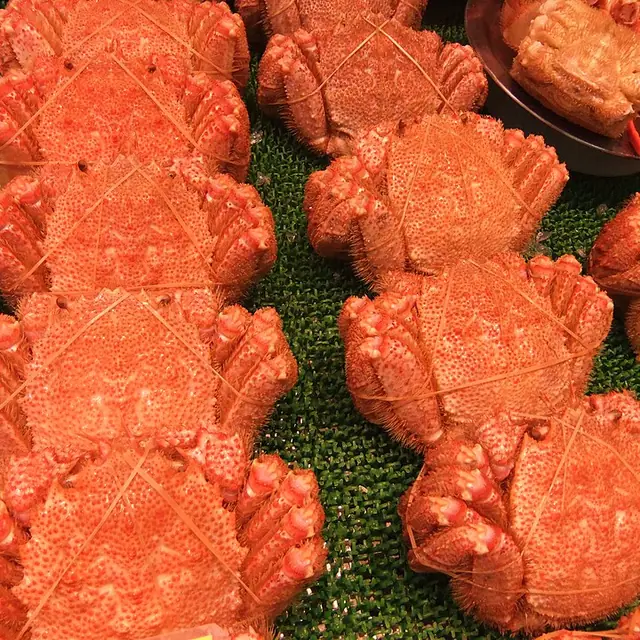
Hokkaido's premium hairy crab, steamed whole and served with the orange-coloured kani-miso (crab tomalley) inside the shell. The autumn-to-winter Sapporo signature.

Hokkaido hairy crab fisheries date to the late nineteenth century, but the dish entered Sapporo restaurants seriously in the 1960s as the city's crab houses grew around the Susukino entertainment district. Kani Honke opened its Honten in 1964; the seven-storey building became a tourist landmark in the 1970s. Today, kegani peaks September through November, with the densest tomalley in the autumn months; Kani Honke and Kani Shogun lead the Susukino crab kaiseki rooms.

Where to eat Kegani (Hokkaido Hairy Crab) in Sapporo

3 editor picks for Kegani (Hokkaido Hairy Crab) in Sapporo, ranked by editorial score. All Sapporo signature dishes · Kegani (Hokkaido Hairy Crab) across every city.

Book food experiences in Sapporo

See all 687 food experiences in Sapporo

Make it at home

Serves 235 minEasy

Ingredients

  • 1 whole live hairy crab (kegani), 500-700g
  • Sea salt (3 percent by water weight)
  • 1 small lemon, halved
  • Hokkaido sake to pour over (optional)

Method

  1. Bring a large pot of water to a rolling boil. Add salt at 3 percent by weight.
  2. Plunge the crab head-first into the boiling water; cook 15 minutes for a 500-600g crab, 18 minutes for 700g.
  3. Remove crab with tongs and rest belly-up for 5 minutes to redistribute juices.
  4. Flip the crab on its back; pry off the apron (the triangular flap on the belly).
  5. Lift the top shell off carefully; the orange tomalley (kani-miso) is inside.
  6. Use a small knife to break the body into halves and crack each leg with a crab cracker.
  7. Serve the crab on a plate alongside the tomalley in the shell, with lemon and a small drizzle of Hokkaido sake.

Editor tip. Don't overcook; hairy crab flesh dries out fast. The tomalley is the prize; spoon it onto small rice scoops.

Common allergens: Shellfish.