
How Sapporo came to eat the way it does: the people, migrations and accidents that shaped the plate.
Key eras
-
Pre-1869: Ainu food traditions
Before Meiji settlers arrived, the Sapporo plain was home to the Ainu, whose food traditions ran on salmon, deer, wild edible plants and a brewed millet drink called tonoto. Ainu cuisine remains a living tradition in eastern Hokkaido today, though most Sapporo restaurants treat it ceremonially rather than nightly.
-
1869-1900: Founding and the brewery era
Meiji-era settlers laid the grid of Sapporo in 1869 and founded what became Sapporo Brewery in 1876. Hokkaido Development Commission scientists like Edwin Dun and William S. Clark brought dairy farming, ranching, wheat and brewing to the new city, codifying the agriculture that still defines Hokkaido.
-
1955: Miso ramen invented at Aji no Sanpei
Founder Morito Omiya created the lard-capped miso ramen at Aji no Sanpei in 1955, blending a thick miso broth with the city's bitter winters in mind. The bowl spread first through Ramen Yokocho (an alley founded 1951 just south of Susukino), then nationally, and now defines Hokkaido ramen worldwide.
Taste it todaySapporo Miso Ramen -
1976: Sapporo Beer Garden opens to the public
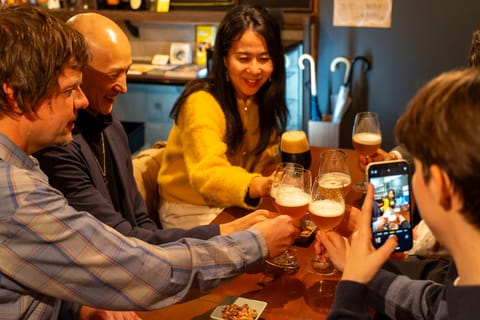
Sapporo Brewery turned its 1890 brick brewing complex into the Sapporo Beer Garden in 1976, an all-you-can-eat jingisukan hall paired with the brewery's draft beer. The marriage of Hokkaido lamb grilling and Sapporo lager became the city's defining group meal.
Taste it todayJingisukan (Genghis Khan Lamb) -
1993: Soup curry named at Magic Spice
Founder Taizan Shimomura coined the term soup curry at Magic Spice in 1993, riffing on Indonesian soto ayam with a chicken broth and 30-plus spices. By the late 2000s, soup curry was the city's second signature dish; today Sapporo counts more than 200 dedicated shops.
Taste it todaySapporo Soup Curry -
2017: Michelin Guide Hokkaido Special Edition
The Michelin Guide's first Hokkaido edition arrived in 2017, awarding Sushi Miyakawa three stars (the only sushi room in Hokkaido at that tier) and one star each to Sushi Zen, Saimi and a small group of Maruyama and Susukino rooms. Sapporo's fine-dining inventory has expanded steadily since.
Immigrant influences
- Honshu Japanese settlers (post-1869)
- Meiji-era settlers from across Honshu brought their regional dishes to Sapporo. Soba shops from Nagano, Sake breweries from Niigata and Tofu shops from Kyoto all took root within a generation, blending into a Hokkaido grammar that now stands distinct from any one Honshu prefecture.
- Ainu (pre-Meiji)
- The indigenous Ainu people maintain food traditions in northern and eastern Hokkaido, with salmon-and-vegetable simmered dishes (ohaw), millet brews and dried mountain plants.
- Chinese (post-1945)
- Chinese cooks who arrived in Hokkaido after World War 2 contributed the wok and the alkaline ramen noodle to the city.
- Indonesian and South Asian inspiration
- Soup curry's invention in 1993 at Magic Spice drew on Indonesian soto ayam and Pakistani spice traditions.
Signature innovations
- Sapporo miso ramen, invented 1955 at Aji no SanpeiTaste it todaySapporo Miso Ramen
- Soup curry, named 1993 at Magic Spice (Sapporo-style)Taste it todaySapporo Soup Curry
- Genghis Khan-style jingisukan, codified 1954 at Daruma in SusukinoTaste it todayJingisukan (Genghis Khan Lamb)
- Chikuwa pan (fish-cake bread), invented 1983 at Donguri OdoriTaste it todayChikuwa Pan (Fish-Cake Bread)
- Sapporo Brewery Beer Garden, 1976 (jingisukan plus draft)Taste it todayJingisukan (Genghis Khan Lamb)
Book food experiences in Sapporo