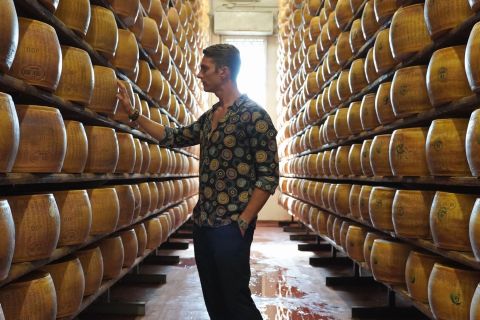
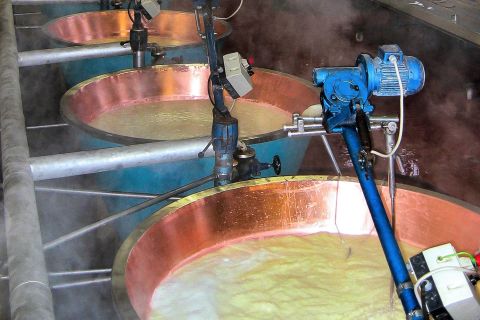
Sala Baganza and Felino hold Parma's salame country: the Felino museum, the wine museum in Sala's Rocca and trattorias at the edge of the ducal woods.
Tip: Walk the Boschi di Carrega between the two museums and finish with torta fritta and salame di Felino at I Pifferi.
Fontanellato circles its moated Rocca Sanvitale with porticoes and welcoming trattorias, the easiest castle-plus-lunch day out on Parma's western plain.
Tip: See Parmigianino's frescoed room in the Rocca, then lunch in the porticoed square; pair it with Soragna to fill the day.
Langhirano is where Prosciutto di Parma actually cures: a valley of curing houses on the Parma stream, with Torrechiara's castle guarding the road from Parma.
Tip: Tour a prosciuttificio in the morning, climb Torrechiara before lunch at the Taverna del Castello, and hit the Prosciutto Museum on the way out.
Colorno pairs the Reggia, its little Versailles north of Parma, with serious eating: Al Vedel, an inn since 1780, ages culatello under the village.
Tip: Visit the Reggia and its gardens, then book Al Vedel for lunch and ask to see the Podere Cadassa culatello cellars before coffee.
Polesine Zibello is culatello's homeland, 35 km from Parma on the Po: fog, curing cellars, the Culatello Museum and Massimo Spigaroli's starred farm court.
Tip: The fog is the terroir: winter visits show the Bassa as the salumi know it. Book Antica Corte Pallavicina or the Hosteria del Maiale ahead.
Busseto belongs to Giuseppe Verdi and the Bassa's tables: after the composer's theatre, the town near Parma's Po edge eats spalla cotta and culatello.
Tip: Do Verdi's birthplace at Roncole Verdi and the little opera house first; the salsamenterie around the piazza handle lunch honourably.