

How Reims came to eat the way it does: the people, migrations and accidents that shaped the plate.

Taste the history
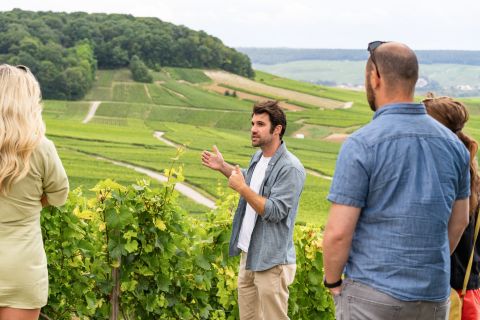
Small Group - Half Day Champagne Tour - Visit of 2 Small Producers/Growers
Key eras
-
The coronation city, 816 to 1825
From Louis the Pious in 816 to Charles X in 1825, the kings of France were crowned in Reims cathedral, thirty-three sovereigns in a little over a thousand years, and the city paid for the coronation banquet. Its aldermen presented pain d'épices to Louis XV at his coronation in 1722, and the biscuit makers Noël-Houzeau supplied the coronation of Louis XVI.
-
Pain d'épices and biscuits, 14th to 18th century
Reims bakers began spicing honey bread around the 14th century; the pain d'épices makers founded their guild on 2 August 1571 and Henri IV recognised it in 1596. In the 1690s Champenois bakers left a once-baked dough to dry in the cooling bread oven, the biscuit rose, and Noël-Houzeau, the firm now called Maison Fossier, was founded in 1756.
Taste it todayMaison Fossier -
The champagne houses, 1729 to 1876
Nicolas Ruinart founded the first established champagne house in Reims on 1 September 1729, after a 1728 edict allowed wine to travel in bottles. Clicquot followed in 1772 and Mumm in 1827; Barbe-Nicole Clicquot made the first known vintage in 1810 and the riddling table in 1816, and Pommery dug its cellars through Gallo-Roman chalk pits on the Saint-Nicaise hill.
Taste it todayChampagne -
War and the Halles du Boulingrin, 1914 to 2012
The First World War destroyed much of Reims, the old market on Place du Forum with it. A 1922 competition produced Émile Maigrot's concrete Halles du Boulingrin, built with Eugène Freyssinet and opened on 30 October 1929. Closed in 1988 and listed as a historic monument in 1990, the hall was restored and reopened in September 2012.
-
UNESCO and the champagne hill, 2015
On 4 July 2015 UNESCO inscribed the Champagne hillsides, houses and cellars on the World Heritage list, and the Saint-Nicaise hill in Reims is one of its three core sectors with the historic slopes near Hautvillers and the Avenue de Champagne in Épernay. The Reims houses export at least 80 million bottles a year.
Taste it todayChampagne
Immigrant influences
- Rhineland wine merchants
- The Mumm family, wine traders from Cologne, founded G.H. Mumm in Reims on 1 March 1827 and registered the Cordon Rouge name in 1876; the house was re-established in Reims in 1920.
- American donors
- American gifts, the Carnegie and Rockefeller foundations among them, helped pay for rebuilding Reims after the First World War, the reconstruction that also gave the city its Art Deco Halles du Boulingrin.
Signature innovations
- The riddling table, invented at Veuve Clicquot in Reims in 1816 to clear the sediment from champagneTaste it todayChampagne
- The first known vintage champagne, blended by Barbe-Nicole Clicquot from the 1810 harvest aloneTaste it todayChampagne
- Blended rosé champagne, first made by Clicquot in 1818 with red wine from its Bouzy vineyardsTaste it todayChampagne
- Brut champagne, created by Pommery for the British market in 1876 from the 1874 vintageTaste it todayChampagne
- The biscuit rose de Reims, baked twice since the 1690s and coloured pink with carmineTaste it todayBiscuit rose de Reims
Book food experiences in Reims

