Signature dishes
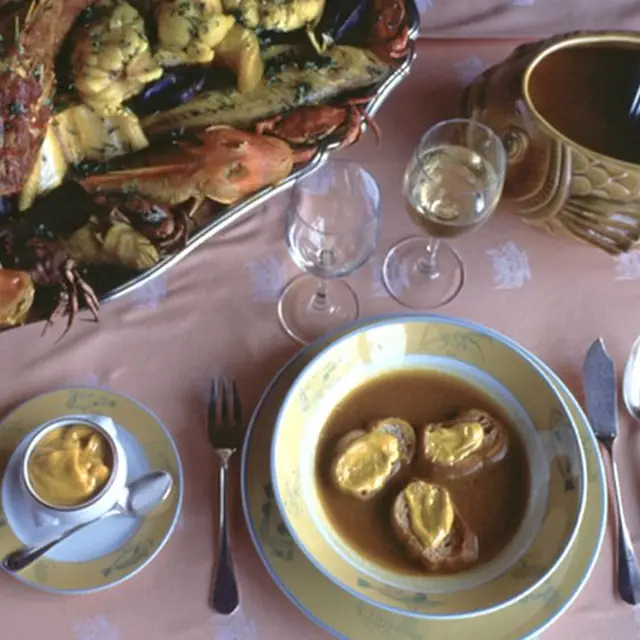
Bouillabaisse is a Provencal rock-fish stew of rascasse, galinette, conger and saint-pierre cooked in a saffron and fennel broth, served broth-first with croutons and rouille then the carved fish.
Where: Chez Fonfon, Chez Michel, Le Miramar, Chez Madie Les Galinettes
Price: €55-80 per person
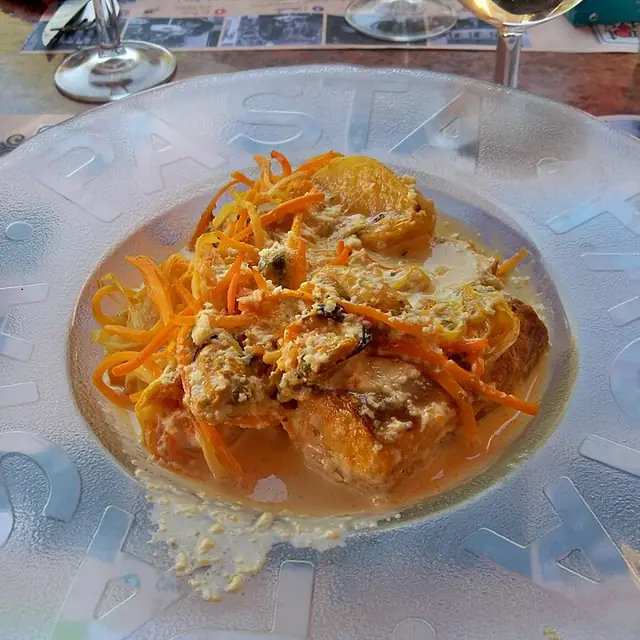
Bourride is the white-fleshed fish cousin of bouillabaisse, monkfish or sea bass poached in a broth bound with aioli into a creamy emulsion, served with garlic croutons and the same garlic mayonnaise on the side.
Where: Chez Fonfon, Chez Michel, Le Miramar
Price: €38-55
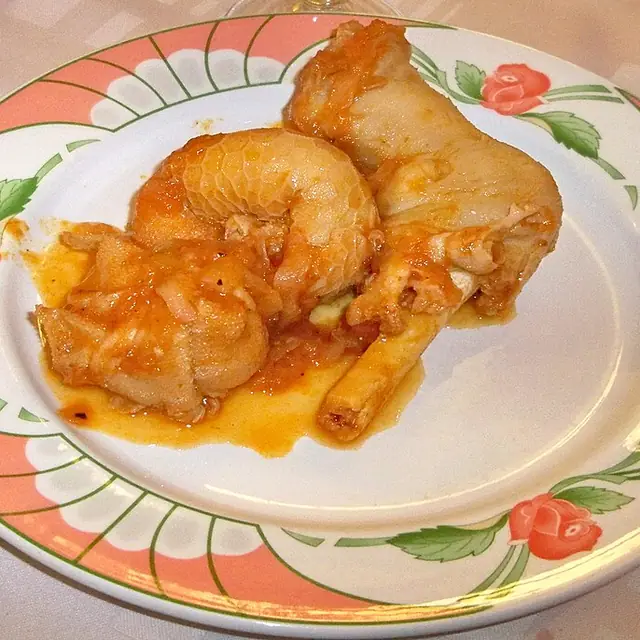
Pieds paquets is the Marseillais offal dish of lamb tripe rolled into small parcels stuffed with garlic, parsley and salt pork, simmered with sheep's trotters in a white-wine and tomato broth for four to six hours.
Where: Chez Madie Les Galinettes, Le Bouchon Provencal
Price: €22-32
The navette is a dry boat-shaped biscuit perfumed with orange-blossom water, baked without yeast in a wood-fired oven, the canonical Marseille souvenir biscuit from the Four des Navettes since 1781.
Where: Four des Navettes, La Cure Gourmande
Price: €5-12 per bag
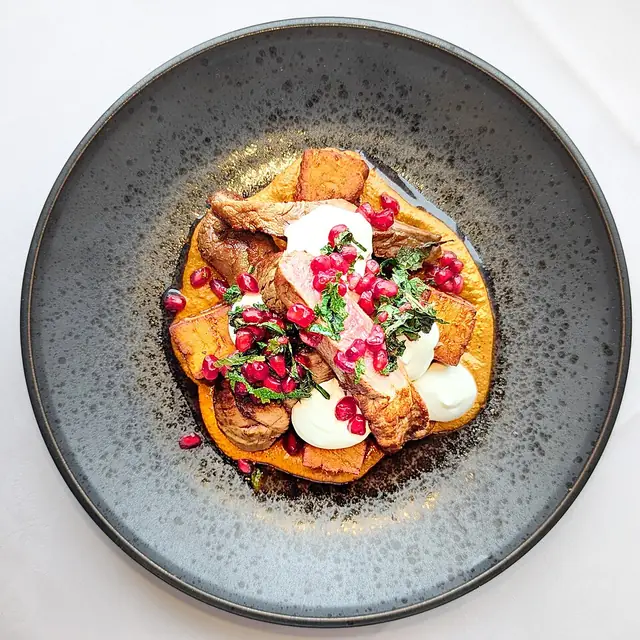
Panisse is the Marseillais chickpea-flour fritter, a thick batter set cold then sliced and deep-fried until crisp outside and creamy within, served in a paper cone with sea salt and pepper.
Where: Chez Magali, Marche des Capucins counter food
Price: €3-6 per portion
Marseillais pizza is the thin Sicilian-rooted version, the canonical order half cheese and half anchovy, baked in a wood oven and cut into thin slices, often eaten standing at a counter or out of a paper.
Where: Chez Etienne, Chez Sauveur, Pizza Charly, Le Vieux Panier
Price: €12-18 for a whole pizza
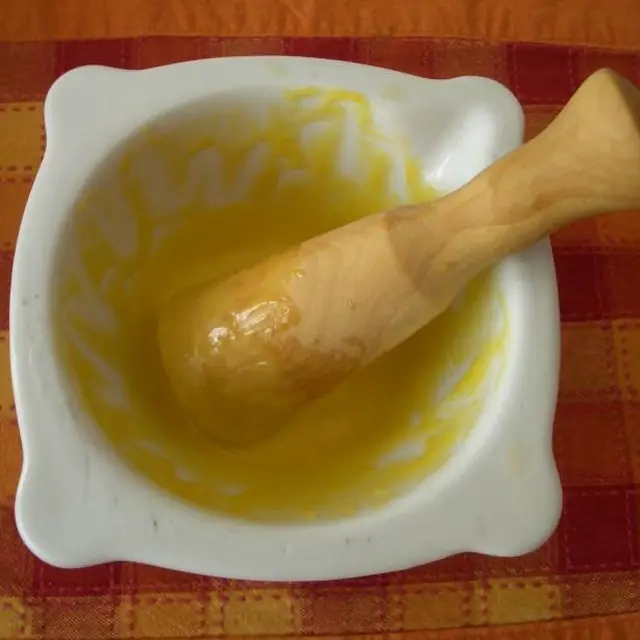
Le grand aioli is the Friday lunch tradition of Marseille and Provence, a feast plate of poached salt cod, boiled vegetables, eggs and snails arranged round a deep bowl of garlic-and-olive-oil aioli mayonnaise.
Where: La Caravelle, Chez Madie Les Galinettes, Le Bouchon Provencal
Price: €22-35
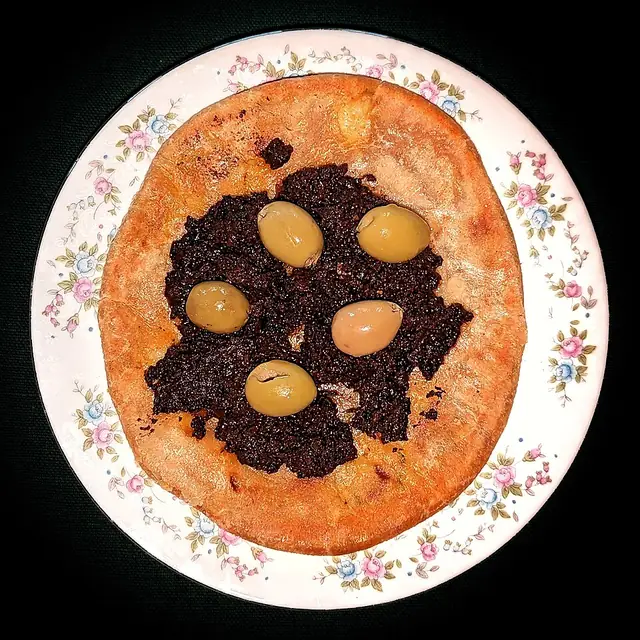
Tapenade is the Provencal paste of black olives, capers, anchovies, garlic and olive oil pounded together in a mortar, eaten on toast as an aperitif or as a stuffing for fish and chicken.
Where: Le Cafe de l'Abbaye, La Caravelle, Le Bouchon Provencal
Price: €6-12 as an aperitif plate
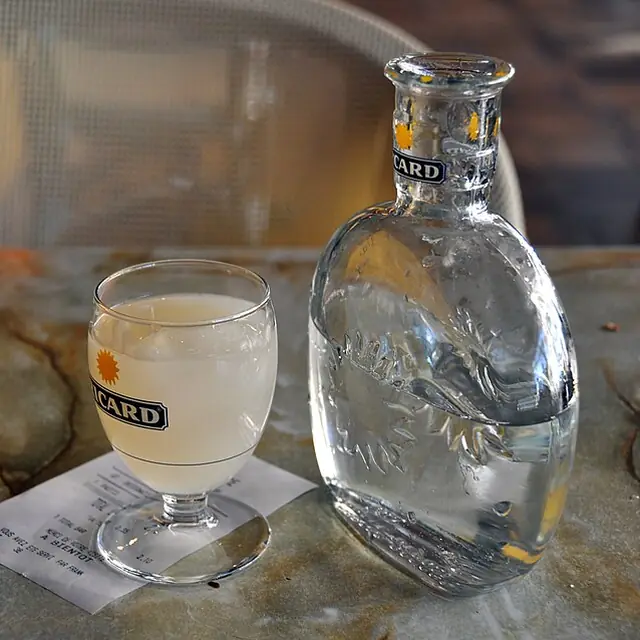
Anise-and-liquorice aperitif invented in Marseille in 1932 by Paul Ricard, served midday with five parts cold water poured over one part pastis. The water turns the drink milky cloudy through the louche effect.
Where: Bar de la Marine, Le Cafe de la Banque, Le Pelle-Mele, Le Cafe de l'Abbaye
Price: €3-6 a glass
Tunisian-Algerian couscous adopted as a Marseille canteen staple after the great Maghrebi migration: steamed semolina with merguez, lamb shank, chickpeas and a harissa-spiked vegetable broth.
Where: Le Femina, Chez Yassine, La Kahena, Chez Sauveur
Price: €16-26
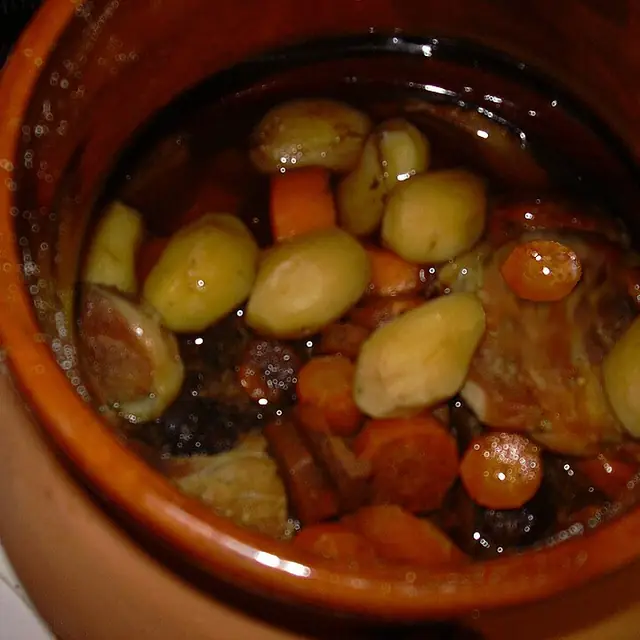
Slow-braised beef cheek in red Provence wine, perfumed with orange peel, thyme, rosemary and black olives. Marinated overnight, simmered for hours, served traditionally on Mondays with pasta or boiled potatoes.
Where: Le Bouchon Provencal, Chez Madie Les Galinettes, Chez Etienne, Chez Fonfon
Price: €22-34
A long ridged doughnut of wheat and chickpea flour, fragrant with orange-blossom water, deep-fried in olive oil until shatteringly crisp and rolled in caster sugar. The L'Estaque seaside snack since 1907.
Where: Chez Magali, Chez Sauveur, Marche aux Poissons du Vieux Port
Price: €2-5
Bouillabaisse
Bouillabaisse is a Provencal rock-fish stew of rascasse, galinette, conger and saint-pierre cooked in a saffron and fennel broth, served broth-first with croutons and rouille then the carved fish.
History: Marseille fishermen had cooked a leftover fish stew on the quays for centuries, but the codification into bouillabaisse-as-restaurant-dish came in the early 20th century. Le Miramar (1965) was a founding member of the Charte de la Bouillabaisse, and Chez Michel has cooked the same recipe at the Catalans beach since 1946. The dish always uses Mediterranean rock fish bought off the morning quay boats; rouille of garlic, saffron and olive oil binds it. The two-service ritual (broth then fish carved tableside) is the marker of a real Marseille bouillabaisse.
Where to try it: Chez Fonfon, Chez Michel, Le Miramar, Chez Madie Les Galinettes
Watch out for: Fish, Shellfish, Gluten, Eggs
Bourride
Bourride is the white-fleshed fish cousin of bouillabaisse, monkfish or sea bass poached in a broth bound with aioli into a creamy emulsion, served with garlic croutons and the same garlic mayonnaise on the side.
History: Bourride was the everyday fisherman's stew in Marseille from the 19th century, cheaper than bouillabaisse because it used a single white fish (often monkfish, anglerfish or sea bass) rather than the four rock fish of the bouillabaisse charter. The broth is bound with aioli rather than rouille, which gives it the creamy yellow colour. Chez Fonfon and Chez Michel both cook it, and Le Miramar serves the bourride as a one-fish alternative to bouillabaisse on the same menu.
Where to try it: Chez Fonfon, Chez Michel, Le Miramar
Watch out for: Fish, Eggs, Gluten
Pieds paquets
Pieds paquets is the Marseillais offal dish of lamb tripe rolled into small parcels stuffed with garlic, parsley and salt pork, simmered with sheep's trotters in a white-wine and tomato broth for four to six hours.
History: Pieds paquets came out of the bouchons and brasseries of Marseille from the late 19th century, the workers' meal that used the cheapest cuts of the lamb. The dish travelled across the Bouches-du-Rhone (Marseille and Sisteron the rival schools) and was protected for decades by the Confrerie des Pieds et Paquets at the city's traiteurs. The slow cook breaks down the tripe so the parcels read as silky rather than chewy, and the broth thickens around the trotters.
Where to try it: Chez Madie Les Galinettes, Le Bouchon Provencal
Navette de Marseille
The navette is a dry boat-shaped biscuit perfumed with orange-blossom water, baked without yeast in a wood-fired oven, the canonical Marseille souvenir biscuit from the Four des Navettes since 1781.
History: Four des Navettes at 136 Rue Sainte has baked the navette in a Roman-model oven since 1781, the recipe held by three families over the generations. The boat shape comes from one of two legends: either the unmanned boat that brought the Saintes Maries to the Provencal coast, or the form of a Black Virgin statue washed up at the Lacydon. Every February 2 the Archbishop of Marseille processes from the Vieux Port to Saint-Victor Abbey to bless the Black Virgin, then walks to the bakery to bless the oven and the day's navettes.
Where to try it: Four des Navettes, La Cure Gourmande
Watch out for: Gluten, Eggs
Panisse
Panisse is the Marseillais chickpea-flour fritter, a thick batter set cold then sliced and deep-fried until crisp outside and creamy within, served in a paper cone with sea salt and pepper.
History: Panisse arrived in Marseille with the Italian and Ligurian dockworkers from Genoa across the 19th century, the cheap chickpea-flour street snack of the workers' lunch. Chez Magali at the L'Estaque port has fried panisse since 1947 in the family kiosk, and the dish has stayed a working-class fast food eaten standing in a paper cone with a glass of pastis. The Marche des Capucins counters fry them all day as quick lunch.
Where to try it: Chez Magali, Marche des Capucins counter food
Marseillais pizza
Marseillais pizza is the thin Sicilian-rooted version, the canonical order half cheese and half anchovy, baked in a wood oven and cut into thin slices, often eaten standing at a counter or out of a paper.
History: Marseille's Sicilian and Calabrian immigrants from the early 20th century brought the wood-fired pizza tradition that became Marseillais pizza, distinct from the Neapolitan version with a thinner crust and a sharper salt-and-anchovy edge. Chez Etienne in Le Panier (1943) and Chez Sauveur in Noailles (1943) are the canonical rooms, both still cooking without menus on cash-only terms. The half-anchovy half-cheese is the local Marseillais order, asked for as the moitie-moitie.
Where to try it: Chez Etienne, Chez Sauveur, Pizza Charly, Le Vieux Panier
Watch out for: Gluten, Fish, Dairy
Aioli (le grand aioli)
Le grand aioli is the Friday lunch tradition of Marseille and Provence, a feast plate of poached salt cod, boiled vegetables, eggs and snails arranged round a deep bowl of garlic-and-olive-oil aioli mayonnaise.
History: Aioli has been the canonical garlic emulsion of Provence since the Middle Ages, the dish (le grand aioli) the canonical Friday Lenten meal of the city. The full plate includes salt cod, carrots, fennel, green beans, potatoes, hard-boiled eggs and sometimes snails or octopus, with the aioli mounted in a mortar (mortier) by hand. La Caravelle and Madie Les Galinettes both run it as a Friday lunch special; the home version comes out at Provencal family lunches across the year.
Where to try it: La Caravelle, Chez Madie Les Galinettes, Le Bouchon Provencal
Watch out for: Fish, Eggs
Tapenade
Tapenade is the Provencal paste of black olives, capers, anchovies, garlic and olive oil pounded together in a mortar, eaten on toast as an aperitif or as a stuffing for fish and chicken.
History: Tapenade was codified as a recipe in Marseille in 1880 by chef Meynier at the Maison Doree, the name from the Provencal tapeno for caper. The Provencal paste predates the recipe by centuries, but the proportions Meynier wrote (olives, capers, anchovy, olive oil, lemon) became the canonical version still served in every Marseille bistro and bouchon as part of the aperitif tapas board.
Where to try it: Le Cafe de l'Abbaye, La Caravelle, Le Bouchon Provencal
Watch out for: Fish
Pastis
Anise-and-liquorice aperitif invented in Marseille in 1932 by Paul Ricard, served midday with five parts cold water poured over one part pastis. The water turns the drink milky cloudy through the louche effect.
History: Pastis was created in 1932 by Paul Ricard in the Sainte-Marthe district, after absinthe's 1915 ban left a market gap. Henri Bardouin and Janot followed as Provencal artisan producers. The 1:5 dilution ritual at the cafe table is unchanged since the 1930s; the Marseille midday pause centres on it. Bar de la Marine and Le Cafe de la Banque pour the canonical city version.
Where to try it: Bar de la Marine, Le Cafe de la Banque, Le Pelle-Mele, Le Cafe de l'Abbaye
Couscous Marseillais
Tunisian-Algerian couscous adopted as a Marseille canteen staple after the great Maghrebi migration: steamed semolina with merguez, lamb shank, chickpeas and a harissa-spiked vegetable broth.
History: Couscous arrived in Marseille with Algerian, Tunisian and Moroccan migration from the 1920s onwards, and consolidated as the city's defining North African dish by the 1960s. Le Femina on Rue du Musee opened in 1921 and serves a Kabyle barley couscous from the predominantly Berber region of northern Algeria; Chez Yassine on Noailles runs the Tunisian red-sauce version with merguez.
Where to try it: Le Femina, Chez Yassine, La Kahena, Chez Sauveur
Watch out for: Gluten, Egg
Daube Provençale
Slow-braised beef cheek in red Provence wine, perfumed with orange peel, thyme, rosemary and black olives. Marinated overnight, simmered for hours, served traditionally on Mondays with pasta or boiled potatoes.
History: Daube has been the Provencal Sunday dish since the 18th century, named for the daubière, the round-bellied earthenware pot it traditionally simmers in. The Marseille version adds orange peel and black olives. Le Bouchon Provencal, Chez Etienne and Chez Madie Les Galinettes all keep daube on the winter menu. The dish was historically served on Mondays as leftover Sunday lunch reheated, with the broth strained and reduced through reheating.
Where to try it: Le Bouchon Provencal, Chez Madie Les Galinettes, Chez Etienne, Chez Fonfon
Watch out for: Sulphites
Chichi Frégi
A long ridged doughnut of wheat and chickpea flour, fragrant with orange-blossom water, deep-fried in olive oil until shatteringly crisp and rolled in caster sugar. The L'Estaque seaside snack since 1907.
History: Chichis frégis were popularised in 1907 by Alexis Guglielmi in Toulon and migrated up the coast to L'Estaque in the 1930s, where the fishing-village stalls turned them into the canonical Marseille beach snack. Chez Magali, run by the Magali Pisciotto family, still cooks them in 20-litre olive oil cauldrons at the L'Estaque seafront. The Sunday-afternoon queue is unchanged across generations.
Where to try it: Chez Magali, Chez Sauveur, Marche aux Poissons du Vieux Port
Watch out for: Gluten