

The plates that define Bordeaux: what they are, where they came from, and where to eat the canonical version.
Signature dishes
-
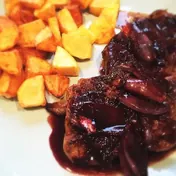
Entrecote a la bordelaise ★ 4.9
Entrecote a la bordelaise is Bordeaux's beef-and-wine signature, a thick rib steak grilled over vine cuttings then served with a red-wine, shallot and bone-marrow sauce, with a single bone of marrow on top.
Where to try it: La Tupina, La Brasserie Bordelaise
Price: €28-38
The recipe was born in the Medoc vineyards in the 19th century, when winemakers grilled beef on the embers of the old barriques after wine season. Today most Bordeaux brasseries grill the steak over vine sarments rather than vine barrels, but the wine-and-shallot sauce with marrow has stayed canonical. The Bordelais bistros La Tupina, La Brasserie Bordelaise and Le Mably each keep their own version, and the sauce is sometimes called sauce bordelaise across French menus.
Watch out for: None
-
Cannele de Bordeaux ★ 4.9
The cannele de Bordeaux is the city's edible signature, a small fluted pastry with a deeply caramelised crust and a soft, custardy interior scented with rum and vanilla, baked in copper moulds.
Where to try it: Baillardran, La Toque Cuivree, Cassonade
Price: €1.50-3 each
The cannele has its origins in the 16th-century Convent of the Annonciades in Bordeaux, where the nuns used the egg whites discarded by Bordeaux winemakers (used to fine wines) and the leftover yolks were spun into pastries. The recipe with rum and vanilla emerged in the 18th century via the triangular trade through Bordeaux's port. The cannele was officially recognised as a Bordeaux specialty in 1985. Baillardran, La Toque Cuivree and Cassonade are the three modern Bordeaux producers.
Watch out for: Gluten, Egg, Dairy
-
Lamproie a la bordelaise ★ 4.7
Lamproie a la bordelaise is Bordeaux's most ancient signature, an eel-like fish from the Dordogne and Garonne cooked in its own blood with red wine, leeks and ham, into a deep mahogany stew.
Where to try it: La Tupina, Le Petit Commerce, La Brasserie Bordelaise
Price: €28-42
Lamproie a la bordelaise predates entrecote a la bordelaise by centuries; the recipe traces to medieval Aquitaine. The lamprey is the only fish bled alive in preparation, its blood mixed with red wine to bind the sauce. Lampreys run the Dordogne and Garonne from February through April, and the dish appears on Bordeaux menus only in that window. La Tupina serves it through the season in its fireplace cauldron.
Watch out for: Fish
Book food experiences in Bordeaux


-
Cepes a la bordelaise ★ 4.7
Cepes a la bordelaise are Aquitaine porcini sauteed with garlic, finely chopped shallots, parsley and a knob of butter, served at the height of the autumn harvest as a side or a main with bread.
Where to try it: La Tupina, La Cape, Le Chien de Pavlov
Price: €22-32
The preparation is named after Bordeaux but actually originated in the Landes and the Perigord pine forests where the cepes grow. The Bordelaise twist is the use of shallots over onions and a finishing parsley persillade. La Tupina, La Cape and Le Chien de Pavlov all serve them in season, and most southwestern French bistros put them on autumn menus.
Watch out for: None
-
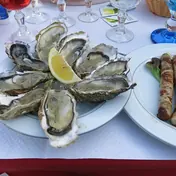
Arcachon oysters ★ 4.8
Atlantic oysters from the Bassin d'Arcachon, served raw in their shells with a wedge of lemon, brown bread and butter, and a glass of Entre-deux-Mers or Pessac white.
Where to try it: Chez Jean-Mi, La Boite a Huitres, Le Petit Commerce
Price: €12-18 per dozen
Oyster farming in the Bassin d'Arcachon dates from the second half of the 19th century, when Napoleon III imported Portuguese spat to compensate for declines in the native gravette oyster. Today the Bassin produces around 8,000 tonnes a year, and the cabanes of L'Herbe, Le Canon and Cap Ferret are the producer addresses. Chez Jean-Mi at Marche des Capucins is the urban Bordeaux address.
Watch out for: Shellfish
-
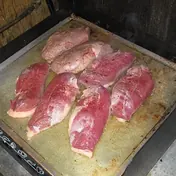
Magret de canard ★ 4.7
Magret de canard is southwestern France's duck breast preparation, pan-roasted on the fat side with the meat pink, sliced and served with potatoes confits, often with a fig or cepe sauce.
Where to try it: La Tupina, Le Bouchon Bordelais, Le Petit Gascon
Price: €22-28
The modern magret was invented by Andre Daguin at Hotel de France in Auch in 1959, by treating a duck breast like a steak and serving it pink. Before that, duck was always confited or roasted whole. The technique spread quickly across Aquitaine and became a southwestern French staple. La Tupina, Le Bouchon Bordelais and Le Petit Gascon all serve it daily.
Watch out for: None
-
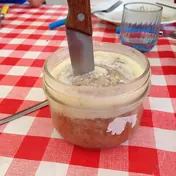
Foie gras des Landes ★ 4.6
Foie gras from the Landes, the fattened duck or goose liver, is served as a slice of terrine with toast and a Sauternes pairing, the canonical southwestern French aperitif and starter.
Where to try it: La Tupina, La Cape
Price: €18-32 per slice
Foie gras production in southwestern France dates back to the 18th century, with the Landes department becoming the major producer in the 19th century. The IGP Foie Gras du Sud-Ouest covers production from the Aquitaine and Midi-Pyrenees regions. Most Bordeaux fine-dining rooms make their own terrine; La Tupina and Le Mably are among the local benchmarks.
Watch out for: None
-
Tricandilles ★ 4.4
Tricandilles are Gascon-style braised pig intestines, simmered then grilled over vine cuttings, crispy outside and tender inside, served as an aperitif plate with mustard.
Where to try it: La Tupina, Cafe Tupina, Le Petit Gascon
Price: €12-18
Tricandilles are a Gascon specialty traditionally served at vineyard lunches and harvest festivals across the Bordeaux and Médoc wine country. The technique is classic peasant kitchen: pig intestines cleaned thoroughly, simmered for two to three hours in white wine and aromatics until tender, then grilled over vine cuttings (sarments) for the smoky finish. La Tupina on rue Porte de la Monnaie is the canonical Bordeaux address for them, grilled over the fireplace cauldron in the dining room and served as a starter or aperitif with mustard. Chartreuse de Sauternes also serves them in autumn during the grape harvest months.
Watch out for: None
-
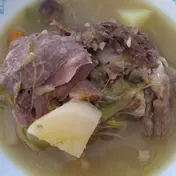
Garbure gasconne ★ 4.5
Garbure gasconne is a thick southwestern French peasant soup of ham hock, cabbage, white beans, potatoes and root vegetables, finished with confit duck and served over toast.
Where to try it: Le Petit Gascon, La Tupina, Cafe Tupina
Price: €14-22
The garbure is one of the canonical Gascon dishes, traditionally a winter farmer's meal in the Bearn and Gers regions, served from a single large clay pot at the family table. The classic recipe runs to two days of preparation: white tarbais beans soaked overnight, ham hock simmered with cabbage and root vegetables, then finished on the second day with confit duck leg and toasted slabs of country bread (the goudales). The Bordeaux versions usually include confit duck leg, white tarbais beans and Bayonne ham hock. Le Petit Gascon and La Tupina serve it through the cold months, with the dish ladled into deep bowls over toast and topped with a glass of red wine in the local goudale tradition.
Watch out for: None
-
Alose a la bordelaise ★ 4.3
Alose a la bordelaise is the shad fish from the Garonne grilled over vine cuttings then served on a bed of sorrel that helps dissolve the bones, a centuries-old Bordeaux preparation.
Where to try it: La Tupina, Le Petit Commerce, La Brasserie Bordelaise
Price: €24-32
The alose, or shad, runs up the Garonne and Dordogne in spring from the Atlantic to spawn. The Bordeaux preparation pairs it with sorrel because the acid helps soften the many small bones. The dish has been on Bordeaux menus since the medieval period but is increasingly rare as shad populations have declined.
Watch out for: Fish
-
Bordeaux Wine Flight ★ 4.8
A comparative tasting of the four classic Bordeaux red appellations: Médoc, Pessac-Léognan, Saint-Émilion, and Pomerol. Tannin, oak, and Right-vs-Left-Bank Merlot or Cabernet dominance define every bottle.
Where to try it: Le Quatrieme Mur, La Brasserie Bordelaise, Soif, Symbiose, Racines, La Tupina
Price: €20-60 per flight
Bordeaux has been the centre of French wine commerce since the 12th century, when Eleanor of Aquitaine's marriage to Henry Plantagenet opened the English market. The 1855 classification of the Médoc remains the most influential wine ranking in the world. The wine flight at La Cité du Vin, La Brasserie Bordelaise, and Le Quatrieme Mur is the canonical introduction to the region's appellations.
-
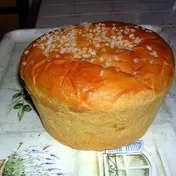
Pastis Landais (Southwest Brioche) ★ 4.3
An orange-flower-and-rum-scented brioche from southwest France, baked in a deep mould and topped with pearl sugar. A Landes specialty long sold in Bordeaux bakeries; Maison Zurcher keeps the tradition.
Where to try it: Maison Zurcher, Patisserie Valantin, Patisserie S, Baillardran, Boulangerie Louis Lamour
Price: €8-18
Pastis landais (from Gascon pastis, meaning cake) is a brioche specialty of the Landes and Béarn regions south of Bordeaux, flavoured with rum and orange-flower water. It travelled north through Aquitaine trade routes and became a fixture of Bordeaux bakeries alongside the canelé. Patisserie Valantin and Maison Zurcher in central Bordeaux remain among the city's most consistent sources.
Watch out for: Gluten, Dairy, Egg
Signature Dishes in Bordeaux, FAQ
What food is Bordeaux known for?
Bordeaux's signature dishes include Entrecote a la bordelaise, Cannele de Bordeaux, Lamproie a la bordelaise, Cepes a la bordelaise, Arcachon oysters. See our signature dishes chapter for where to eat each.