$$$$
PueblanCentro Historico
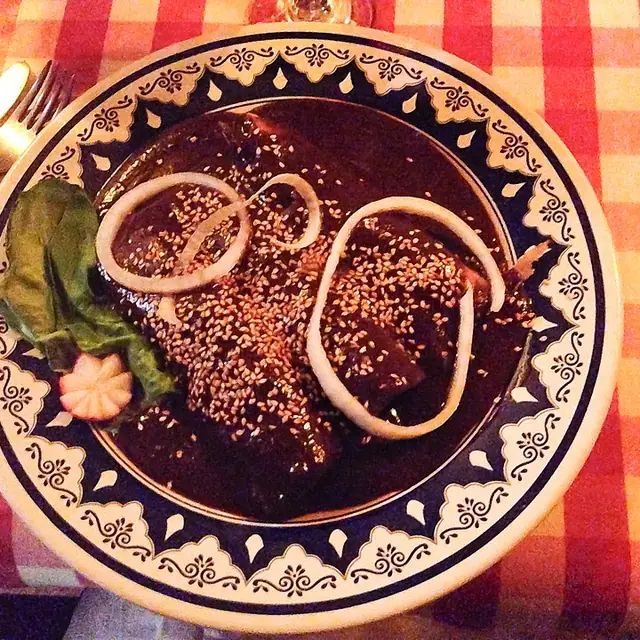
El Mural de los Poblanos on 16 de Septiembre pours three moles at once in Puebla: the 26-ingredient house recipe, mole de Xico and mole de Quimixtlan.
Book3 to 7 days ahead
TipMole plates run between 245 and 395 pesos, and the Encuentro de Moles in May adds guest recipes from outside Puebla.
$$$$
PueblanCentro Historico
Restaurante Casareyna holds a 2026 Michelin Bib Gourmand in Puebla, serving a four-mole tasting plate under Talavera vaults on Privada 2 Oriente.
Book2 to 5 days ahead
TipMole plates land between 205 and 245 pesos, which is what the 2026 Bib Gourmand is recognising more than the dining room.
$$$$
Wine barCentro Historico
Augurio is chef Angel Vazquez's Pueblan dining room on 9 Oriente, added to the 2026 Michelin Guide selection and built around a six-mole tasting in Puebla.
WineMexican labels chosen to sit against mole
FoodFull Pueblan menu
TipSommelier Gina de la Mora builds the list around the six-mole tasting, which is a harder pairing job than it sounds.
$$$$
PueblanCentro Historico
Fonda Tipica la Poblana cooks mole poblano and chalupas on 8 Norte in Puebla, a plain fonda that opens at half past eight and runs until eight at night.
OrderMole poblano at 150 pesos, with rice and hand-made tortillas.
TipOpen from 08:30 to 20:00 daily, so the mole is freshest between one and four in the afternoon.
$$$$
PueblanLos Remedios
Antojitos Mellos is the weekend mole and pipian stop in Barrio de los Remedios, Puebla, with pozole and mole de panza on the board the rest of the week.
Why locals goWeekend-only mole and pipián in Barrio de los Remedios, far enough from the Zocalo that the queue stays local.
TipMole and pipián are cooked on Saturday and Sunday only, so a weekday visit gets pozole and mole de panza instead.
$$$$
PueblanCentro HistoricoUntil 00:00 daily
Comal looks straight at Puebla cathedral from 16 de Septiembre, cooking blue-corn chilaquiles, chanclas, pelonas and mole poblano from breakfast to midnight.
TryChanclas and mole poblano
TipThe kitchen runs to midnight seven days a week, which is unusual for a Centro dining room of this quality.
$$$$
PueblanCentro Historico
La Casa del Mendrugo cooks mole poblano and pipian verde inside a former Jesuit college on 4 Sur in Puebla, with a museum and a jazz room attached.
Book2 to 4 days ahead
TipThe mole here runs about 190 pesos and the ticket includes the museum, which is a rare pairing in the Centro Historico.
$$$$
PueblanCentro Historico
Clementina Cocina Poblana keeps a short mole and pipian list on 6 Oriente in Puebla, a daytime kitchen a block from the Calle de los Dulces.
OrderA mole or pipián plate between 139 and 195 pesos.
TipSits on 6 Oriente, the sweet street, so the natural order is lunch here then camotes two doors down.
$$$$
PueblanArboledas De Guadalupe
La Ververa cooks chalupas, memelas and mole poblano at neighbourhood prices in Arboledas de Guadalupe, Puebla, on Saturdays and Sundays only.
Why locals goA residential-street kitchen in Arboledas de Guadalupe serving chalupas at 35 pesos and mole poblano at 89, weekends only.
TipOpen Saturday and Sunday only and closed by six, so this works as a weekend lunch detour rather than a weekday one.