Nishiki Market ★ 4.7
The kitchen of Kyoto: four covered blocks east-west on Nishikikoji-dori, 130 stalls of pickles, tofu, tea, fish, and the wagashi the city's tea houses use.
Kyoto's pickle tradition, including shibazuke (red-perilla aubergine), senmaizuke (paper-thin turnip) and suguki (slow-fermented turnip), sold at Nishiki Market.
Where to eat it: 3 restaurants across 1 city.
Pickled vegetables (tsukemono) have anchored Kyoto's plate for over 1,000 years, born of the city's inland location and the need to preserve summer Kyo-yasai for winter. Three regional specialties define the form: shibazuke from Ohara village, salted aubergine with red shiso; senmaizuke, paper-thin Shogoin turnip pressed with kombu and rice vinegar; and suguki, a slow-fermented turnip from Kamigamo. All three are sold at Nishiki Market and at Tsuchinoko-mura in Ohara, alongside dozens of seasonal variants.
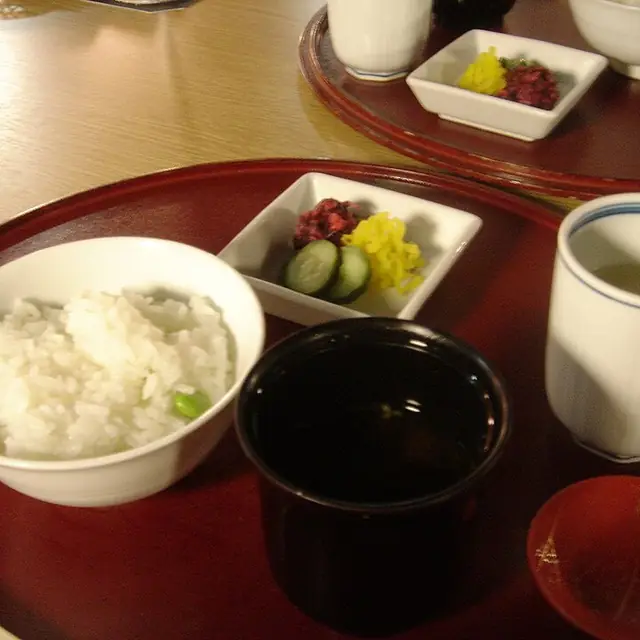
Tip from the editors. The mandoline cut is the entire dish. If your slices are thicker than 1.5mm, the pickle is mediocre; if thinner than 0.5mm, they tear.
This is the TableJourney editorial recipe, modelled on the canonical bistro / counter version. The first place to try the dish in its city of origin is below.
The kitchen of Kyoto: four covered blocks east-west on Nishikikoji-dori, 130 stalls of pickles, tofu, tea, fish, and the wagashi the city's tea houses use.
Lunch in Kyoto for under 1,000 yen: walk Nishiki Market east to west grazing on tako-tamago skewers, yuba sticks, tsukemono samples and warabi-mochi cups.
Try: Tsukemono samples and snacks
Daimaru Kyoto's depachika basement on Shijo-dori, 70-plus counters of wagashi, bento, sashimi and sake. The downtown alternative to JR Kyoto Isetan.
More cities are in research. Want kyoto tsukemono pickles covered somewhere specific? Tell us where you want to eat.