
History
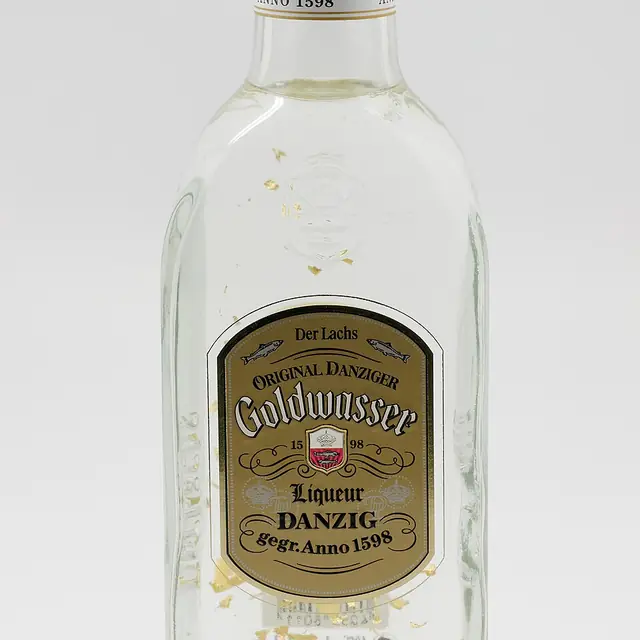
Goldwasser was invented by Ambrosius Vermeulen (Vermöllen), a Dutchman from De Lier who became a citizen of Danzig on 6 July 1598. In 1704 Salomon Vermöllen and Isaac Wed-Ling moved production to premises on the Breitgasse, today ul. Szeroka, whose façade carried a salmon (Lachs) and gave the brand the name Der Lachs zu Danzig. It is flavoured with cardamom, cloves, cinnamon, lavender, thyme, coriander and juniper. Peter the Great ordered a steady supply, and cases were sent to Catherine the Great by 1767. Production in Gdańsk ran from 1598 to 2009; it is now made in Germany.
Book a food experience
Tours, tastings and classes from the cities on this page, bookable on GetYourGuide.


Where to eat goldwasser (23-carat gold liqueur)
Goldwasser (23-carat gold liqueur) in Gdańsk
Witómë ★ 4.3
Witómë, at ul. Piwna 36/39 in Gdańsk, presents itself as a Kashubian restaurant that will amaze you, with breakfasts served daily from 7:30.
TipBreakfasts are served every day from 7:30 to 10:30 at ul. Piwna 36/39.
Goldwasser ★ 4.1
Goldwasser's menu mixes Polish classics with Gdańsk, Kashubian and seafood dishes, and the house speciality is meat, at ul. Długie Pobrzeże 22.
OrderThe roast duck: half a boned duck with apples, beetroot, golden potato dumplings and cranberry sauce.
TipTry the Goldwasser liqueur with flakes of 23-carat gold on site; the restaurant also sells it to take away.
Tygle Gdańskie ★ 4.4
Tygle Gdańskie on Granary Island is recommended by the Michelin Guide, where Executive Chef Michał Stężalski cooks with ingredients from Pomerania.
More cities are in research. Want goldwasser (23-carat gold liqueur) covered somewhere specific? Tell us where you want to eat.