The plates that define Aarhus: what they are, where they came from, and where to eat the canonical version.
Signature dishes
-
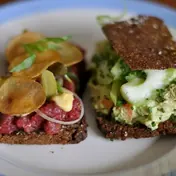
Smørrebrød ★ 4.9
The open-face sandwich on dense dark rye is the defining meal of Aarhus. The rye carries pickled herring, roast beef, leverpostej, fried fish, or egg with chives, each with specific condiments that do not swap.
Where to try it: Restaurant Klokken, Vesterlauget, Restaurant Kohalen
Price: DKK 80-160 per piece
Smørrebrød became the urban working lunch in the 19th century when factory workers needed portable, high-calorie meals. The word means buttered bread; the rye base and the piled toppings are specifically Danish rather than Scandinavian. The Aarhus lunch culture around Mindegade and Vestergade is a direct continuation of the tradition.
Watch out for: Gluten, Dairy, Fish, Eggs
-

Pickled Herring (Marineret Sild) ★ 4.7
Danish pickled herring comes in six preparations: wine-pickled, curry, mustard, dill, tomato and brine. The Aarhus version leans toward classic brine or wine-pickled, served cold on rye with raw onion and capers.
Where to try it: Restaurant Klokken, Vesterlauget
Price: DKK 90-130 per piece on rye
Herring has been caught and salted in the Kattegat waters around Jutland since Viking times. The pickling tradition developed in the 16th century as a preservation method; the flavoured vinegar preparations emerged in the 18th and 19th centuries as trade with the Continent brought new spice combinations.
Watch out for: Fish, Gluten
-
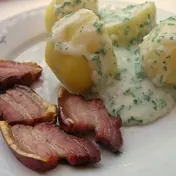
Stegt Flæsk med Persillesovs ★ 4.5
Fried salt pork belly with parsley sauce and boiled potatoes is the most voted favourite Danish dish in the annual poll. Strips of belly pork are fried crisp and served with thick white parsley sauce and floury potatoes.
Where to try it: Teater Bodega, Restaurant Kohalen, Vesterlauget
Price: DKK 130-180
Stegt flæsk was voted Denmark's national dish in 2014 in a public poll run by the Ministry of Food. The dish has roots in the farm kitchens of Jutland where salt-cured pork belly was the most reliable winter protein; the parsley sauce drew on the abundant fresh herb growing in every kitchen garden. The Aarhus version is typically served at Teater Bodega and at Restaurant Kohalen as a Wednesday lunch special.
Watch out for: Dairy, Gluten
-
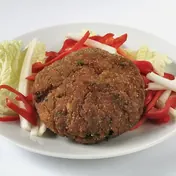
Frikadeller ★ 4.5
Danish pork and veal meatballs, shaped by hand into an oval and fried in butter until golden and cooked through. Served with boiled or caramelised potatoes, pickled red cabbage and a simple gravy.
Where to try it: Teater Bodega, Den Lille Kro, Restaurant Kohalen
Price: DKK 110-160
Frikadeller have been the Danish home-cooking centrepiece since at least the 18th century, with the first published recipe appearing in Madam Mangor's 1837 Kogebog for Smaa Husholdninger. The pork-and-veal combination is specific to Denmark; the oval hand-shape is the test of technique. Every Danish grandmother has a recipe she considers the definitive one.
Watch out for: Gluten, Dairy, Eggs
-

Leverpostej ★ 4.3
Pork liver paté baked in a loaf and served cold on dark rye bread with pickled beetroot or a slice of fried bacon. The texture is dense and spreadable; the flavour is deeply savoury with a hint of allspice.
Where to try it: Restaurant Klokken, Vesterlauget
Price: DKK 70-110 per piece on rye
Leverpostej has been made in Danish home kitchens since the 17th century as a way to use the full pig. Commercial production began at the Stryhns factory in Roskilde in the late 19th century and the dish is now one of the most consumed Danish foods, appearing on roughly 40 percent of all smørrebrød ordered in Denmark. The Aarhus lunch tradition treats it as the third leg of the classic herring-roast beef-leverpostej trio.
Watch out for: Gluten, Dairy, Eggs
-

Risalamande (Christmas Rice Pudding) ★ 4.4
Cold rice pudding mixed with whipped cream, sugar and vanilla, served with a warm cherry sauce. A whole almond is hidden in the communal bowl; whoever finds it in their serving receives a gift.
Where to try it: Teater Bodega, Den Lille Kro, Restaurant Klokken
Price: DKK 60-90 as a dessert
Risalamande is an adaptation of the French riz a l'amande introduced to Danish cuisine in the 19th century. The tradition of hiding the whole almond is uniquely Danish and dates to the same period. The cold pudding contrasts with the warm cherry sauce in a way that is considered the defining flavour of Danish Christmas.
Watch out for: Dairy, Tree nuts, Gluten
-
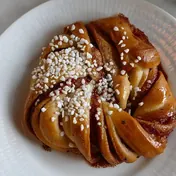
Kanelsnurre (Cinnamon Swirl) ★ 4.6
A laminated pastry swirl filled with cinnamon butter and topped with pearl sugar. The layers of the pastry should peel apart when eaten; the interior should be dense with caramelised cinnamon.
Where to try it: Schweizerbageriet, La Cabra Bakery, Emmerys Store Torv
Price: DKK 30-50
The kanelsnurre is the Danish version of the Nordic cinnamon bun tradition, distinct from the Swedish kanelbulle in its lamination technique and pearl sugar topping. The pastry arrived in Denmark through the 19th-century trade routes with Austria and Germany that shaped the wienerbrod tradition, when Austrian bakers were hired to staff the Copenhagen pastry shops during a baker strike of 1850. Aarhus bakeries carry the same lamination practice to this day.
Watch out for: Gluten, Dairy, Eggs
-
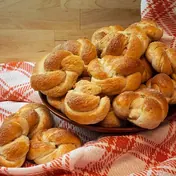
Cardamom Bun (Kardemommesnegle) ★ 4.8
A spiral bun made from enriched dough flavoured with freshly ground cardamom and filled with butter and sugar. La Cabra's Latin Quarter version is the signature of the Aarhus specialty coffee culture.
Where to try it: La Cabra Bakery, Jumbo Bakery, Schweizerbageriet
Price: DKK 40-65
La Cabra introduced the cardamom bun to Aarhus in 2012 and made it the pairing item for their specialty filter coffee. The Nordic cardamom bun tradition is older, but La Cabra's version using freshly ground cardamom seeds rather than pre-ground powder set a new standard that influenced bakeries across Scandinavia.
Watch out for: Gluten, Dairy, Eggs
-

Æbleskiver ★ 4.4
Spherical pancakes made in a specially cast iron pan with rounded wells. The exterior is golden and slightly crispy; the interior is pillowy and eggy.
Where to try it: Aarhus Christmas Market, Aarhus Street Food, Schweizerbageriet
Price: DKK 50-80 for a portion of six
Æbleskiver (literally apple slices) originally contained sliced apple in the batter, a practice that largely disappeared in the 20th century. The name persisted even after the filling changed. The Christmas market tradition of selling æbleskiver has made them one of the most visible seasonal foods in Danish public life.
Watch out for: Gluten, Dairy, Eggs
-
Chanterelle on Toast (Kantareller paa Ristede Brod) ★ 4.6
Wild chanterelles from the Jutland forest sautéed in butter with thyme and shallots, served on toasted sourdough. The September chanterelle season is the annual peak of New Nordic cooking in Aarhus.
Where to try it: Hærværk, Domestic, Substans
Price: DKK 150-280
Wild chanterelle foraging from the beech forests of Jutland and the Mols Bjerge has been a Danish autumn tradition for centuries. The New Nordic movement of the 2010s elevated the chanterelle from a peasant find to a high-end ingredient; restaurants like Haervaerk, Substans and Domestic now build September menus around the season.
Watch out for: Gluten, Dairy
-
Limfjord Oyster (Wild Østers) ★ 4.7
Wild flat oysters from the Limfjord in northwest Jutland served raw on ice with lemon and mignonette. The Kattegat and Djursland coast wild Pacific oysters provide the second source.
Where to try it: Nicolinehus Market Hall, Substans, Frederikshøj
Price: DKK 25-45 per oyster
Wild flat oysters from the Limfjord have been harvested since Viking times and were a Danish export commodity to northern Europe in the 18th and 19th centuries. A disease killed most of the population in the late 19th century; the current stock are descendants of the revived population from the 1970s. Pacific oysters from the Djursland coast are the more abundant modern harvest.
Watch out for: Shellfish
-
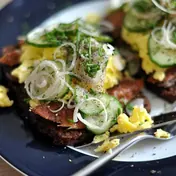
Røget Makrel (Smoked Mackerel) ★ 4.5
Whole mackerel hot-smoked over alder or beech wood at the Jutland coast smokehouses, then served flaked on rugbrød with a horseradish creme fraiche and pickled red onions. A defining Aarhus and Mols Bjerge summer dish.
Where to try it: Mols Smokehouse, Aarhus Harbour Fish Market, Restaurant Klokken, Vesterlauget, Nicolinehus Market Hall
Price: DKK 60-110 per piece on rye
Smokehouses along the Limfjord and the Mols Bjerge coast have hot-smoked mackerel since the 19th century, when the silver fish ran densely through the Kattegat each summer. The Bornholm smokehouses to the east set the technique standard, while Mols Smokehouse and the Aarhus Harbour Fish Market continue the East Jutland tradition with daily-smoked fish from local waters.
Watch out for: Fish, Gluten, Dairy
Signature Dishes in Aarhus, FAQ
What food is Aarhus known for?
Aarhus's signature dishes include Smørrebrød, Pickled Herring (Marineret Sild), Stegt Flæsk med Persillesovs, Frikadeller, Leverpostej. See our signature dishes chapter for where to eat each.