

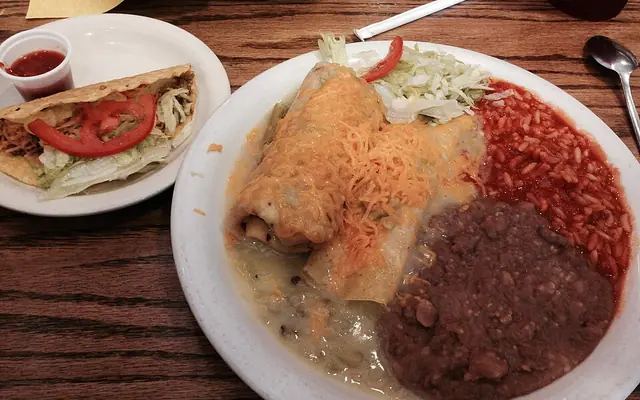
New Mexican cuisine is one of the most underappreciated regional cuisines in the United States, distinct from Mexican (which it predates as a continuous tradition in the same place) and from Tex-Mex (which descends from a different historical layer of Mexican-American cooking). New Mexico has been continuously inhabited by Pueblo peoples for over 1,000 years, was colonized by Spain in 1598, became part of Mexico from 1821 to 1848, and joined the United States in 1850 (statehood 1912). The cuisine reflects this 400-year continuous Spanish-and-Pueblo culinary tradition that diverged from Mexican cooking after independence and never resynced.
The defining ingredient is chile (singular, with an 'e,' which is the New Mexican spelling and signals authenticity). Specifically, New Mexico chile, grown almost exclusively in the state's southern Rio Grande Valley around Hatch and Las Cruces, exists in two forms: green chile (picked young, roasted, peeled, chopped, used in sauces and stews; medium-hot but with a distinctive vegetal-smoky flavor) and red chile (the same pepper allowed to ripen on the vine, dried, ground into powder, used in sauces and pastes). The state's iconic question, asked at every restaurant, is 'red or green?' (or 'Christmas' for both); it is the official state question, codified by the legislature.
The other foundational elements are blue corn (a Pueblo heritage variety, deeper in flavor than yellow or white corn, used in tortillas, atole, and many traditional dishes), pinto beans, calabacitas (squash with corn), posole (hominy stew), sopaipillas (puffed fried-bread pillows served with honey), and the use of piñon (pine nuts from the local piñon pine, harvested traditionally by Pueblo and Hispano families). The cuisine is older than the United States itself in its territory, and despite limited national visibility, has produced a deeply distinct flavor profile that does not exist anywhere else.
Book a food experience
Tours, tastings and classes from the cities on this page, bookable on GetYourGuide.

Top picks
The best-scored New Mexican place in each of 6 cities.
Mac's La Sierra Coffee Shop ★ 4.8
Mac's La Sierra has been family owned in Albuquerque since 1952, at 6217 Central Ave NW, and specializes in New Mexican food such as huevos rancheros.
OrderHuevos rancheros or enchiladas, the New Mexican food it specializes in.
TipDaily specials are available for both breakfast and lunch, and the doors are open seven days a week.
Cafe Pasqual's ★ 4.8
Chef Katharine Kagel has cooked seasonal Pueblo-meets-Mexico-meets-Mediterranean at Cafe Pasqual's just off the Plaza in Santa Fe since 1979.
SignatureHuevos motulenos, Chile relleno con huevos, Mole enchiladas
El Taco de Mexico ★ 4.6
El Taco de Mexico in Denver is the Santa Fe Drive counter, a James Beard America's Classics-winning shop with $3 tacos and a $9 chile relleno plate.
TryLengua, tripa, cabeza tacos
La Cocina ★ 4.2
La Cocina on Court Avenue in Tucson runs Southwestern lunch and dinner inside the Old Town Artisans courtyard, with shaded patio and nightly live music.
SignatureGreen chile stew, Prickly pear margarita
Los Dos Molinos ★ 4.2
Los Dos Molinos in Phoenix: A fiery New Mexican room in a former Tom Mix homestead on South Central that regulars warn newcomers about for the heat.
Why locals goA fiery New Mexican room in a former Tom Mix homestead on South Central that regulars warn newcomers about for the heat.
TipThe Hatch green and red chiles run genuinely hot; order the shrimp Veracruz and have a drink ready.
Hatch Burritos ★ 4.0
New Mexico green chile burritos in a city of BBQ and tacos. Hatch Burritos on N Mangum has quickly become a weekday morning-to-lunch favourite downtown.
TryHatch green chile breakfast burritos
Find a place
Mac's La Sierra Coffee Shop ★ 4.8
Mac's La Sierra has been family owned in Albuquerque since 1952, at 6217 Central Ave NW, and specializes in New Mexican food such as huevos rancheros.
OrderHuevos rancheros or enchiladas, the New Mexican food it specializes in.
TipDaily specials are available for both breakfast and lunch, and the doors are open seven days a week.
Cafe Pasqual's ★ 4.8
Chef Katharine Kagel has cooked seasonal Pueblo-meets-Mexico-meets-Mediterranean at Cafe Pasqual's just off the Plaza in Santa Fe since 1979.
SignatureHuevos motulenos, Chile relleno con huevos, Mole enchiladas
La Choza ★ 4.8
Sister of The Shed, La Choza has plated Northern New Mexican on Alarid Street since 1983; voted #1 New Mexican by Santa Fe Reporter readers repeatedly.
SignatureCarne adovada burrito, Blue corn enchiladas, Green chile stew
The Compound ★ 4.8
Mark Kiffin, 2005 James Beard Best Chef Southwest, owns The Compound on Santa Fe's Canyon Road; Chef Dale Kester runs the market-driven kitchen as head cook.
Book2-3 weeks ahead
Mary and Tito's Cafe ★ 4.7
Mary and Tito's Cafe is a New Mexican restaurant at 2711 4th St NW in Albuquerque.
Sadie's of New Mexico ★ 4.6
Sadie's of New Mexico serves New Mexican cuisine on Fourth Street NW, with big portions and a signature kick of heat, in a family owned room.
SignatureGreen Chile Chicken Birria Tacos, Stuffed sopapilla sliders
El Taco de Mexico ★ 4.6
El Taco de Mexico in Denver is the Santa Fe Drive counter, a James Beard America's Classics-winning shop with $3 tacos and a $9 chile relleno plate.
TryLengua, tripa, cabeza tacos
La Cocina ★ 4.2
La Cocina on Court Avenue in Tucson runs Southwestern lunch and dinner inside the Old Town Artisans courtyard, with shaded patio and nightly live music.
SignatureGreen chile stew, Prickly pear margarita
Los Dos Molinos ★ 4.2
Los Dos Molinos in Phoenix: A fiery New Mexican room in a former Tom Mix homestead on South Central that regulars warn newcomers about for the heat.
Why locals goA fiery New Mexican room in a former Tom Mix homestead on South Central that regulars warn newcomers about for the heat.
TipThe Hatch green and red chiles run genuinely hot; order the shrimp Veracruz and have a drink ready.
Hatch Burritos ★ 4.0
New Mexico green chile burritos in a city of BBQ and tacos. Hatch Burritos on N Mangum has quickly become a weekday morning-to-lunch favourite downtown.
TryHatch green chile breakfast burritos
New Mexican by city





.jpg)
Regional variations
Northern New Mexico (Santa Fe, Taos, Española)
The deepest traditional cooking. Posole, atole, blue corn tortillas, carne adovada (pork in red chile), green chile stew with potatoes, sopaipillas. The Pueblo and Hispano heritage is most directly preserved here, with restaurants like La Choza, The Shed, Tia Sophia's, Rancho de Chimayó, and El Parasol embodying the tradition.
Albuquerque and central New Mexico
Broader urban scene with more modern restaurants. Frontier (the institution near UNM), Sadie's of New Mexico, El Pinto, Mary & Tito's (where the carne adovada reaches its peak), the more modern restaurants like Campo at Los Poblanos.
Las Cruces and the south (chile country)
The Hatch Valley and Mesilla Valley, where most of the state's chile is grown. La Posta de Mesilla, The Pecan Grill. Strong borderlands influence; some overlap with northern Mexican cooking, but still distinctly New Mexican.
Defining New Mexican dishes
- Green chile cheeseburger
- A beef patty topped with roasted, peeled Hatch green chile and melted cheese, on a soft bun. The state's official sandwich and one of the great regional burger variants. Bobcat Bite (closed) was the legendary one; Santa Fe Bite, the Owl Cafe in Albuquerque, and Sparky's in Hatch carry the tradition.
- Carne adovada
- Pork shoulder marinated and slow-cooked in a sauce of dried red chile, garlic, oregano, and cumin until tender and deep red. The defining New Mexican meat dish; eaten with tortillas, rice, beans, and sopaipillas.
- Green chile stew
- Pork (or beef), potatoes, onion, garlic, and chopped roasted green chile slow-cooked into a thick stew. The everyday New Mexican home dish; served with a flour or blue-corn tortilla.
- Sopaipillas
- Squares or triangles of fried wheat dough that puff into hollow pillows in the hot oil, served with honey. The traditional New Mexican bread and dessert; some restaurants split them and stuff them with carne adovada or beans for a savory main.
- Posole
- Hominy stew with pork (or sometimes chicken), red chile, oregano, and onion. The Christmas Eve and celebration dish for many New Mexican families.
- Blue corn enchiladas
- Blue corn tortillas (with their distinctive purple-gray color and deeper corn flavor) stacked or rolled with cheese, onion, chicken, or beef, topped with red or green chile sauce, baked. Often served with a fried egg on top (the New Mexican upgrade).
- Stacked enchiladas
- The Santa Fe style: three or four blue corn tortillas stacked flat with filling and sauce between each layer, topped with red or green chile sauce and cheese, with a fried egg on top. Distinct from the rolled enchilada style of Mexican cooking.
- Chile relleno
- A whole green chile (often a poblano or specifically a New Mexico Big Jim) stuffed with cheese, dipped in egg batter, deep-fried, and topped with red or green chile sauce. The New Mexican version is often less battered and more rustic than the Tex-Mex equivalent.
- Frito pie
- A bag of Fritos (the original Texas corn chips) topped with red chile or chili, cheese, and onion, eaten with a spoon directly from the bag. Disputed origin (Texas vs. Santa Fe), but the Santa Fe Capitol Burrito and Five & Dime General Store version is the New Mexican benchmark.
- Calabacitas
- Squash (zucchini and yellow squash) sauteed with corn, onion, green chile, and cheese. A Pueblo-heritage side dish.
- Atole and champurrado
- Blue corn (or yellow corn) drink, thickened to a porridge consistency, often with cinnamon, sugar, and milk. Champurrado adds chocolate. The traditional breakfast and ceremonial drink.
- Biscochitos
- Anise-and-cinnamon shortbread cookies, made with lard. The state cookie (the only state with an official cookie). Traditional at weddings, baptisms, and Christmas.
How to order
At any New Mexican restaurant, the question 'red or green?' will come early. The honest answer is: red chile is typically deeper, smokier, and earthier; green is brighter, more vegetal, and often hotter (counterintuitively, since red chile is ripened green chile). Christmas is the answer for both. The standard order is a combination plate (enchilada, chile relleno, taco, with rice and beans), or a single specialty (carne adovada, posole, green chile stew) with a sopaipilla on the side. Salt-and-honey sopaipillas at the end of the meal are essentially universal.
The rookie mistakes: spelling chile with an 'i' instead of an 'e' (New Mexicans take this seriously), assuming the cuisine is the same as Mexican or Tex-Mex (it is neither), under-ordering green chile (it goes on everything, including breakfast eggs), and skipping the sopaipillas (they are the bread and the dessert). The heat level of green chile varies by season and crop; ask if you are sensitive.
What to drink with it
Margaritas and beer are the obvious table drinks, with the New Mexican beer scene (Marble, Santa Fe Brewing, Bow & Arrow, La Cumbre) genuinely strong. Mexican beer (Modelo, Tecate) is widely available. Atole or champurrado for the non-alcoholic traditional option. With carne adovada or posole, a medium red (a Spanish Tempranillo or a Texas-Hill-Country red) works; the New Mexico wine industry is small but growing (Black Mesa Winery and Gruet sparkling are the established names). With sopaipillas and honey, coffee.
Where to eat it
Santa Fe for the deepest traditional cooking: The Shed, La Choza, Tia Sophia's, Cafe Pasqual's, Rancho de Chimayó. Albuquerque for Mary & Tito's (carne adovada benchmark), Sadie's, Frontier, El Pinto. Las Cruces and the Hatch Valley for borderland New Mexican: La Posta de Mesilla, Sparky's in Hatch. Outside New Mexico, the cuisine is essentially unavailable; a few diaspora restaurants in Denver, Phoenix, and Los Angeles cook a version, but the chile-and-blue-corn pantry does not travel well, and the cuisine is best encountered in the state itself.
A short history
New Mexican cuisine descends from over 1,000 years of Pueblo agricultural cooking (corn, beans, squash, chile), layered with Spanish colonization from 1598 (the introduction of wheat, pork, and beef, plus Spanish techniques), the Mexican period (1821 to 1848), and the American period (from 1850). The cuisine diverged from Mexican cooking after 1821 and developed its own distinct identity, which the Hispano and Pueblo communities have preserved for nearly two centuries. The chile of New Mexico, particularly the cultivars from the Hatch Valley, are protected by state law as the cornerstone of the regional identity.
Frequently asked
Is New Mexican food the same as Mexican?
No. New Mexican cuisine descends from the continuous Pueblo-Spanish tradition that has lived in northern New Mexico for over 400 years, diverging from Mexican cooking after 1821 and developing its own distinct pantry (New Mexico chile, blue corn, piñon, posole, carne adovada). Mexican cooking has its own regional traditions (Yucatecan, Oaxacan, Pueblan), none of which match New Mexican.
Why is it spelled chile and not chili?
New Mexican usage. Chile (with an 'e') is the Spanish spelling, used for the pepper itself and for the New Mexican preparation. Chili (with an 'i') is the Texan stew called chili con carne, a different dish entirely. Spelling chile correctly in New Mexico is a marker of basic cultural literacy; the state legislature passed a resolution in 1996 making 'chile' the official spelling.
What is Hatch chile?
New Mexico chile (a specific cultivar developed at New Mexico State University starting in the late 19th century) grown in the Hatch Valley along the Rio Grande in southern New Mexico. The soil, climate, and water of the valley produce a distinctive flavor that has made Hatch the most famous chile-growing region in the United States. Hatch is the place; the chile itself is technically 'New Mexico chile.'
More cities are in research. Want New Mexican covered somewhere specific? Tell us where you want to eat.