

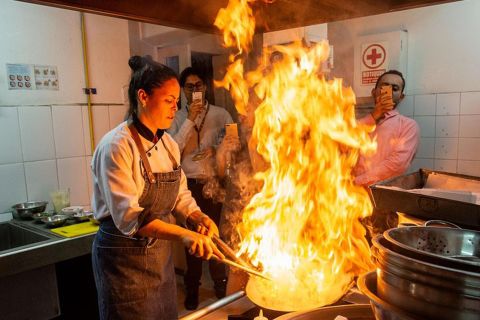
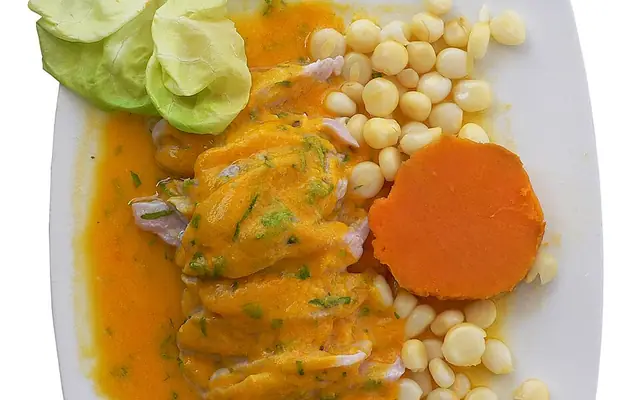
Nikkei cuisine (sometimes Nikkei or Cocina Nikkei) is the food of Peru's Japanese-descendant community, which numbers around 100,000 and is the second-largest Japanese diaspora in Latin America after Brazil. The first ship of Japanese contract laborers arrived at Callao in 1899 to work the sugar plantations; over the next century, Japanese-Peruvians moved into commerce, fishing, and cooking, and the cross-pollination of Japanese technique with Peruvian ingredients produced a cuisine that is now recognized as one of the great fusion traditions of the world.
Nikkei is built on Peruvian seafood (the cold Humboldt current produces extraordinary white fish, octopus, scallop, and shellfish) prepared with Japanese cutting and curing precision. Ceviche (raw fish cured in lime) is the dish that crystallizes the marriage: Japanese cooks brought sashimi-grade fish butchery to a Peruvian preparation, shortened the cure (modern ceviche is marinated for minutes, not hours), and reframed the dish around freshness and texture. Tiradito (Peru's sashimi-shaped ceviche) is an explicitly Nikkei invention, attributed to Japanese-Peruvian chefs in mid-20th-century Lima.
The Nikkei pantry layers Peruvian aji (chiles), corn, lime, sweet potato, and Andean grains onto Japanese soy, miso, ginger, and dashi. Mirin replaces sugar in some glazes; ponzu shows up alongside leche de tigre. The result is a cuisine that registers as Peruvian to a Japanese visitor and as Japanese to a Peruvian one. Lima's top Nikkei restaurants (Maido, Costanera 700, Hanzo) routinely rank in the global 50 best lists, and the style has now exported to Tokyo, New York, London, and São Paulo.
Book a food experience
Tours, tastings and classes that match this page, bookable on GetYourGuide.
Top picks
The best-scored Japanese-Peruvian place in each of 10 cities.
Maido ★ 4.9
Maido at Calle San Martin 399 in Miraflores is Mitsuharu Tsumura's Nikkei tasting room, named The World's Best Restaurant 2025 in Turin on 19 June.
OrderThe full Nikkei Experience tasting menu, Pacific coast to Peruvian Amazon in 14 courses.
TipBook via mesa247 the moment a slot opens; reservation only, no walk-ins.
Matsuhisa ★ 4.6
Matsuhisa in Denver is Nobu Matsuhisa's Cherry Creek dining room since 2009, the chef's third Colorado location with the canonical Nobu-style.
OrderThe black cod miso and yellowtail jalapeno are the Matsuhisa signatures.
TipThe sushi bar pours through a separate booking link from the dining room. The Aspen location is the chef's original; Denver is the day-trip Front Range version.
Azabu Ponsonby ★ 4.5
Azabu runs Nikkei (Japanese-Peruvian) cooking from a corner at 26 Ponsonby Road, Grey Lynn, Auckland. Sashimi tostadas and pisco cocktails on the daily.
SignatureTuna sashimi tostadas, Pisco-glazed beef, Nikkei tiradito
Yunta Nikkei ★ 4.5
Yunta in South End is Bruno Macchiavello and Randy Garcia's Peruvian-Japanese Nikkei kitchen, opened by the team behind Viva Chicken on South Boulevard.
OrderThe tiradito; the kitchen runs it with a Pisco-led cocktail programme designed by mixologist Bob Peters.
TipBar seats take walk-ins; the omakase counter is reservation-only via Tock.
Chotto Matte ★ 4.5
Kurt Zdesar's tenth-floor Nikkei rooftop room at No.1 St Michael's, opened October 2025. Located in Spinningfields. Kitchen leans japanese-peruvian nikkei.
OrderSalmon Nikkei tiradito; black cod miso; finish at the rooftop bar.
TipBook the terrace tables for sunset; lift access from the Jacksons Row entrance only.
NUNA ★ 4.5
NUNA at the Four Seasons Miami is chef Jaime Pesaque's Nikkei rooftop on Brickell Avenue, the Peruvian-Japanese room that opened above the hotel in May 2025.
OrderCeviche Limeno with corvina in leche de tigre, sweet potato and cilantro.
TipDinner only, Monday to Saturday from 6pm; the rooftop terrace seats are the booking to request at sunset.
Matsuhisa ★ 4.3
Sushi chef Nobu Matsuhisa opened Matsuhisa at 129 N La Cienega Blvd in Beverly Hills in 1987, with a blend of Japanese and Peruvian cuisine.
SignatureBlack cod miso, Yellowtail jalapeno
TipBook online or call the restaurant; lunch and dinner are both served Monday to Sunday.
Panorama Nikkei Bar ★ 4.2
Panorama Nikkei Bar pairs Japanese-Peruvian plates with Mediterranean tapas on Carrer de Brussel·les in Salou, from corvina ceviche to Balfegó tuna tacos.
OrderCeviche carretillero, corvina in classic tiger's milk with crisp baby squid on top.
TipOysters come three ways: natural, Peruvian with tiger's milk or Nikkei with ponzu; a weekend set menu runs at Friday to Sunday lunch.
Sushi Social ★ 4.2
Sushi Social at Thingholtsstraeti 5 has a 7 course menu that combines Iceland's produce with Japanese and South American cuisine, and a 5 course omakase.
OrderThe 5 course omakase, or the 7 course menu that starts with a shot of Brennivín.
TipOmakase is a 5 course tasting menu, served only for the entire table, and it starts with sparkling wine.
Ikibana ★ 4.1
Ikibana in Barcelona's Born is the loud Brazil-Japan room on Passeig de Picasso: sushi, sashimi and tropical cocktails in a dark-lit dining loft.
OrderThe Ikibana signature roll and a tuna tataki to share.
TipOpen daily lunch and dinner; book the bar over the table on busy nights.
Find a place
Maido ★ 4.9
Maido at Calle San Martin 399 in Miraflores is Mitsuharu Tsumura's Nikkei tasting room, named The World's Best Restaurant 2025 in Turin on 19 June.
OrderThe full Nikkei Experience tasting menu, Pacific coast to Peruvian Amazon in 14 courses.
TipBook via mesa247 the moment a slot opens; reservation only, no walk-ins.
Matsuhisa ★ 4.6
Matsuhisa in Denver is Nobu Matsuhisa's Cherry Creek dining room since 2009, the chef's third Colorado location with the canonical Nobu-style.
OrderThe black cod miso and yellowtail jalapeno are the Matsuhisa signatures.
TipThe sushi bar pours through a separate booking link from the dining room. The Aspen location is the chef's original; Denver is the day-trip Front Range version.
Matsuhisa Denver ★ 4.6
Matsuhisa Denver is Nobu Matsuhisa's Cherry Creek dining room since 2009, the chef's Colorado location running the canonical Nobu-style Japanese-Peruvian.
Book3 weeks ahead
Azabu Ponsonby ★ 4.5
Azabu runs Nikkei (Japanese-Peruvian) cooking from a corner at 26 Ponsonby Road, Grey Lynn, Auckland. Sashimi tostadas and pisco cocktails on the daily.
SignatureTuna sashimi tostadas, Pisco-glazed beef, Nikkei tiradito
Yunta Nikkei ★ 4.5
Yunta in South End is Bruno Macchiavello and Randy Garcia's Peruvian-Japanese Nikkei kitchen, opened by the team behind Viva Chicken on South Boulevard.
OrderThe tiradito; the kitchen runs it with a Pisco-led cocktail programme designed by mixologist Bob Peters.
TipBar seats take walk-ins; the omakase counter is reservation-only via Tock.
Chotto Matte ★ 4.5
Kurt Zdesar's tenth-floor Nikkei rooftop room at No.1 St Michael's, opened October 2025. Located in Spinningfields. Kitchen leans japanese-peruvian nikkei.
OrderSalmon Nikkei tiradito; black cod miso; finish at the rooftop bar.
TipBook the terrace tables for sunset; lift access from the Jacksons Row entrance only.
NUNA ★ 4.5
NUNA at the Four Seasons Miami is chef Jaime Pesaque's Nikkei rooftop on Brickell Avenue, the Peruvian-Japanese room that opened above the hotel in May 2025.
OrderCeviche Limeno with corvina in leche de tigre, sweet potato and cilantro.
TipDinner only, Monday to Saturday from 6pm; the rooftop terrace seats are the booking to request at sunset.
Matsuhisa ★ 4.3
Sushi chef Nobu Matsuhisa opened Matsuhisa at 129 N La Cienega Blvd in Beverly Hills in 1987, with a blend of Japanese and Peruvian cuisine.
SignatureBlack cod miso, Yellowtail jalapeno
TipBook online or call the restaurant; lunch and dinner are both served Monday to Sunday.
Azabu Mission Bay ★ 4.2
Azabu Mission Bay is the eastern-bays sibling of the Ponsonby room, with Nikkei Japanese-Peruvian cooking at 44 Tamaki Drive on the Auckland waterfront.
SignatureTuna tostadas, Nikkei ceviche, Maki rolls
Panorama Nikkei Bar ★ 4.2
Panorama Nikkei Bar pairs Japanese-Peruvian plates with Mediterranean tapas on Carrer de Brussel·les in Salou, from corvina ceviche to Balfegó tuna tacos.
OrderCeviche carretillero, corvina in classic tiger's milk with crisp baby squid on top.
TipOysters come three ways: natural, Peruvian with tiger's milk or Nikkei with ponzu; a weekend set menu runs at Friday to Sunday lunch.
Sushi Social ★ 4.2
Sushi Social at Thingholtsstraeti 5 has a 7 course menu that combines Iceland's produce with Japanese and South American cuisine, and a 5 course omakase.
OrderThe 5 course omakase, or the 7 course menu that starts with a shot of Brennivín.
TipOmakase is a 5 course tasting menu, served only for the entire table, and it starts with sparkling wine.
Ikibana ★ 4.1
Ikibana in Barcelona's Born is the loud Brazil-Japan room on Passeig de Picasso: sushi, sashimi and tropical cocktails in a dark-lit dining loft.
OrderThe Ikibana signature roll and a tuna tataki to share.
TipOpen daily lunch and dinner; book the bar over the table on busy nights.
Japanese-Peruvian by city
 Auckland4 places
Azabu Ponsonby, Azabu Mission Bay
Auckland4 places
Azabu Ponsonby, Azabu Mission Bay
 Charlotte2 places
Yunta Nikkei
Charlotte2 places
Yunta Nikkei
 Denver2 places
Matsuhisa, Matsuhisa Denver
Denver2 places
Matsuhisa, Matsuhisa Denver
 Lima2 places
Maido
Lima2 places
Maido
 Manchester2 places
Chotto Matte
Manchester2 places
Chotto Matte
 Salou2 places
Panorama Nikkei Bar
Salou2 places
Panorama Nikkei Bar
 Barcelona1 place
Ikibana
Barcelona1 place
Ikibana
 Los Angeles1 place
Matsuhisa
Los Angeles1 place
Matsuhisa
 Miami1 place
NUNA
Miami1 place
NUNA
 Reykjavik1 place
Sushi Social
Reykjavik1 place
Sushi Social
Regional variations
Lima
The heart of Nikkei. Maido (chef Mitsuharu 'Micha' Tsumura) is the modern flagship and one of Latin America's most decorated restaurants. The Lima Nikkei scene is concentrated in Miraflores and San Isidro, with a long bench of family-run cevicherias going back three generations.
Callao and the Peruvian coast
Closer to the fishing port. Heavier on raw seafood, simpler plating, lower prices, more family operators. The original Nikkei kitchens were here, working directly off the day's catch.
Outside Peru
Nikkei has been exported by Lima-trained chefs to Tokyo (Bepocah, Costanera Lima), New York (Llama Inn, Llama San), London (Coya, Pachamama), São Paulo, and Madrid. Each city's Nikkei restaurants adjust ingredients (US, UK, and Japanese fish replace the Humboldt species) but preserve the technique.
Defining Japanese-Peruvian dishes
- Ceviche Nikkei
- Raw white fish (corvina, lenguado, mero) cured in lime juice (leche de tigre) with red onion, aji limo or rocoto chile, cilantro, sweet potato, and often a Japanese accent of dashi, ponzu, or sesame oil.
- Tiradito
- Nikkei sashimi-style ceviche. Fish sliced thin like sashimi (not cubed like ceviche), arranged on a flat plate, dressed with a citrus-aji-soy sauce just before service. Almost no marination time, no onion.
- Maki Acevichado
- Sushi roll filled with shrimp tempura or fish, topped with sliced fish and a sauce based on leche de tigre. A Lima sushi-bar invention, ubiquitous in the city's Nikkei restaurants.
- Anticucho Nikkei
- Grilled beef-heart skewers (the traditional Peruvian street food) reworked with Japanese glazes (mirin-soy, miso, yuzu) or paired with rice and ponzu dipping sauce. A specialty at Maido and other modern Nikkei kitchens.
- Causa Nikkei
- Cold molded yellow-potato cake (Peruvian causa) layered with raw or cured fish, tobiko, avocado, and Japanese-style toppings (uni, salmon roe, shiso). A direct fusion plate.
- Pulpo al Olivo Nikkei
- Sliced poached octopus with a black-olive cream sauce, plated sashimi-style with shiso and a soy reduction. Originally a Peruvian dish, refined by Nikkei chefs into a sushi-counter form.
- Arroz con Mariscos Nikkei
- Peruvian seafood rice (closer to paella in form) with Japanese accents: dashi in the cooking liquid, sake instead of white wine, and topped with raw scallop or uni at the last moment.
- Tetsuya Cocktail
- Nikkei restaurants have a strong pisco-and-sake bar program. The Tetsuya layered pisco-sake-yuzu cocktail is a Lima-bar invention now traveling internationally.
- Aji de Gallina Nikkei
- The Peruvian creamed-chicken stew, lightened by replacing some of the milk-bread base with dashi and finishing with a Japanese pickle. A subtle home-style fusion.
How to order
At a Lima cevicheria with Nikkei influence, the right opener is ceviche or tiradito. Start with a tiradito to taste the chef's knife and dressing, then a classic ceviche, then move to a hot dish (arroz con mariscos, pescado a la chorrillana). At a serious Nikkei restaurant like Maido, the tasting menu (Nikkei Experience) is the right choice: 12 to 18 courses pacing through ceviche, tiradito, sushi, anticucho, hot dishes, and dessert. Pisco sour or chilcano (pisco with lime and ginger ale) is the right opening drink. Sake from the restaurant's Japanese list is the pair for the sashimi-side of the meal. Bills include a 10% service charge by Peruvian law; an extra 5% tip is normal at a sit-down restaurant. The rookie mistake is treating Nikkei as either Japanese (asking for soy sauce on everything) or Peruvian (drowning ceviche in onion and aji); it is a deliberate balance and the chef has set the seasoning.
What to drink with it
Pisco is the national spirit of Peru and the default Nikkei pair. Pisco sour (pisco, lime, syrup, egg white, bitters) opens almost every meal. Chilcano (pisco, lime, ginger ale, bitters) is the lighter alternative. Sake from a Nikkei sake list (often imported junmai and ginjo) pairs the sashimi-style courses. White wine works with hot mains; Sauvignon Blanc or Albariño are common picks. Beer (Cusqueña, Pilsen Callao) for casual cevicherias. Coffee is the closer; Peru produces serious specialty coffee from Cusco and Cajamarca and most Nikkei restaurants serve it.
Where to eat it
Lima is the only place to eat Nikkei at full depth. Maido (Mitsuharu Tsumura), Costanera 700 (the older established Nikkei flagship), Hanzo, Edo Sushi Bar, and Osaka Cocina Nikkei lead the Miraflores and San Isidro scene. Callao's older Nikkei cevicherias for the family-operator version. Outside Peru, Tokyo (Bepocah), New York (Llama San, Llama Inn), London (Coya, Pachamama), Madrid (Pakta), São Paulo, and Buenos Aires hold credible Nikkei kitchens, almost always run by Lima-trained chefs.
A short history
Japanese immigration to Peru began in 1899 with the first contract laborers arriving at Callao to work sugar plantations. Over the next 50 years, Japanese-Peruvians moved into urban commerce, fishing, and food service, and Japanese fishmongers became central to Lima's cevicherias. The Nikkei culinary identity crystallized in the 1970s and 1980s, with chefs like Dario Matsufuji and Humberto Sato (Costanera 700) formalizing the cuisine. Mitsuharu Tsumura's Maido (founded 2009) globalized Nikkei in the 2010s, and Peru is now widely recognized as one of the world's deepest fusion-cuisine countries.
Frequently asked
Is Nikkei the same as Peruvian-Japanese fusion at any sushi restaurant?
No. Nikkei is a specific historical and cultural cuisine that developed inside Peru's Japanese-descendant community over 120 years. A non-Peruvian sushi restaurant adding aji amarillo to a tuna roll is not Nikkei; Nikkei is the codified tradition, not just any Japan-Peru ingredient combination.
What is the difference between tiradito and ceviche?
Tiradito is Nikkei. The fish is sliced thin sashimi-style (not cubed), arranged on a flat plate, and dressed at service with little or no marination time. Ceviche is cubed, marinated in lime for minutes (originally hours), and served with onion, sweet potato, and corn. Tiradito has no onion.
Is Maido worth the booking effort?
Yes if visiting Lima. Maido is widely considered one of the world's best restaurants and is the clearest single-room expression of modern Nikkei. The tasting menu runs about 4 hours, requires booking weeks in advance, and is significantly cheaper than a comparable counter in Tokyo, New York, or Copenhagen.
More cities are in research. Want Japanese-Peruvian covered somewhere specific? Tell us where you want to eat.