
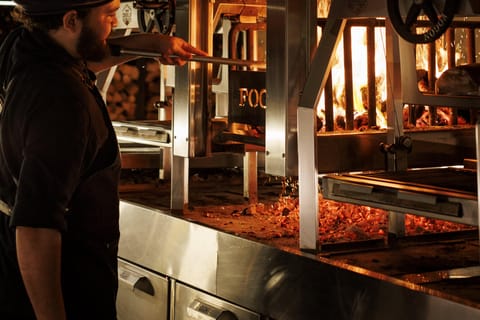
An Argentine parrilla is a specialist steakhouse built around an open hardwood grill, almost always burning quebracho or another dense local wood, with the parrilla (the grill bars) set high above the coals so meat cooks slowly through radiant heat rather than scorched by flame. The asador, the cook tending the fire, moves cuts around the grill based on thickness and fat. The cuisine here is narrow on purpose: a few starters, four to six cuts of beef, lamb or chorizo for variety, salads to cut the richness, a malbec list.
What separates an excellent parrilla from a mediocre one is fire management and source. The best Buenos Aires parrillas (Don Julio, El Pobre Luis, La Cabrera, La Brigada) age their own beef, work with named producers, and stagger the fire so each cut cooks at the right temperature for the right time. Tira de asado, the cross-cut short rib, is the diagnostic order: salted heavily, cooked over slowly receding coals, served when the fat has rendered and the bone-side crust is dark but the interior is still pink. If a parrilla can do tira properly, the rest will follow.
The meal pattern is also specific. A picada (cheese, salami, olives) and a glass of malbec while the fire builds. Provoleta, a thick slice of provolone melted directly on the grill with oregano. Chorizo and morcilla, the two grilling sausages, usually first off the fire. Then the offal course (mollejas, sweetbreads; chinchulines, small intestine; rinones, kidney) for those who want it. Then the steak, often shared, with a green salad and a potato. Chimichurri sits on the table as a condiment, not a marinade. Dessert is flan with dulce de leche or nothing at all.
Book a food experience
Tours, tastings and classes that match this page, bookable on GetYourGuide.

Top picks
The best-scored Argentine parrilla place in each of 3 cities.
Don Julio ★ 4.9
Pablo Rivero's Palermo Soho parrilla; Latin America's 50 Best #1 in 2020 and 2024, #3 in 2025. One Michelin star plus a Green Star in the BA guide.
SignatureBife de chorizo, Provoleta, Empanadas
Balvanera ★ 4.4
Balvanera in the Strip District serves Argentine asado in Pittsburgh. Chef Fernando Navas runs the wood-fired grill in a converted 1920s terminal warehouse.
OrderEmpanadas to start, then a grilled cut with chimichurri and a Malbec.
TipThe dining room takes reservations; the bar and bodega area are first-come walk-ins. Parking lots sit behind the Terminal.
Julia's Empanadas ★ 4.2
Julia's Empanadas in Washington DC is the Adams Morgan 18th Street empanada counter since 1993, open until 03:00 on Friday and Saturday nights.
TryTwo-empanada combo ($9-11)
TipTwo empanadas plus a side of plantains stays under $12; Friday and Saturday counter runs until 03:00 for the late-night crowd.
Find a place
Don Julio ★ 4.9
Pablo Rivero's Palermo Soho parrilla; Latin America's 50 Best #1 in 2020 and 2024, #3 in 2025. One Michelin star plus a Green Star in the BA guide.
SignatureBife de chorizo, Provoleta, Empanadas
Anchoita ★ 4.6
Enrique Pineyro's Chacarita room in a former siphon factory; glass-walled charcoal grill, cheese cart and Entre Rios river fish. Michelin Green Star 2024.
SignatureAged ribeye, Daily fresh fish, Cheese course
La Carniceria ★ 4.6
Pedro Pena and German Sitz's intimate Palermo parrilla. Grass-fed beef from family land, no walk-ins; charred-crust steaks and smoky bone marrow.
SignatureCostilla de chorizo, Mollejas, Grilled provoleta
Balvanera ★ 4.4
Balvanera in the Strip District serves Argentine asado in Pittsburgh. Chef Fernando Navas runs the wood-fired grill in a converted 1920s terminal warehouse.
OrderEmpanadas to start, then a grilled cut with chimichurri and a Malbec.
TipThe dining room takes reservations; the bar and bodega area are first-come walk-ins. Parking lots sit behind the Terminal.
Julia's Empanadas ★ 4.2
Julia's Empanadas in Washington DC is the Adams Morgan 18th Street empanada counter since 1993, open until 03:00 on Friday and Saturday nights.
TryTwo-empanada combo ($9-11)
TipTwo empanadas plus a side of plantains stays under $12; Friday and Saturday counter runs until 03:00 for the late-night crowd.
Argentine parrilla by city




Defining Argentine parrilla dishes
- Tira de asado
- Cross-cut short rib, the diagnostic Argentine cut. Salted heavily, grilled bone-down first then flipped, served when the fat has rendered and the meat is medium-rare. The most-ordered cut at a serious parrilla.
- Bife de chorizo
- Sirloin strip, thick-cut, salted and grilled hot then rested. The most internationally familiar Argentine steak.
- Vacio
- Flank, with a layer of external fat that bastes the cut as it cooks. Long, flat, grilled slowly. Sliced across the grain to serve. The asadores' favorite cut for its texture and flavor.
- Entrana
- Skirt steak, thin, fast-grilled, served rare. Strong beef flavor, the working-cook's cut. Often the first steak off the fire at a long asado.
- Ojo de bife
- Ribeye, well-marbled, grilled with the cap on. The richest of the standard parrilla cuts.
- Mollejas
- Sweetbreads (thymus gland), salted, grilled crisp on the outside and creamy inside, finished with lemon. The offal opener at every serious parrilla.
- Chorizo and morcilla
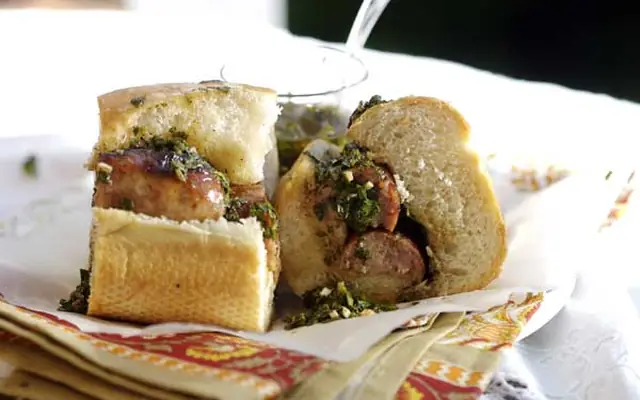
- The two parrilla sausages: chorizo is pork-and-paprika, morcilla is the blood sausage. Served first off the fire, often inside a roll as choripan with chimichurri.
- Provoleta
- Thick slice of provolone melted on a small cazuela on the grill with oregano and chile. Eaten with crusty bread, scooping the molten cheese.
- Asador / cordero al palo
- Whole lamb (or kid goat) crucified on a cross-shaped iron stake (asador) and roasted next to a fire for hours. The Patagonian and country-asado specialty, found at rural parrillas and special events.
How to order
Start with provoleta and a glass of malbec while the table fills. Picada (a charcuterie-and-cheese board) is a common opener if the wait is long. Once the fire is ready, the asador will begin sending things in waves: morcilla and chorizo first, then the offal course (mollejas above all), then the steaks in order of how the cuts handle the fire. Tira de asado is the diagnostic order; bife de chorizo and ojo de bife are the larger cuts; vacio and entrana are the flat cuts. For a group, order parrilla mixta (a mixed grill) and add the cuts everyone specifically wants on top.
Doneness is named differently. Jugoso is medium-rare, a punto is medium, bien hecho is well-done. The Argentine norm is a punto or a punto jugoso. Asking for rare beyond jugoso is unusual and the kitchen may push back. Chimichurri is a table condiment (parsley, garlic, oregano, vinegar, oil, chile); use it sparingly, not as a marinade. The standard parrilla meal is two to three hours; the asado is unhurried by design.
What to drink with it
Malbec, malbec, malbec. Mendoza's Argentine specialty is the global gold standard for parrilla wine. Specific bottles to know: Catena Zapata, Achaval Ferrer Quimera, Nicolas Catena Zapata, Bodega Norton Privada. Cabernet sauvignon, bonarda, and the increasingly important cabernet franc are alternatives. Quilmes lager is the local beer. After the meal: a fernet con coca, an espresso, occasionally a grappa. Water is bottled (con gas / sin gas); the tap water in Buenos Aires is drinkable but rarely served at restaurants.
Where to eat it
Buenos Aires is the world capital of the parrilla. Don Julio (Palermo, often listed among the world's 50 best restaurants), La Cabrera (Palermo, the dry-aged-cut showcase), El Pobre Luis (Belgrano, Uruguayan-influenced and lesser-known), La Brigada (San Telmo), and Parrilla Pena (Recoleta) are the canonical rooms. Mendoza for the parrilla-and-wine pairing in the vineyards. Patagonia for cordero al palo. Outside Argentina, parrilla format runs in Madrid (where the Argentine diaspora is largest in Europe), Miami, New York (Don Julio NY 2024, Patagonia), Tokyo, and Sao Paulo.
A short history
The parrilla descends from the 18th- and 19th-century gaucho cattle culture of the Pampas. Gauchos would skewer beef on iron stakes (asadores) and roast it next to wood fires; the parrilla grill is the urban institutionalization of that practice. The codification of the modern Buenos Aires parrilla as a restaurant format dates to the early 20th century. Quebracho, the dense Argentine hardwood (the name means 'ax-breaker'), is the traditional grilling wood and remains the standard fuel.
Frequently asked
How does a parrilla differ from a steakhouse?
A parrilla grills over wood or hardwood charcoal at high distance, slowly; an American steakhouse usually uses gas broilers or short-distance charcoal at much higher temperatures. The parrilla flavor profile is smokier, the cuts are slightly less crusted, and the focus is on cooking the whole animal in waves rather than on one steak per plate.
Is the meat dry-aged?
At the top Buenos Aires parrillas, yes. Don Julio and La Cabrera dry-age in-house. Many mid-tier parrillas serve fresh beef (untreated), which produces a different texture. Argentine grass-fed beef has less marbling than US grain-finished beef, so the texture is firmer at the same doneness.
What's chimichurri actually for?
It's a table condiment, not a marinade. Parsley, garlic, oregano, vinegar, oil, sometimes chile and bay leaf. A small spoonful on top of a slice of grilled meat as you eat it; not for soaking the steak before cooking.
More cities are in research. Want Argentine parrilla covered somewhere specific? Tell us where you want to eat.