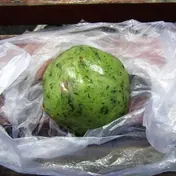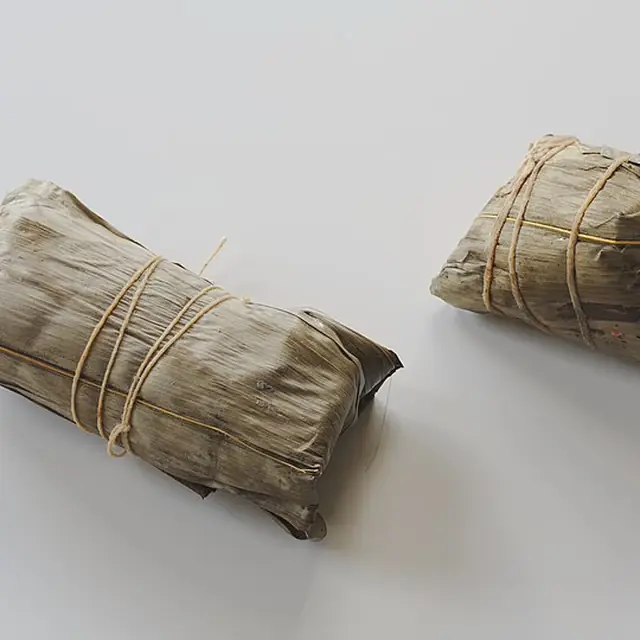
Zongzi are leaf-wrapped glutinous rice dumplings eaten at the Dragon Boat Festival; Shanghai favours savoury pork, often with egg yolk, and sweet red bean.

Ancient China called zongzi jiaoshu, after their angular shape and millet filling. By the Jin dynasty, eating leaf-wrapped millet dumplings around the fifth day of the fifth lunar month, near the summer solstice, was an established custom. The dumplings are linked to the poet Qu Yuan: according to the Xu Qixie Ji, people tossed rice-filled bamboo tubes into the Miluo River after he drowned himself there. In the Ming and Qing dynasties zongzi also stood for exam luck, as students ate long brush-shaped bizong, a name that sounds like bizhong, certain to succeed. Shanghai's favourite fillings are savoury pork, with or without salted egg yolk, and sweet red bean and candied jujube.

Where to eat Zongzi (glutinous rice dumplings) in Shanghai

1 editor pick for Zongzi (glutinous rice dumplings) in Shanghai, ranked by editorial score. All Shanghai signature dishes · Zongzi (glutinous rice dumplings) across every city.

Book food experiences in Shanghai

See all 2,183 food experiences in Shanghai

More places to eat in Shanghai

Not on this list, but among the highest we score in this city. Every one is in our guide with its address, hours and what to order.

Make it at home

Serves Makes about 108 hrAdvanced

Ingredients

  • 500g glutinous rice, soaked for at least 4 hours
  • 20 dried bamboo leaves, soaked and rinsed
  • 400g pork belly, cut into chunks and marinated in 2 tbsp light soy sauce, 1 tbsp dark soy sauce and 1 tbsp Shaoxing wine
  • 2 salted duck egg yolks, halved (optional)
  • String or kitchen twine, for tying

Method

  1. Drain the soaked rice and toss it with a little of the pork marinade so the grains pick up colour.
  2. Take two bamboo leaves and overlap them, then fold into a cone near the wide end.
  3. Spoon in a layer of rice, add a piece of marinated pork and half a salted egg yolk if using, then top with more rice to cover.
  4. Fold the top of the leaves down over the filling to seal the cone into a triangular parcel and tie tightly with string.
  5. Lower the parcels into a large pot of water, making sure they are fully submerged, and bring to the boil.
  6. Simmer for at least 3 hours, topping up with boiling water as needed, until the rice is fully cooked through.
  7. Lift out and drain, then let them cool slightly before unwrapping.

Editor tip. Tie each parcel tightly before it goes in the pot; a loose zongzi lets water in and turns the rice mushy instead of firm.

Common allergens: Egg.