What is in season in Ho Chi Minh City. and what to order when the market changes.
Spring
- Tet feast dishes: Around the Lunar New Year in late January or February, home tables and stalls fill with banh tet sticky-rice logs, thit kho trung braised pork with egg, and trays of candied fruit and coconut.
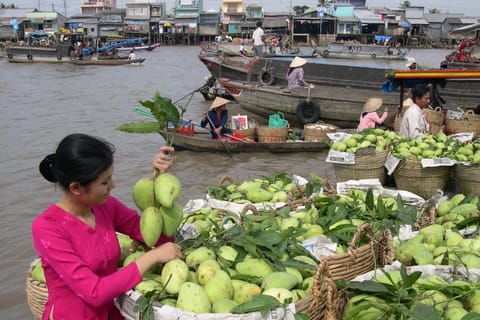
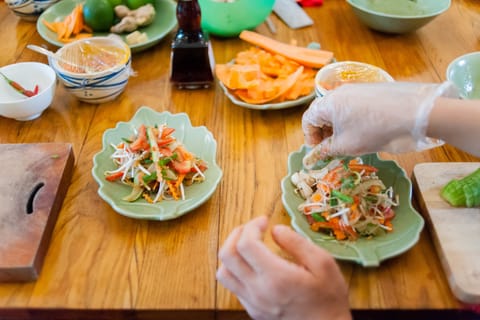
- Green mango and thanh tra: The dry-season tail brings sour green mango and thanh tra, shredded into som and salads with chili salt, a cooling street snack as the heat builds toward April.
Summer
- Delta fruit season: From May to August the Mekong orchards flood the markets with mangosteen, rambutan, lychee, longan and durian, sold whole or blended into che and smoothies against the wet-season heat.
- Che and cooling desserts: In the hottest months Saigon lives on che, sweet bean, jelly and coconut-milk cups over crushed ice, sold from carts and stalls across every district through the afternoon.
Autumn
- Mooncakes: For the Mid-Autumn Festival in September, bakeries and street stalls sell banh nuong baked mooncakes and banh deo sticky ones, in flavours from lotus seed and salted egg to durian and green tea.
- Pomelo and longan: The turn of the wet season brings sweet pomelo, segmented into goi buoi salads with dried shrimp, alongside baskets of fresh longan sold along the roadside markets.
Winter
- Dry-season grilling: The cooler, drier months from November are prime time for outdoor eating, when snail joints, com tam grills and seafood stalls are most comfortable and busiest across the city after dark.
- Dalat strawberries and vegetables: The cool-season harvest from the Dalat highlands sends strawberries, artichokes and crisp vegetables down to Saigon markets, a brief window of temperate produce in a tropical city.