

The plates that define St. Louis: what they are, where they came from, and where to eat the canonical version.
Signature dishes
-
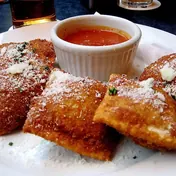
Toasted ravioli ★ 4.7
Toasted ravioli, or t-ravs, are meat-filled ravioli breaded and deep-fried until crisp, served with marinara for dipping. They are the defining St. Louis appetiser, born on The Hill.
Where to try it: Charlie Gitto's On The Hill, Zia's On The Hill, STL Toasted, Anthonino's Taverna
Price: $8-12
The dish was invented by accident on The Hill, St. Louis's Italian neighbourhood, around the 1940s, when a cook is said to have dropped ravioli into hot oil instead of boiling water. Both Charlie Gitto's and the former Mama Toscano's have claimed the origin. However it happened, breaded-and-fried ravioli spread from the neighbourhood's red-sauce kitchens to become the city's signature starter, now found on menus across the metro and rarely anywhere else.
Watch out for: Gluten, Egg, Dairy
-
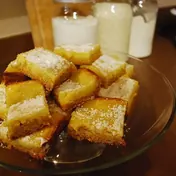
Gooey butter cake ★ 4.6
Gooey butter cake is a dense, flat coffee cake with a sticky butter-and-sugar top, somewhere between a cake and a custard bar. It is a St. Louis bakery staple eaten any time of day.
Where to try it: Park Avenue Coffee, Federhofer's Bakery, Missouri Baking Company
Price: $3-6 a slice
The cake is a St. Louis invention, most often dated to a German-American bakery in the 1930s where a baker reportedly reversed the proportions of butter and flour by mistake. Rather than throw it out, the bakery sold the dense, gooey result, and it caught on across the city's German bakeries. Today every St. Louis bakery makes a version, some with cream cheese and powdered sugar, others, like Federhofer's, without either, and Park Avenue Coffee turns out more than 70 flavours.
Watch out for: Gluten, Egg, Dairy
-
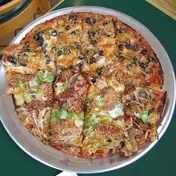
St. Louis-style pizza ★ 4.4
St. Louis-style pizza has a cracker-thin, unleavened crust topped with Provel, a processed cheese unique to the city, and is cut into squares known as the tavern cut.
Where to try it: Imo's Pizza
Price: $12-20
The style took shape in the city's Italian and tavern kitchens in the mid-20th century, but it was Imo's, founded in 1964 on The Hill, that made it the regional standard. Its defining feature is Provel, a processed blend of cheddar, Swiss and provolone with a low melting point, gooey and buttery rather than stringy. Locals are fiercely divided on Provel, but the cracker crust cut in squares is the version St. Louisans grew up on and order by the dozen.
Watch out for: Gluten, Dairy
Book food experiences in St. Louis


-
The slinger ★ 4.3
The slinger is a late-night diner pile-up: two eggs over hash browns and a hamburger patty, smothered in chili and cheese and topped with raw onion. It is breakfast, dinner and a hangover cure in one.
Where to try it: Courtesy Diner, Fleur STL, Southwest Diner
Price: $10-14
The slinger emerged from St. Louis's all-night diners in the mid-20th century, with the now-closed Eat-Rite Diner among the spots that claimed it. There is no single inventor; it grew out of the griddle-cook habit of combining whatever was on hand into one plate for late-shift workers and bar crowds. Diners across the south side still serve it around the clock, and Fleur STL now plates an elevated version in the old Eat-Rite building.
Watch out for: Egg, Dairy
-
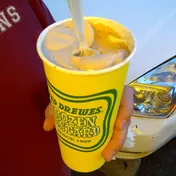
Frozen custard concrete ★ 4.5
A concrete is frozen custard blended so thick with mix-ins that it holds a spoon upside down. Ted Drewes made it the St. Louis dessert, dense, cold and famously inverted at the window.
Where to try it: Ted Drewes Frozen Custard
Price: $4-8
Frozen custard, an egg-enriched ice cream, took hold in the Midwest in the 1930s, and Ted Drewes opened his Chippewa Street stand on Route 66 in 1941. The concrete, blended so stiff it can be handed over upside down without spilling, became the signature, a showmanship move that doubles as proof of thickness. The Chippewa stand still draws summer lines and ranks among the most enduring food landmarks in the city.
Watch out for: Egg, Dairy
-
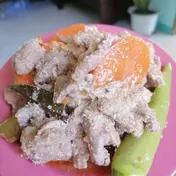
Pork steak ★ 4.2
A pork steak is a thick cut of pork shoulder, grilled low over charcoal and braised in barbecue sauce, usually the local Maull's. It is the signature St. Louis backyard cookout dish.
Where to try it: Sugarfire Smoke House
Price: $12-18
The pork steak became a St. Louis summer staple in the 1950s, helped by local meatpackers cutting pork shoulder into affordable steaks and by Maull's, a St. Louis barbecue sauce dating to 1926. Cooked slow over coals then simmered in sauce until tender, it is rarely seen as a restaurant dish and instead defines backyard grilling across the metro, a regional cut few cities outside the area know.
-
St. Louis-style ribs ★ 4.3
St. Louis-style ribs are spare ribs trimmed into a neat rectangular rack by removing the brisket bone and cartilage. The cut is now used nationwide but takes its name from this city.
Where to try it: Pappy's Smokehouse, Salt + Smoke, Bogart's Smokehouse
Price: $18-28 a rack
The St. Louis cut is a butchery style, not a recipe: pork spare ribs squared off by trimming the sternum, cartilage and flap, leaving an even rack that cooks consistently. The name reflects the city's role as a major 20th-century pork-processing centre. Local smokehouses like Pappy's and Salt + Smoke turn the cut into Memphis- and Texas-leaning ribs, and the trim is now a standard term on menus and in butcher cases across the country.
-
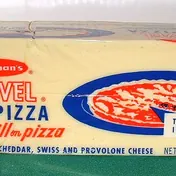
Provel ★ 4.2
Provel is a processed cheese unique to St. Louis, a blend of cheddar, Swiss and provolone with a low melting point that turns gooey and buttery rather than stringy. It defines local pizza.
Where to try it: Imo's Pizza
Price: Sold by the pound at local groceries
Developed in the mid-20th century for the St. Louis market, Provel was engineered to melt smoothly and not stretch into strings, which suited the city's cracker-crust, square-cut pizza. It is sold almost exclusively in the St. Louis area and is the ingredient that most divides locals and outsiders. Beyond pizza, it tops the Gerber sandwich and turns up wherever a melty, mild cheese is wanted in the regional kitchen.
Watch out for: Dairy
-
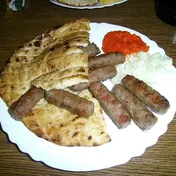
Cevapi ★ 4.3
Cevapi are small grilled beef-and-lamb sausages served in fluffy somun flatbread with raw onion and ajvar. They are the heart of St. Louis's large Bosnian food scene around Bevo Mill.
Where to try it: Balkan Treat Box
Price: $10-15
Cevapi arrived with the tens of thousands of Bosnian refugees who settled St. Louis in the 1990s, building the largest Bosnian community outside Bosnia. Centred on Bevo Mill and Gravois Avenue, Bosnian kitchens and bakeries made cevapi, burek and somun everyday local food. Balkan Treat Box in Webster Groves later earned national attention baking wood-fired somun for its cevapi, bringing the dish to a wider audience.
Watch out for: Gluten
-
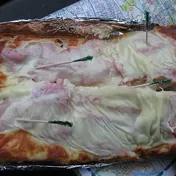
Gerber sandwich ★ 4.0
A Gerber is an open-face sandwich of garlic bread topped with ham and Provel, broiled until the cheese turns gooey and golden. It is a St. Louis lunch-counter creation.
Where to try it: Blues City Deli, Mom's Deli
Price: $8-12
The Gerber was created in the 1970s at Ruma's Deli in St. Louis, named for a regular customer, Dickie Gerber. Built on a half-loaf of buttered garlic bread, layered with ham and the city's signature Provel, then broiled, it became a fixture of St. Louis delis and bars. It is essentially a local riff on open-face cheese toast, and like Provel itself, it rarely appears outside the metro.
Watch out for: Gluten, Dairy
-

Crispy snoots ★ 3.9
Crispy snoots are pig snouts smoked and fried until they crackle like cracklin, a St. Louis barbecue tradition rooted in the city's African-American smokehouses.
Price: $8-12
Snoots are part of the whole-hog, nose-to-tail tradition of St. Louis's African-American barbecue, particularly on the north side. The snout is smoked low and slow, then fried or smoked further until it crisps into a crunchy, chewy snack eaten with hot sauce or barbecue sauce. Few cities outside St. Louis keep the tradition, and the city's smokehouses are the best places to try it.
-
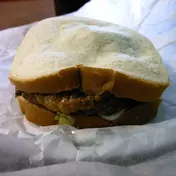
St. Paul Sandwich ★ 4.3
An egg foo young patty (pork, beef, chicken or shrimp) griddled in a Chinese-American kitchen, then sandwiched between two slices of soft white bread with mayonnaise, dill pickles, lettuce, tomato and white onion.
Where to try it: Blues City Deli
Price: $6-12
The St. Paul Sandwich is genuinely unique to St. Louis Chinese-American takeout counters and exists almost nowhere else. The most-told origin credits Steven Yuen at Park Chop Suey, who is said to have named it for his hometown of St. Paul, Minnesota, but blues historian researchers later surfaced St. Louis newspaper ads for 'St. Paul' sandwiches as early as 1916 and noted Park Chop Suey did not open until the mid-1970s. The egg-foo-young-on-white-bread format remains a city signature. Maybe a dozen counters still serve it citywide; House of Wong, Beijing Express and Blues City Deli are among the standard-bearers.
Watch out for: Gluten, Egg, Shellfish, Soy
Signature Dishes in St. Louis, FAQ
What food is St. Louis known for?
St. Louis's signature dishes include Toasted ravioli, Gooey butter cake, St. Louis-style pizza, The slinger, Frozen custard concrete. See our signature dishes chapter for where to eat each.