

The plates that define Portland: what they are, where they came from, and where to eat the canonical version.
Signature dishes
-
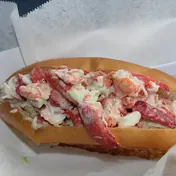
Maine lobster roll ★ 4.9
Cold Maine lobster meat (claws, knuckles and tails picked the morning of) tossed with mayo, salt and lemon, piled onto a buttered and griddled top-split New England roll. Soft-shell season runs late May to September.
Where to try it: Eventide Oyster Co, Scales, Boone's Fish House + Oyster Room, Bite Into Maine at Allagash
Price: $24 to $42
The lobster roll is widely credited to Perry's Restaurant in Milford, Connecticut, in the 1920s, when chef Harry Perry put hot buttered lobster meat onto a long bun for a travelling salesman. The Maine-style cold-mayo version evolved separately along the Maine coast through the 1930s and 1940s at shore-side lobster shacks. The top-split bun, baked by J J Nissen Baking Company starting in the 1940s, became the structural canon: flat sides griddle in butter like a panini. Eventide Oyster Co's brown-butter lobster roll on a steamed Bao bun (2012, from Mike Wiley and Andrew Taylor) reset the modern interpretation. Today both styles run at Portland lobster pounds and tasting menus alike.
Watch out for: Shellfish, Gluten, Egg
-
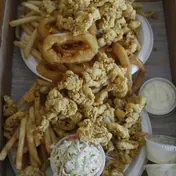
Fried Maine clams ★ 4.8
Whole-belly soft-shell clams (Mya arenaria), dredged in evaporated milk and corn flour, then deep-fried until crisp. Maine clam shacks favour whole-belly over strip; the milk-and-corn-flour dredge produces a lacy crust.
Where to try it: Becky's Diner, Scales, Boone's Fish House + Oyster Room, Harbor Fish Market
Price: $22 to $32
Fried clams trace to Woodman's of Essex, Massachusetts, where Chubby Woodman is credited with the first fried clam in 1916. The Maine variant, almost exclusively whole-belly (not strip clams), spread along the working waterfronts through the 1930s and 1940s. The dredging in evaporated milk and corn flour, rather than batter, gives the canonical lacy crust. Portland's Becky's Diner, Bite Into Maine and the Old Port seafood rooms all run them seasonally; the Mid-Coast clam shacks from Wiscasset to Camden are the day-trip destinations.
Watch out for: Shellfish, Gluten, Dairy
-
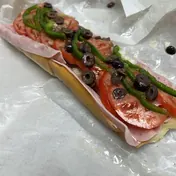
Maine Italian sandwich ★ 4.5
Soft white roll filled with ham, salami, American cheese, sliced onions, tomato, green olives, sour pickles, sweet peppers, oil, salt and pepper.
Where to try it: Amato's Original Italian Sandwich, Rosemont Market Munjoy Hill
Price: $7 to $11
Giovanni Amato, a Sicilian immigrant baker, sold the first Italian sandwich at his Italian Sandwich Shop on India Street in 1902 to Portland dock workers who needed lunch they could carry. Amato sold them for a nickel. The soft white roll was based on Sicilian-style rolls; the seven fillings stayed standard. The Maine Italian became the regional sandwich of Portland and southern Maine, distinct from any other US Italian-American sandwich. Amato's still operates the original 1902 storefront on India Street; the Maine Italian routinely appears as Maine's signature lunch on national lists.
Watch out for: Gluten, Dairy
Book food experiences in Portland

-
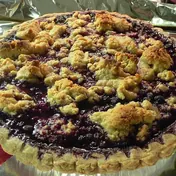
Wild Maine blueberry pie ★ 4.7
Double-crust American pie of wild Maine lowbush blueberries (Vaccinium angustifolium), sugar, lemon and starch. The lowbush berry is smaller and more intense than the highbush; peak is late July through August.
Where to try it: Two Fat Cats Bakery, Becky's Diner, Standard Baking Co
Price: $6 to $9 per slice, $28 to $42 whole
Wild lowbush blueberries (Vaccinium angustifolium) are native to the Maine barrens; the Wabanaki peoples cultivated them for thousands of years before European settlement. Commercial wild blueberry production began in the 1840s in Washington County, Maine; today Maine produces nearly all US wild blueberries. The pie has been a Maine summer staple since the late 1800s, with cookbooks from the Maine Cooperative Extension formalising the canonical sugar-and-cornstarch ratio in the 1920s. Two Fat Cats Bakery on Lancaster Street and Becky's Diner both run a canonical July to August blueberry pie window.
Watch out for: Gluten, Dairy
-
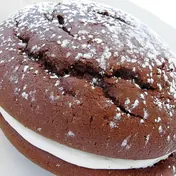
Whoopie pie ★ 4.4
Two soft round chocolate cakes sandwiched around fluffy white marshmallow-cream filling, traditionally palm-sized. Designated Maine's official state treat in 2011 (the blueberry pie remains the state dessert).
Where to try it: Two Fat Cats Bakery, Rosemont Market Munjoy Hill, Public Market House
Price: $3 to $6
The whoopie pie's origin is contested among Maine, Pennsylvania and Massachusetts. Maine's claim rests on the Labadie's Bakery (Lewiston, 1925) and on Amish recipes adapted by Maine bakers in the early 1900s. The Maine state legislature designated the whoopie pie as the state's official treat in 2011 (with the blueberry pie remaining the state dessert). Two Fat Cats Bakery and Wicked Whoopies (Gardiner, Maine, also sold in Portland) are the canonical commercial sources; family bakeries across Maine each have a personal recipe.
Watch out for: Gluten, Dairy, Egg
-
Maine oysters on the half shell ★ 4.9
Cold-water Maine oysters (Glidden Point, Pemaquid, Bagaduce, Nonesuch) shucked to order and served on crushed ice with mignonette, lemon and cocktail sauce.
Where to try it: Eventide Oyster Co, Scales, Boone's Fish House + Oyster Room, Harbor Fish Market
Price: $3 to $4.50 per oyster
Maine's modern oyster industry started in the 1980s with the Damariscotta River farms (Glidden Point Oyster Sea Farm, founded 1987 by Barbara Scully). The cold, plankton-rich Damariscotta brine produces the canonical Maine oyster: small, cold, briny, with a sweet finish. Portland's Eventide Oyster Co opened 2012 with a granite oyster bar built to serve them; Scales and Boone's Fish House quickly followed. Today Maine farms produce more than 4 million oysters annually; the Maine OysterFest at Harvest on the Harbor in October showcases every farm.
Watch out for: Shellfish
-
Maine fish chowder ★ 4.5
Milk-and-cream chowder with white fish (cod, haddock or pollock), potato, onion and rendered salt pork, finished with butter. Distinct from clam chowder; salt pork carries the fat, milk (never boiled) carries the body.
Where to try it: Becky's Diner, Scales, Boone's Fish House + Oyster Room, Fore Street
Price: $8 to $14 cup, $14 to $22 bowl
Fish chowder predates Maine by centuries; French and English fishermen on the Grand Banks made shipboard chowders from the 1500s. The Maine version, refined through the 1700s and 1800s, leans on cod and haddock rather than clams and uses salt pork for fat and milk for body. The 1896 Boston Cooking School Cook Book codified the canonical Maine fish chowder ratio: salt pork, onion, potato, fish and milk in that order. Becky's Diner on Commercial Street and Scales on Maine Wharf both run a year-round chowder; in winter, the Old Port seafood rooms switch to chowder-first menus.
Watch out for: Fish, Dairy
-
Maine potato donut ★ 4.5
Yeast-raised donut with mashed Maine potato in the dough, producing a moist, dense, chewy bite distinct from American cake donuts. Leigh Kellis built The Holy Donut in 2012 around Maine Russet, Yukon and sweet potatoes.
Where to try it: The Holy Donut, The Holy Donut Commercial Street
Price: $3 to $5 per donut
The Holy Donut on Park Avenue opened in 2012 from Leigh Kellis, who reworked her grandmother's potato-dough recipe into a commercial bakery program built entirely on Maine potatoes (Russet, Yukon Gold, sweet). Potato in donut dough is not new (American potato donuts date to the 1800s), but Kellis built a single-product Portland business around it. Three Portland locations plus Scarborough now run the same daily-changing flavour board.
Watch out for: Gluten, Dairy, Egg
-
Maine Lobster Bisque ★ 4.6
A velvety cream soup built from a roasted lobster-shell stock, sweet Maine lobster meat, sherry, brandy, butter and cream, finished with a swirl of tarragon oil and chunks of claw meat.
Where to try it: Fore Street, Scales, Eventide Oyster Co, Boone's Fish House + Oyster Room
Price: $16-28 a bowl
Maine lobster bisque grew out of French restaurant kitchens of the late 19th century, when American chefs adapted the French bisque format (a strained shellfish soup thickened with rice and enriched with cream) to use Maine lobster instead of the smaller Atlantic prawns or langoustines. Portland's high-end seafood restaurants codified the modern version: Fore Street, J's Oyster Bar, and the Eventide Oyster Co. all run versions. The Portland version typically includes a tablespoon of brandy and a smaller pour of sherry; the cream is usually heavy (35 percent), and the surface gets a final crown of tarragon oil and claw meat. The canonical winter Maine lobster preparation.
Watch out for: Shellfish, Dairy
-
Maine Steamed Clams (Steamers) ★ 4.6
Soft-shell longneck Maine clams steamed in their own briny liquor with white wine, butter and garlic, served in a bucket with a small pot of melted butter, a cup of broth for rinsing and a wedge of lemon.
Where to try it: Boone's Fish House + Oyster Room, Eventide Oyster Co, Fore Street, Scales
Price: $22-32 a bucket
Soft-shell clams (Mya arenaria), called steamers in Maine, have been harvested from the mudflats of Casco Bay, Penobscot Bay and the Damariscotta estuary for centuries. The Wabanaki peoples relied on them as a primary protein well before European contact, leaving the great shell heaps that line the Maine coast. The 19th-century lobster-and-clam shore-dinner codified the modern serving format: a bucket of steamers, a melted-butter ramekin for dipping and a cup of broth to rinse grit. Portland's J's Oyster and The Port Hole keep the canonical down-east bucket; Eventide and Scales run more refined plated versions.
Watch out for: Shellfish, Dairy, Sulphites
-
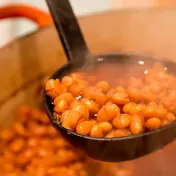
Maine Baked Beans ★ 4.3
Slow-baked Yellow Eye or Soldier beans simmered with salt pork, dark molasses, brown sugar and yellow mustard, baked low and slow in a stoneware bean pot until the beans are silky and the surface is mahogany.
Where to try it: Becky's Diner, Hot Suppa, The Front Room, Amato's Original Italian Sandwich
Price: $6-12 as a side
Baked beans entered New England via early colonial necessity: dry beans, salt pork and molasses (the Caribbean trade triangle staple) were the affordable winter pantry, and the long bean-pot bake suited the wood-fired Saturday-evening oven. The Maine tradition codified by the 19th century around Maine-bred heirloom beans like Jacob's Cattle, Yellow Eye and Soldier, with a sweet-savoury profile drawn from regional dark molasses. Becky's Diner runs the canonical Maine breakfast plate with baked beans, brown bread, ham and eggs. Bean Suppers (community fundraiser dinners) remain a Maine institution and feature this dish.
-
Duckfat Belgian Fries ★ 4.7
Duckfat's house specialty: hand-cut Maine potato fries fried twice in rendered duck fat, served in a paper cone with one of seven dipping sauces (truffle ketchup, curry mayo, garlic aioli). Maine's most photographed fry.
Where to try it: Duckfat, Duckfat Frites Shack, Bite Into Maine at Allagash
Price: $8-14 a cone
Duckfat opened on Middle Street in Portland in 2005 under chef Rob Evans (formerly of Hugo's, the city's first James Beard winner) and his wife Nancy Pugh. The conceit was a casual sandwich shop where the fries were the structural centrepiece: hand-cut Maine potatoes fried twice in pure duck fat, in the Belgian frites tradition rather than the American style. The dish became Maine's most-photographed plate of food, written up by Food and Wine, Bon Appetit, and the New York Times within the first three years. Evans expanded with Duckfat Frites Shack at Allagash Brewing and a takeaway shop, but the original Middle Street counter remains the canonical address.
Watch out for: Egg (sauces)
-
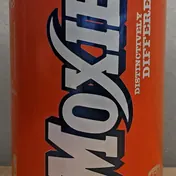
Moxie ★ 4.0
Maine's bitter-sweet brown soda flavoured with gentian root, the only state-recognised soft drink in America. Tastes like root beer crossed with cough syrup; Mainers either swear by it or have never tried it.
Where to try it: Becky's Diner
Price: $3 to $6
Moxie was invented in 1884 by Maine-born Dr. Augustin Thompson of Union, marketed initially as Moxie Nerve Food. It is among the first sodas commercially produced in America. The bitter gentian-root note divides drinkers sharply; Mainers grew up with it, outsiders find it medicinal. In 2005, Governor John Baldacci signed Moxie into law as Maine's official state soft drink. The annual Moxie Festival in Lisbon Falls, second weekend of July, draws 30,000-plus fans. Portland diners and burger counters keep Moxie on tap or in glass bottles; it's drunk straight or mixed into a Moxie float with vanilla ice cream.
-
Needham ★ 4.1
A Maine confection: sweetened mashed potato fondant centre flavoured with vanilla and shredded coconut, hand-dipped in dark chocolate. Looks like a chocolate truffle, tastes nothing like any.
Price: $3 to $6 each
Needhams are an early 20th-century Maine confection from the Down East coast, named after either George Needham (a 19th-century Maine politician) or Charles Needham (a Maine confectioner; both claims persist). The defining trick is the mashed potato in the fondant centre, a Depression-era substitute for more expensive marshmallow or egg-white centres. Wilbur's of Maine in Freeport makes the canonical commercial version; small Portland confectioners and bakeries replicate the format every Christmas. Outside Maine, the needham is unknown; inside Maine, it's the lunch-box Christmas treat.
Watch out for: Dairy
Signature Dishes in Portland, FAQ
What food is Portland known for?
Portland's signature dishes include Maine lobster roll, Fried Maine clams, Maine Italian sandwich, Wild Maine blueberry pie, Whoopie pie. See our signature dishes chapter for where to eat each.