Signature dishes
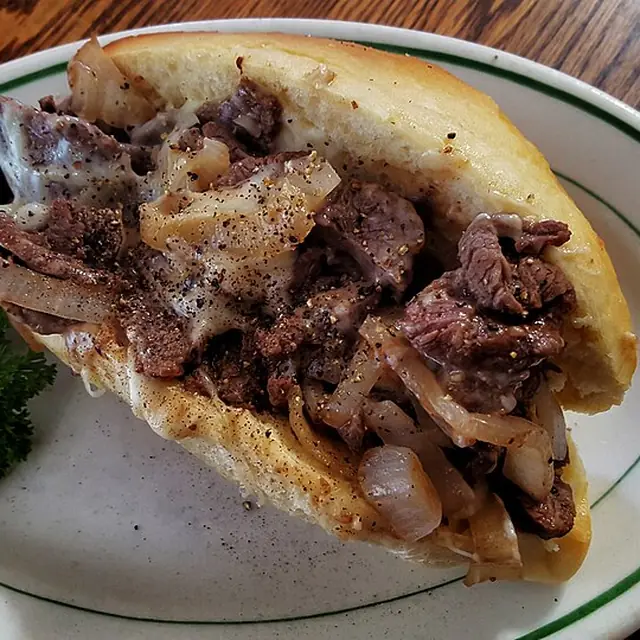
Thin-shaved rib-eye on a long Amoroso roll, griddled with chopped onions and finished with melted Cheez Whiz, American or provolone. The South Philly sandwich that travelled the world.
Where: Pat's King of Steaks, Geno's Steaks, John's Roast Pork, Jim's Steaks South Street
Price: $11-15
Slow-roasted pork shoulder, sliced thin, piled on a seeded Italian roll with garlicky broccoli rabe and sharp aged provolone. The locals' answer to the cheesesteak.
Where: Tommy DiNic's, John's Roast Pork, Tony Luke's
Price: $10-14
Italian cold cuts (mortadella, capicola, salami, prosciutto), sharp provolone, lettuce, tomato, onion, oregano, oil and vinegar on a long Amoroso roll. The classic Philly lunch.
Where: Sarcone's Bakery, John's Roast Pork, Famous 4th Street Delicatessen
Price: $9-14
Square-cut focaccia-style pizza, baked at room temperature, with a thick layer of seasoned crushed tomato and a dusting of grated cheese. No melted cheese. Served at room temperature.
Where: Sarcone's Bakery, Iannelli's Bakery
Price: $3-5 per square
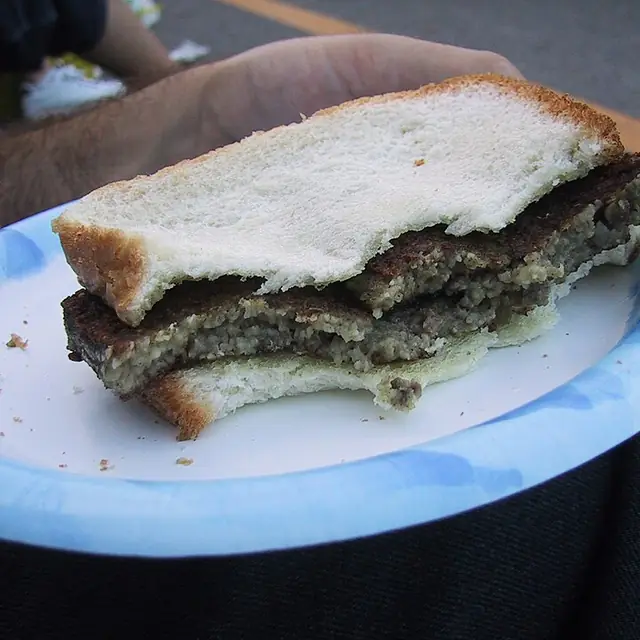
Pennsylvania Dutch pork-mush loaf made from pork trimmings, cornmeal, buckwheat and sage, sliced and griddled crisp. Served with eggs and pancakes at breakfast counters.
Where: Reading Terminal Market, Tommy DiNic's
Price: $3-6 as a side
Hand-twisted, low-rise, figure-eight soft pretzel sold from sidewalk carts, doused with mustard. Denser than the German original, flatter than the Bavarian.
Where: Center City Pretzel Co., Reading Terminal Market
Price: $1-2 each
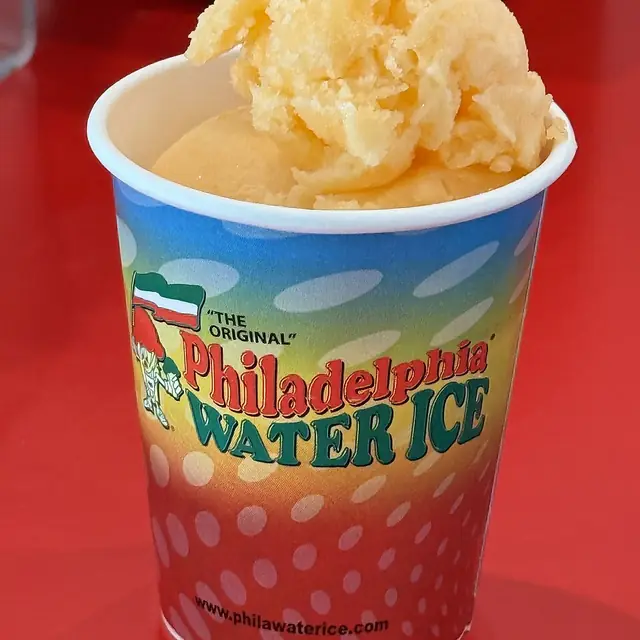
Fine-grained Italian-style flavoured ice, sold from corner stores and stands across the city from April through September. Lemon, cherry, mango, blue raspberry.
Where: South 9th Street Italian Market
Price: $3-6
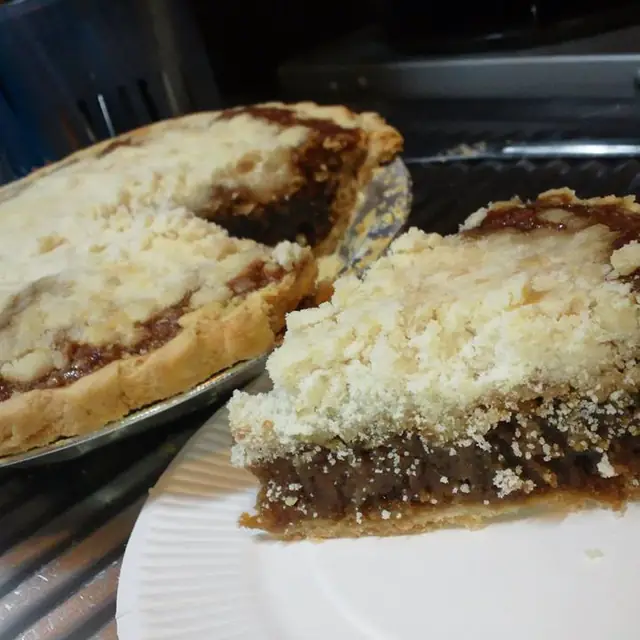
Molasses-and-brown-sugar custard pie with a crumb topping, baked deep, served in slabs at Reading Terminal Market and Lancaster County diners. Wet-bottom is the canonical style.
Where: Beiler's Doughnuts, Reading Terminal Market
Price: $4-6 per slice, $20-25 whole
Thick, peppery tripe soup with vegetables, dumplings and a heavy hand on black pepper. The historic soldiers' soup of Valley Forge, kept alive at Reading Terminal Market in Philadelphia.
Where: Reading Terminal Market
Price: $8-12
Long sandwich on a sesame-seeded Philly roll layered with prosciutto, capicola, salami, sharp provolone, lettuce, tomato, onion, oil, vinegar and oregano. The Italian Market's defining sandwich.
Where: Di Bruno Bros. (Italian Market), Sarcone's Bakery, South 9th Street Italian Market, Reading Terminal Market
Price: $11-18
Pennsylvania-Dutch yeasted doughnuts, dense and slightly chewy, fried in lard and dipped in maple, glazed in chocolate or filled with raspberry cream. Beiler's at Reading Terminal Market is the canonical Philly operator.
Where: Beiler's Doughnuts, Reading Terminal Market, Isgro Pastries, Termini Brothers Bakery
Price: $2-4 each
Philly cheesesteak
Thin-shaved rib-eye on a long Amoroso roll, griddled with chopped onions and finished with melted Cheez Whiz, American or provolone. The South Philly sandwich that travelled the world.
History: The cheesesteak was invented in 1930 at 9th and Wharton in South Philly. Pat Olivieri, a hot-dog vendor, threw a handful of thin-shaved beef on his grill, slid it into an Italian roll and sold the result to a taxi driver. Cheez Whiz was added in the 1950s. Geno's Steaks opened directly across Passyunk Avenue in 1966 and the two-vendor rivalry has run uninterrupted ever since. John's Roast Pork on Snyder, open since 1930, runs a parallel claim to the city's best version. Ordering is its own language: one-Whiz-wit means one cheesesteak with Whiz and onions, one-Whiz-witout means without onions. American and provolone are accepted answers. Ketchup is not.
Where to try it: Pat's King of Steaks, Geno's Steaks, John's Roast Pork, Jim's Steaks South Street
Watch out for: Gluten, Dairy
Philadelphia roast pork sandwich
Slow-roasted pork shoulder, sliced thin, piled on a seeded Italian roll with garlicky broccoli rabe and sharp aged provolone. The locals' answer to the cheesesteak.
History: The roast pork sandwich is the Philadelphia natives' sandwich. While tourists queue at Pat's, locals walk into Tony Luke's, John's Roast Pork or DiNic's at Reading Terminal Market for slow-roasted pork shoulder, broccoli rabe and sharp provolone on a seeded roll. The dish traces to Italian-American South Philly between the wars: home cooks roasted weekly pork shoulders with rosemary, fennel and garlic and pressed leftovers into bread for lunch. DiNic's took the format to the Reading Terminal in 1980 and its sandwich was crowned best in America by the Travel Channel in 2013. The trio of slow-roasted pork, bitter rabe and sharp cheese is its own balanced act.
Where to try it: Tommy DiNic's, John's Roast Pork, Tony Luke's
Watch out for: Gluten, Dairy
Philadelphia hoagie
Italian cold cuts (mortadella, capicola, salami, prosciutto), sharp provolone, lettuce, tomato, onion, oregano, oil and vinegar on a long Amoroso roll. The classic Philly lunch.
History: The hoagie was born in South Philly's Hog Island shipyard during the First World War, when Italian-American workers (called Hoggies) brought submarine-style sandwiches to lunch. The roll, the cured-meat layering and the oil-and-vinegar finish were codified by Italian Market salumerias like Sarcone's, Esposito's and Cosmi's. In 1992 Mayor Ed Rendell declared the hoagie the official sandwich of Philadelphia. The defining variables are the bread (a long crisp-crusted Italian roll, Amoroso or Sarcone's), the meat stack and a careful drizzle of oil and red-wine vinegar with dried oregano.
Where to try it: Sarcone's Bakery, John's Roast Pork, Famous 4th Street Delicatessen
Watch out for: Gluten, Dairy
Philadelphia tomato pie
Square-cut focaccia-style pizza, baked at room temperature, with a thick layer of seasoned crushed tomato and a dusting of grated cheese. No melted cheese. Served at room temperature.
History: Philadelphia tomato pie is a distinct genre from New York pizza or Trenton tomato pie. Square-cut, focaccia-thick, baked on sheet pans without melted cheese, the pie was a 1920s South Philly bakery snack: a way for Italian Market bread bakers to use leftover dough. Sarcone's, Iannelli's, Marchiano's and Cacia's bakeries each kept a tomato-pie program running through the 20th century. The pie is sold by the square at room temperature. The defining details: a sweet oregano-heavy sauce baked into the dough; a fine dusting of grated pecorino or romano on top, never mozzarella; and no toppings, ever.
Where to try it: Sarcone's Bakery, Iannelli's Bakery
Watch out for: Gluten, Dairy
Scrapple
Pennsylvania Dutch pork-mush loaf made from pork trimmings, cornmeal, buckwheat and sage, sliced and griddled crisp. Served with eggs and pancakes at breakfast counters.
History: Scrapple is the oldest distinctly Pennsylvanian food. Pennsylvania Dutch (Deitsch) farmers of the 17th and 18th centuries used every part of the slaughtered hog; the trimmings, offcuts and liver were simmered with cornmeal and buckwheat flour to make a savoury mush, set in a loaf pan, sliced cold and fried at breakfast. The Habbersett family (founded 1863 in Media, PA) and Rapa Scrapple Company (founded 1926 in Bridgeville, DE) industrialised the recipe. In Philadelphia, scrapple appears on diner breakfast plates with two eggs over easy, hash browns or fried apples, and toast. Drizzled with maple syrup or ketchup depending on which family you grew up in.
Where to try it: Reading Terminal Market, Tommy DiNic's
Philadelphia soft pretzel
Hand-twisted, low-rise, figure-eight soft pretzel sold from sidewalk carts, doused with mustard. Denser than the German original, flatter than the Bavarian.
History: The Philadelphia soft pretzel arrived with German and Pennsylvania Dutch immigrants in the 17th century and was reshaped by South Philly Italian bakers in the 20th. The local pretzel is flatter, denser and saltier than the German original, twisted into a hand-rolled figure-eight rather than the standard knotted shape. Sidewalk vendors and elementary-school pretzel days made it a Philadelphia birthright. Federal Pretzel Baking Company opened in 1922 on South 4th Street and still operates; Center City Pretzel Co. in South Philly bakes round-the-clock. The standard order is a soft pretzel with a stripe of yellow mustard down the middle, eaten while walking.
Where to try it: Center City Pretzel Co., Reading Terminal Market
Watch out for: Gluten
Philadelphia water ice
Fine-grained Italian-style flavoured ice, sold from corner stores and stands across the city from April through September. Lemon, cherry, mango, blue raspberry.
History: Water ice, called wooder ice in the local accent, is Philadelphia's signature warm-weather sweet. Italian immigrants brought granita to the city in the late 19th century; the South Philly version was refined to a smoother, finer-grained texture using shaved (rather than crushed) ice, sugar syrup and fruit. Rita's Italian Ice opened in 1984 in Bensalem and grew the format into a regional chain, but the canonical reference is Pop's Homemade Italian Ice on Oregon Avenue, run by the Pop Italiano family since 1932. Lemon is the founding flavour. Stands open on the first warm day in April and close after Labor Day.
Where to try it: South 9th Street Italian Market
Pennsylvania Dutch shoofly pie
Molasses-and-brown-sugar custard pie with a crumb topping, baked deep, served in slabs at Reading Terminal Market and Lancaster County diners. Wet-bottom is the canonical style.
History: Shoofly pie is the canonical Pennsylvania Dutch dessert, born in 18th-century Lancaster County kitchens that had molasses and flour but not chocolate. The name comes from the cooks shooing flies away from the sticky molasses surface as the pie cooled. Two styles run: wet-bottom (the molasses layer stays soft and gooey beneath a crumb top) and dry-bottom (the molasses bakes into the crust). Lancaster's Bird-in-Hand and Intercourse bakeries each claim their own version; in Philadelphia, Beiler's Bakery at Reading Terminal Market and Dutch Eating Place have run wet-bottom shoofly pies since 1984 and 1974 respectively. The pie pairs with strong black coffee at breakfast or as a 3pm snack.
Where to try it: Beiler's Doughnuts, Reading Terminal Market
Watch out for: Gluten, Dairy, Eggs
Philadelphia pepper pot soup
Thick, peppery tripe soup with vegetables, dumplings and a heavy hand on black pepper. The historic soldiers' soup of Valley Forge, kept alive at Reading Terminal Market in Philadelphia.
History: Pepper pot soup was reportedly created at Valley Forge in 1777 by Continental Army cook Christopher Ludwick under General George Washington's orders to feed the starving troops with what little was on hand: tripe, scraps, peppercorns and stale bread. The recipe travelled into Philadelphia kitchens with returning soldiers and became a 19th-century city staple, hawked by Black Philadelphian street-cart vendors known as Pepper-Pot Women. The dish faded after the Second World War but holds on at Reading Terminal Market and a handful of South Philly counters. Lots of black pepper, hand-cut tripe, dumplings and root vegetables give the soup its name.
Where to try it: Reading Terminal Market
Watch out for: Gluten
Philly Italian hoagie
Long sandwich on a sesame-seeded Philly roll layered with prosciutto, capicola, salami, sharp provolone, lettuce, tomato, onion, oil, vinegar and oregano. The Italian Market's defining sandwich.
History: The Italian hoagie originated in early-20th-century Philadelphia among Italian immigrants working in the Hog Island shipyards (hence 'hoagie'). The sandwich pulls together the deli traditions of South Philly's 9th Street Italian Market. Di Bruno Bros., Sarcone's Bakery (for the roll) and Cosmi's Deli have defined the canonical Philly Italian hoagie. The bread is the make-or-break ingredient: a long roll, dense crumb, crackling crust, traditionally from Sarcone's, Liscio's or Cacia's.
Where to try it: Di Bruno Bros. (Italian Market), Sarcone's Bakery, South 9th Street Italian Market, Reading Terminal Market
Watch out for: Gluten, Dairy
Philly Amish doughnuts
Pennsylvania-Dutch yeasted doughnuts, dense and slightly chewy, fried in lard and dipped in maple, glazed in chocolate or filled with raspberry cream. Beiler's at Reading Terminal Market is the canonical Philly operator.
History: Pennsylvania Dutch doughnut traditions go back to the 18th century, when the Amish and Mennonite communities of Lancaster County developed dense, lard-fried yeast doughnuts. Beiler's Doughnuts, run by a Lancaster Amish family at Reading Terminal Market since 1989, sells the canonical Philadelphia version. Federal Donuts and Five Daughters Bakery have built modern Philadelphia doughnut shops but the Beiler's hand-cut, hand-glazed Amish original remains the city's reference.
Where to try it: Beiler's Doughnuts, Reading Terminal Market, Isgro Pastries, Termini Brothers Bakery
Watch out for: Gluten, Dairy, Egg