

The plates that define Orlando: what they are, where they came from, and where to eat the canonical version.
Signature dishes
-
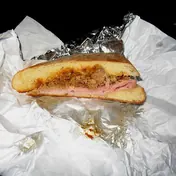
Cuban sandwich ★ 4.7
The Cuban sandwich is roast pork, ham, Swiss cheese, yellow mustard and dill pickles pressed on a buttered Cuban loaf until the cheese melts and the bread crackles.
Where to try it: Black Bean Deli, Pio Pio Restaurant
Price: $10-14 per sandwich
The Cuban sandwich originated in the late 19th-century Cuban cigar-worker communities of Ybor City, Tampa, and Key West, where Cuban immigrants combined Spanish, German, Italian and Cuban deli traditions on a single pressed loaf. Tampa Cubans add Genoa salami reflecting Italian neighbors; Miami Cubans skip it. Central Florida absorbed Cuban migration through the 1960s Mariel exodus and the 1970s mass Puerto Rican settlement, and Orlando's Black Bean Deli has pressed the canonical Miami-style Cuban since 2001. La Lechonera El Jibarito in Kissimmee and the Pio Pio counters round out the Latin map.
Watch out for: Gluten, Dairy
-
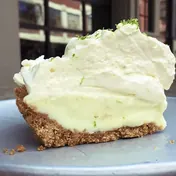
Florida key lime pie ★ 4.6
Florida key lime pie is tart custard from key lime juice, sweetened condensed milk and egg yolks baked into a graham cracker crust and topped with whipped cream.
Where to try it: P is for Pie Bake Shop, The Boathouse, Buttermilk Bakery
Price: $6-10 per slice
Key lime pie originated in the Florida Keys in the late 1800s, when sweetened condensed milk and graham crackers reached the islands by railway and key limes grew wild around Key West. The Borden company introduced sweetened condensed milk in 1856 and Florida cooks used it because fresh dairy was scarce in the Keys. Florida named key lime pie the official state pie in 2006. Orlando's P is for Pie in Audubon Park bakes a celebrated slice version, and most Florida-leaning bakeries and seafood spots like The Boathouse run a key lime version on the dessert menu.
Watch out for: Gluten, Dairy, Eggs
-
Florida grouper sandwich ★ 4.5
Florida grouper sandwich is fresh Gulf or Atlantic grouper, blackened or fried golden, on a buttered brioche bun with lettuce, tomato, tartar sauce and a pickle spear.
Where to try it: The Boathouse, Canvas Restaurant and Market, SoCo Restaurant
Price: $18-26 per sandwich
Grouper is Florida's signature white fish, pulled from the Gulf and Atlantic by commercial fleets out of Madeira Beach, Tarpon Springs and the Florida Keys since the late 1800s. The grouper sandwich rose to fame in the 1970s as Florida tourism opened coastal seafood shacks; it became the canonical lunch order across the state by the 1990s. Florida-leaning Orlando rooms run the sandwich heavy in the summer and switch to imported grouper offseason: The Boathouse at Disney Springs, Canvas at Lake Nona and many Mills 50 lunch counters carry the canonical version.
Watch out for: Gluten, Fish, Dairy, Eggs
Book food experiences in Orlando


-
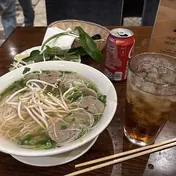
Pho tai ★ 4.7
Pho tai is the canonical Vietnamese beef noodle soup, with rare-sliced beef cooked at the table by hot broth poured over rice noodles, herbs, lime and chili.
Where to try it: Pho 88, Z Asian Vietnamese Kitchen, Hawkers Asian Street Food
Price: $12-18 per bowl
Pho came to America with Vietnamese refugees after the fall of Saigon in 1975, and Central Florida absorbed a major Vietnamese settlement through the 1980s and 1990s. Orlando's Mills 50 district along Mills Avenue and Colonial Drive became the Southeast's densest Vietnamese restaurant corridor by the 2000s, with dozens of pho counters within walking distance. Pho 88 on North Mills has anchored the corridor since 1996, with Z Asian and the newer rooms expanding the form. Pho tai is the rare-beef starter version that most Mills 50 cooks treat as the canonical first order.
Watch out for: Gluten, Soy
-
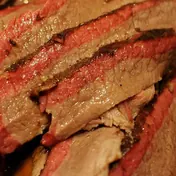
Texas-style smoked brisket ★ 4.6
Texas-style brisket is whole packer brisket smoked low and slow over oak for 12 to 16 hours with a salt and pepper rub, sliced against the grain with a thick smoke ring.
Where to try it: 4 Rivers Smokehouse, Pig Floyd's Urban Barbakoa
Price: $24-32 per pound
Central Texas barbecue tradition arrived in Central Florida through chef John Rivers, who opened the first 4 Rivers Smokehouse in Winter Park in 2009 after years of catering brisket out of a Lake Mary garage. Within a decade the chain expanded across Florida and beyond, anchoring Orlando's craft-barbecue scene. The Florida heat and humidity require longer rests and water-pan smoking, but the canonical Central Texas brisket form holds: oak fire, simple rub, slow smoke and slicing pencil-thick across the grain. Pig Floyd's added a Latin spin in Mills 50.
-
Beefy King roast beef sandwich ★ 4.6
The Beefy King sandwich is thin-sliced rotisserie roast beef piled on a small steamed bun, served straight or with the house Beefy Sauce, since 1968.
Where to try it: Beefy King
Price: $6-9 per sandwich
Beefy King opened on North Bumby Avenue in 1968 as a roast beef counter founded by Tom Viegle; Freeman and Margaret Smith bought the original location within a year and the shop has stayed family-run by their descendants ever since. The thin-sliced roast beef on a steamed bun is the city's defining 1960s diner sandwich, with the Spuds curly fries and seasoned Salts a constant since opening. Beefy King survived the chain era and the Disney boom by holding the same six counter seats and same blue logo for six decades, and it remains the canonical Orlando lunch institution.
Watch out for: Gluten
-
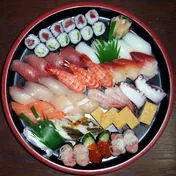
Edomae sushi omakase ★ 4.8
Edomae sushi omakase is the chef-led tasting of nigiri sushi, with each piece pressed and presented one at a time from the counter using traditional Tokyo-Bay techniques.
Where to try it: Kadence, Soseki, Sorekara
Price: $235-311 per person
Edomae sushi is Tokyo's 19th-century street-food form, where Tokyo Bay fish was lightly cured, marinated or aged to preserve it through the warm Edo summers, then pressed onto vinegared rice. The modern omakase counter brought this tradition into fine dining; Tokyo and New York spread it through the 1990s and 2000s. Orlando entered the form with Soseki opening in Winter Park in 2019 (first Michelin star 2022) and Kadence in Audubon Park (Michelin-starred since 2022). Both run 8 to 10-seat counters, three seatings nightly, with pre-paid Tock reservations.
Watch out for: Fish, Soy
-
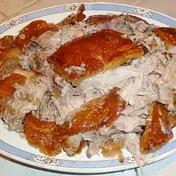
Pernil ★ 4.5
Pernil is Puerto Rican slow-roasted pork shoulder marinated with garlic, oregano, sour-orange and adobo, crisp on the outside and shredded under, with rice and beans.
Where to try it: La Lechonera El Jibarito, Pio Pio Restaurant
Price: $14-22 per plate
Pernil is the canonical Puerto Rican Christmas and special-occasion roast, cooked overnight from a sour-orange and garlic marinade. Central Florida absorbed massive Puerto Rican migration after Hurricane Maria in 2017 and earlier waves through the 1990s, making Orlando the largest Puerto Rican community outside the island. The eastern Colonial Drive and Semoran Boulevard corridors plus the Kissimmee John Young Parkway stretch now hold the densest lechoneras in the region. La Lechonera El Jibarito in Kissimmee and Pio Pio in Lake Eola anchor the city's pernil map.
-
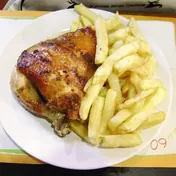
Pollo a la brasa ★ 4.4
Pollo a la brasa is Peruvian rotisserie chicken, marinated in soy, garlic, cumin and aji panca then spit-roasted over charcoal, served with aji verde sauce and yuca fries.
Where to try it: Pio Pio Restaurant
Price: $16-26 per half chicken
Pollo a la brasa was invented in 1950s Lima at La Granja Azul restaurant, where Swiss expatriate Roger Schuler built the first commercial chicken rotisserie. The marinade evolved with Peru's Chinese-Peruvian (chifa) wave to include soy sauce. Peruvian migration to Central Florida accelerated through the 2000s; Pio Pio became Orlando's anchor Peruvian rotisserie in the downtown Lake Eola area. The bird is butterflied or whole, charcoal-roasted 90 minutes, and served with the canonical green herb sauce (aji verde) and yuca frita.
Watch out for: Soy
-
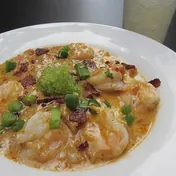
Shrimp and grits ★ 4.5
Shrimp and grits is Southern coastal Carolina-rooted shrimp sauteed with andouille or tasso and white wine, served over creamy stone-ground white grits with sharp cheddar.
Where to try it: SoCo Restaurant, The Ravenous Pig
Price: $18-28 per plate
Shrimp and grits is rooted in the Carolina Lowcountry and Gullah Geechee Sea Islands tradition, where breakfast cooks added local creek shrimp to morning grits through the 19th and early 20th centuries. Bill Neal at Crook's Corner in Chapel Hill brought the form to national fine-dining attention in 1985, and the dish swept down through the Southeast as a brunch and dinner staple. In Central Florida it became the canonical Southern brunch order; SoCo and The Ravenous Pig both run a refined version. Orlando's freshwater-shrimp aquaculture also feeds the dish locally.
Watch out for: Shellfish, Dairy
-
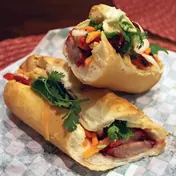
Banh mi ★ 4.5
Banh mi is the Vietnamese baguette sandwich, with pate, char siu or grilled pork, pickled daikon and carrot, cilantro, cucumber, chilies and a touch of Maggi seasoning.
Where to try it: Banh Mi Boy, Pho 88
Price: $8-12 per sandwich
Banh mi developed in early 20th-century Saigon, when French colonial baguettes met Vietnamese ingredients and the local rice flour-blended airier loaf form. The sandwich crossed to America with the post-1975 Vietnamese refugee waves, and Central Florida's Mills 50 corridor turned banh mi into its corner-shop staple. Banh Mi Boy at Mills Market has anchored the form on East Colonial, with Pho 88 rounding out the Vietnamese counter map. The canonical order is pate plus char siu, with extra cilantro and jalapeno.
Watch out for: Gluten, Soy, Eggs
-

Cuban pastelitos ★ 4.3
Pastelitos are Cuban puff-pastry pockets filled with guava and cream cheese, sweet meat picadillo or coconut, baked to a deep amber lacquer and brushed with sugar glaze.
Where to try it: Black Bean Deli, Pio Pio Restaurant
Price: $2-4 per pastelito
Pastelitos came north from Havana through Tampa's Ybor City Cuban bakeries in the early 1900s, where the Spanish puff-pastry empanada tradition was reimagined with tropical guava paste and sweet picadillo. The form spread to Miami after the 1959 Cuban Revolution and entered Central Florida through the 1980s Cuban-Puerto Rican migration waves. Black Bean Deli's counter on East Colonial Drive is Orlando's flagship pastelito source, with guava-and-cheese the canonical order; sweet picadillo and coconut variations follow.
Watch out for: Gluten, Dairy, Eggs
-
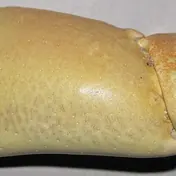
Florida stone crab claws ★ 4.6
Florida stone crab claws are sustainably harvested October through May, served chilled and cracked open with classic mustard sauce, lemon wedges and saltine crackers.
Where to try it: The Boathouse, Christner's Prime Steak and Lobster, Capa
Price: $45-95 per dozen
Stone crab fishing developed in 1920s Florida when fishermen learned the crabs would regenerate a claw after a single one was harvested, making the fishery uniquely sustainable. Joe's Stone Crab opened in Miami Beach in 1913 and codified the dish nationally. Season runs October 15 through May 1, when Gulf-side claws hit Florida menus from Naples to Tampa to Orlando. The Boathouse at Disney Springs, Christner's and the Capa rooftop at Four Seasons all run a seasonal stone-crab plate.
Watch out for: Shellfish, Mustard, Eggs
Signature Dishes in Orlando, FAQ
What food is Orlando known for?
Orlando's signature dishes include Cuban sandwich, Florida key lime pie, Florida grouper sandwich, Pho tai, Texas-style smoked brisket. See our signature dishes chapter for where to eat each.