How New Orleans came to eat the way it does: the people, migrations and accidents that shaped the plate.

Key eras

1718 to 1803, the colonial founding

Bienville founded La Nouvelle-Orleans in 1718 as a French port at the mouth of the Mississippi. French colonists, Spanish administrators after 1763, enslaved West Africans and free people of colour built the early Creole kitchen with okra (from Africa), rice (from Africa and Asia), file (from Choctaw sassafras leaves) and the French roux. The Ursuline nuns arrived in 1727 and brought the convent kitchen tradition. By 1803 when Napoleon sold the city to the United States, the Creole template was set.

1840, Antoine's and the white-tablecloth Creole grammar

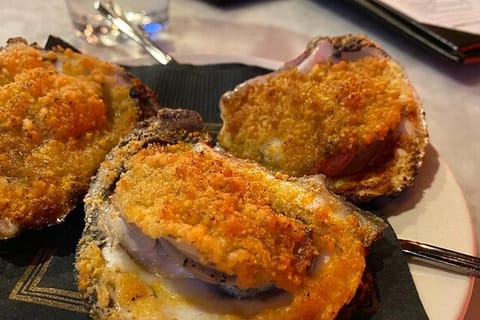
Antoine Alciatore opened Antoine's on St Louis Street in 1840, two doors from the current 713 St Louis address since 1868. It became the United States's oldest family-run restaurant. In 1899 son Jules invented Oysters Rockefeller in response to a French escargot shortage. Antoine's set the white-tablecloth Creole grammar that Galatoire's (1905), Arnaud's (1918) and Commander's Palace (1893) all worked from for the next century.

1862 to 1900, Cafe du Monde and the chicory coffee tradition

Cafe du Monde opened as a coffee stand in the French Market in 1862, after the Civil War cut off coffee imports and forced New Orleanians to stretch their grounds with chicory root. Beignets (the French Creole square doughnut) followed by the 1880s. The chicory-coffee-and-beignets pairing became the city's defining cheap breakfast, served 24 hours and untouched in price for decades.

1929, the streetcar strike and the po-boy

In 1929 the Carmen Strike paralysed New Orleans streetcars for weeks. Brothers Bennie and Clovis Martin, former conductors who ran a French Market sandwich shop, fed the picketing workers free sandwiches built on a special long French loaf they had Leidenheimer Bakery develop. They called the workers poor boys; the sandwich kept the name. By 1940 the po-boy had spread to every corner counter in the city.

1906, Sicilian immigration and the muffuletta

Sicilian immigrants Salvatore Lupo opened Central Grocery on Decatur Street in 1906. Lupo invented the muffuletta around 1906 to serve Sicilian dock workers a lunch they could eat one-handed: round seeded loaf, Italian cold cuts, olive salad. Central Grocery and rival Progress Grocery anchored a Sicilian-American food district on Decatur that ran from 1900 to 1960 and reshaped the New Orleans Italian table.

1980 to present, Paul Prudhomme and modern Cajun

Paul Prudhomme moved from Opelousas to New Orleans in 1979 and took the K-Paul's Louisiana Kitchen helm at 416 Chartres Street. His blackened redfish (1979) and his decision to bring rural Cajun cuisine into a white-tablecloth city room rewrote the city's food map. Frank Brigtsen apprenticed under Prudhomme and opened Brigtsen's on Dante Street in 1986. Donald Link followed with Herbsaint (2000), Cochon (2006) and Peche (2013), each pulling Cajun South Louisiana into international view.

Immigrant influences

  • West African (enslaved and free people of colour): Brought okra (a Bantu word), rice cookery and the gumbo template (okra plus shellfish or game over rice). Built the Creole kitchen's deep base of one-pot stews. Built jambalaya from Spanish paella roots and African rice technique.
  • French (colonial and 19th century): The roux, the bechamel, the beignet, the bouillabaisse-to-gumbo line. Established the white-tablecloth dining room template at Antoine's, Galatoire's, Arnaud's, Brennan's. Most Creole dish names retain French syntax.
  • Sicilian-American (Italian Decatur Street): Invented the muffuletta around 1906 at Central Grocery on Decatur Street. Brought olive salad to the city's lunch counter. Built Brocato's ice cream (1905) and the long Italian deli tradition along Decatur Street.
  • Vietnamese (New Orleans East): Resettled in New Orleans East after 1975. Built the Mary Queen of Vietnam parish and the Saturday morning market. Dong Phuong Bakery on Chef Menteur Highway invented the city's most-anticipated Mardi Gras king cake and won a James Beard America's Classics Award.
  • German (Faubourg Marigny and Mid-City): Leidenheimer Bakery (1896) on Simon Bolivar Avenue baked the French loaf used for every po-boy in the city. Parkway Bakery and Tavern was built by German baker Charles Goering in 1911. Sausage tradition still anchors the Marigny butchers.
  • Honduran and Central American (Mid-City and Kenner): Built the city's largest Honduran community after the 1998 Hurricane Mitch diaspora. Baleadas, tamales and Pollo Campero anchor the Honduran corner of the Mid-City food map.

Signature innovations

  • Oysters Rockefeller, invented at Antoine's in 1899
  • The Sazerac, America's first branded cocktail, 1850s
  • The po-boy sandwich, born in the 1929 streetcar strike
  • The muffuletta, invented at Central Grocery around 1906
  • Bananas Foster, invented at Brennan's in 1951
  • BBQ shrimp po-boy, invented at Liuzza's by the Track
  • Praline bacon, invented at Elizabeth's in Bywater
  • Hansen's Sno-Bliz electric ice shaver, 1934 invention
  • The Pimm's Cup as a New Orleans canonical drink at Napoleon House

Food History in New Orleans, FAQ

When is the best time to eat in New Orleans?

Peak food season in New Orleans is year-round.

What time do people eat in New Orleans?

Local dining hours: lunch around 12:30, dinner from 19:30.

How does tipping work in New Orleans?

service is typically included; small extra is welcome but not expected.

What is the one dish to try in New Orleans?

Ask the next local you meet what they would order. New Orleans rewards trust.

← Back to New Orleans food guide