Key eras
Pre-1896, Tequesta and frontier Miami
Before incorporation in 1896 the Miami River mouth was Tequesta and Seminole territory, with conch, sea grape, palm hearts, and key lime as the food map. Trader Julia Tuttle persuaded Henry Flagler to extend the East Coast Railway south, and the city was incorporated 28 July 1896 with Flagler's Royal Palm Hotel opening in 1897 as the first formal kitchen.
1900s to 1950s, the Flagler-era hotel kitchens and Joe's Stone Crab
Flagler's railway brought the first wave of resort-hotel kitchens: the Royal Palm in downtown Miami, the Breakers up the coast in Palm Beach. Joe Weiss opened Joe's on Miami Beach in 1913, and stone crab joined the menu in 1921 after a Harvard ichthyologist suggested the claws could be boiled and chilled. The Florida stone crab industry developed around the Joe's protocol.
1959 to 1980, the Cuban exile generation builds Calle Ocho
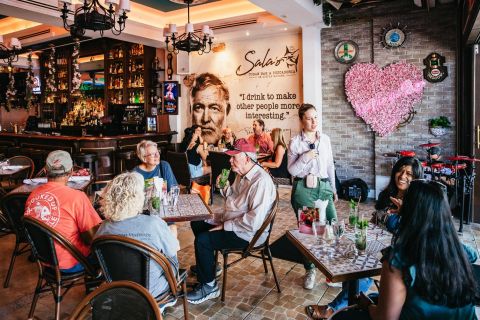
The Cuban Revolution drove hundreds of thousands of Cubans into Miami after 1959. Calle Ocho, the eastern stretch of SW 8th Street, became the densest concentration of ventanitas, cafeterias and cigar rolling rooms in the country. Felipe Valls opened Versailles in 1971, La Carreta in 1976, and the political-water-cooler role of these counters was established.
1980 Mariel boatlift and the broadening of Cuban Miami
The Mariel boatlift of 1980 brought 125,000 more Cubans, broadening the city's food map with new accents and dishes. The pan con bistec, vaca frita and croqueta canon was reinforced. Hialeah grew into the second-largest Cuban-American city outside Havana, with 24-hour bakeries like Tropical and the rise of the Hispanic supermarket chain Sedano's.
2000s to 2020s, Wynwood arts and the Michelin arrival
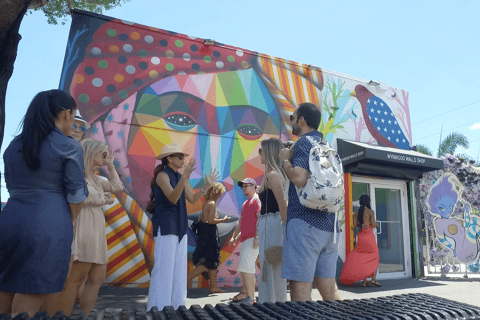
Tony Goldman's Wynwood Walls in 2009 and the Design District redevelopment built a fine-dining axis through the city's mid-section. The Michelin Guide arrived in Florida in 2022 awarding stars to Stubborn Seed, Ariete, Cote, Boia De, L'Atelier de Joel Robuchon and Hiden. Sanguich de Miami and Lung Yai Thai Tapas joined the Bib Gourmand list, signalling Miami's casual-dining strength alongside the stars.