How Louisville came to eat the way it does: the people, migrations and accidents that shaped the plate.
Key eras
-
1779 to 1820, settlement on the Falls of the Ohio
Louisville was founded in 1778 at the only natural rapids on the Ohio River, the Falls of the Ohio. Early settlers built taverns and trading posts that fed flatboat crews and frontier travellers, with corn whiskey already moving down-river from Kentucky farms.
-
1884, the rolled oyster invented at Mazzoni's
Phillip Mazzoni opened Mazzoni's tavern at Third and Market in 1884, where he and his Italian-immigrant brothers gave away rolled oysters with bourbon orders. The cornmeal-battered three-oyster ball became a Louisville bar-snack original and survived Prohibition.
Taste it todayRolled oyster -
Around 1900, Benedictine spread at Jennie Benedict's tea room
Jennie Carter Benedict opened a downtown catering operation in 1893 and a tea room in 1900, where she developed Benedictine spread: cream cheese, cucumber juice, onion juice and a little green food colouring. The cucumber sandwich spread became a Derby weekend staple.
Taste it todayBenedictine spread -
1926, the Hot Brown invented at the Brown Hotel
Chef Fred K. Schmidt at the Brown Hotel created the Hot Brown to feed late-night dancers in 1926: an open-faced turkey sandwich blanketed in Mornay sauce, broiled, and finished with bacon and tomato. The dish defined Louisville hotel dining and remains the city's signature sandwich.
Taste it todayHot Brown -
1954, Derby Pie launched at the Melrose Inn
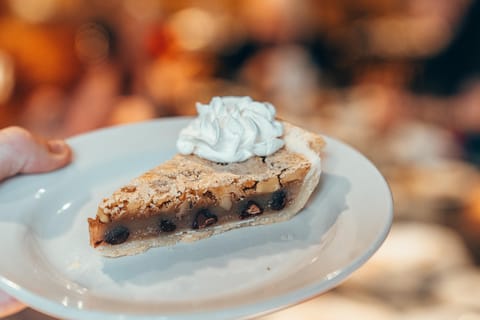
Walter and Leaudra Kern launched the chocolate-walnut Derby Pie at the Melrose Inn in Prospect in 1954, picking the name out of a hat. The Kerns trademarked Derby-Pie in 1969 and have filed 25+ lawsuits to defend the name, making it the official pie of the Kentucky Derby Festival.
Taste it todayDerby Pie -
2000 onward, the modern bourbon renaissance
The bourbon boom that began in the 1990s anchored a new chapter for Louisville restaurants. Whiskey Row distilleries reopened on West Main, including Old Forester in 2018 and Michter's Fort Nelson in 2019, turning the corridor into the city's drink-and-dine destination.
Immigrant influences
- Italian (Mazzoni family from Genoa)
- The Mazzoni brothers' rolled oyster invention in 1884, a cornmeal-battered three-oyster ball, became a Louisville-only bar snack. Italian families also brought the city's first pizzerias and pasta houses.
- German (Schnitzelburg, Germantown)
- German immigrants settled the south-side neighbourhoods of Germantown and Schnitzelburg in the 1850s, bringing rye breads, sausage-making and the beer-hall culture later revived by Monnik Beer Co and Eiderdown.
- African-American (Southern soul food)
- Black Louisville cooks shaped the city's soul-food tradition with fried chicken, country ham, candied yams and corn pudding.
- Mayan (Yucatecan, Bruce Ucan)
- Chef Bruce Ucan opened Mayan Cafe in NuLu in 2002 with traditional Yucatecan plates of his Mayan heritage, anchoring the city's modern Latin-American restaurant scene with tok-sel lima beans and cochinita pibil.Taste it todayMayan Cafe
- Levantine (MeeshMeesh, chef Noam Bilitzer)
- Chef Noam Bilitzer brought Levantine plates from Palestine, Jordan, Israel and Lebanon to NuLu's MeeshMeesh in 2022, the restaurant that took a 2025 James Beard Best Chef Southeast finalist nod.
Signature innovations
- Hot Brown sandwich: open-faced turkey and Mornay, broiled, the city's signature 1926 hotel dishTaste it todayHot Brown
- Rolled oyster: three oysters in cornmeal batter, deep-fried, Mazzoni's 1884 bar snackTaste it todayRolled oyster
- Benedictine spread: cucumber and cream cheese, around 1900 Jennie Benedict inventionTaste it todayBenedictine spread
- Mint Julep: bourbon, sugar, mint and crushed ice, the official Kentucky Derby drink since 1939Taste it todayMint Julep
- Derby Pie: chocolate-walnut tart trademarked by the Kern family since 1969Taste it todayDerby Pie
- Plehn's Bakery cakes and tortes: a Saint Matthews bakery since 1922 known for birthday cakes, Truffle Torte Cake and Derby-week Triple Crown PieTaste it todayPlehn's Bakery
- Modjeska: caramel-dipped marshmallow confection, named for the actress, made by Muth's Candies since 1921
- Bourbon barrel-aged beer: Goodwood Brewing's bourbon-barrel stouts and the Kentucky tradition of ageing dark beers in spent bourbon barrels
Book food experiences in Louisville