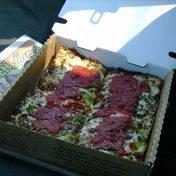
Detroit-style pizza is square, deep-dish and baked in blue-steel rectangular pans first used at Buddy's Rendezvous in 1946. Crispy cheese-edge crust, sauce on top.
Gus Guerra pressed the first Detroit-style pizza into a forge-blue steel pan at Buddy's Rendezvous on Six Mile and Conant in 1946. The pans were borrowed from local auto-parts factories where they held machine parts during shifts. Guerra later moved his recipe to Cloverleaf in Eastpointe in 1953; Loui's Pizza in Hazel Park (1977) and Niki's in Greektown (1980) followed. By 2020 the style was on national chain menus, but Detroit pans the original square: thick layer of Wisconsin brick cheese pushed to the edges to crisp on the pan walls, with stripes of tomato sauce on top after baking.
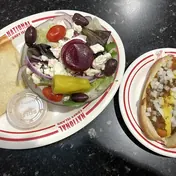
The Coney dog is a Detroit hot dog topped with chili-style meat sauce, yellow mustard and chopped raw onion, served on a steamed bun. Greek immigrant invention.
Around 1917, Greek immigrant Gust Keros opened American Coney Island at 114 W Lafayette. His brother William opened Lafayette Coney Island next door in 1924. Both claim the same Coney dog recipe with different chili-style meat-sauce variations. The rivalry has run for over a century and the two storefronts still stand side by side. Detroit Coneys differ from New York hot dogs and Cincinnati chili: the dog is a natural-casing beef and pork from Dearborn-based Koegel or Kowalski, the bun is steamed, the meat sauce is finer than Cincinnati and beanless.
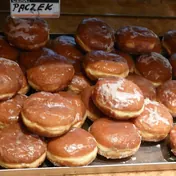
Paczki are round Polish doughnuts filled with prune, rose-hip jam or custard and dusted in icing sugar or glazed. Eaten by the thousand on Fat Tuesday in Hamtramck.
Paczki arrived in Detroit with Polish immigrants in the 1880s. They are the Polish answer to using up lard, eggs and sugar before Lent, traditionally eaten on Tlusty Czwartek (Fat Thursday) and Fat Tuesday. By the 1950s Hamtramck's Polish bakeries collectively sold over a million on Paczki Day; New Palace Bakery on Joseph Campau, founded 1908, is the last surviving Polish bakery from the original wave. Detroit-area news stations cover the lines wrapping the block on Fat Tuesday each year, and Faygo released a paczki-flavored soda for the 2020 edition.
On your Secret Food Tour: Detroit, you’ll explore the beating heart of
Motor City.
Your experienced guides will lead you on a rich journey through the
heart of Detroi...
Dive into Detroit’s downtown soul on a flavorful walking food tour guided by genuine city storytellers. Explore the heart of Motor City, from Greektown to historic lan...
Savor 6+ iconic tastings on a walking food tour through downtown Detroit. Discover the city’s rich history, local flavors, and vibrant soul as you explore its legendar...
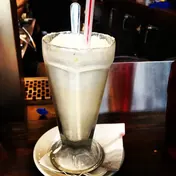
Dr. James Vernor, Michigan's first licensed pharmacist, began aging his ginger ale base in oak barrels in 1862 before being drafted into the Civil War; he came back to find it deliciously different and opened his Woodward Avenue soda fountain in 1866. The Boston cooler emerged from Detroit soda fountains in the early 1900s and is now the canonical Michigan summer drink; ginger ale and vanilla ice cream, never sarsaparilla. Vernors trademarked the term in 1967.
Bumpy cake is a Detroit chocolate cake with parallel ridges of buttercream piped on top, then covered in a dark chocolate ganache that flows around the bumps.
Sanders Confectionery on Woodward and Gratiot in downtown Detroit made the first bumpy cake in 1913, when bakery owner Fred Sanders piped buttercream stripes onto a devil's food cake and topped them with ganache. The shape comes from how the ganache flows around the buttercream ridges. Sanders sold at 57 retail stores at peak in the 1950s, and is now part of Morley Candy Makers in Clinton Township. Bumpy cake is the canonical Michigan birthday cake.
A Detroit slider is a small thin griddled beef patty with chopped onion and mustard on a soft white slider bun. Cheaper than coney dogs and eaten by the half-dozen.
Telway Hamburgers on Michigan Avenue near the West Side has griddled sliders 24 hours a day since 1944. The Hunter House in Birmingham (1952) and the various Telway locations across metro Detroit run the chrome-counter slider canon. Sliders are the cheaper companion to the coney dog on the Detroit budget-food menu; the order is by the half-dozen. Green Dot Stables in Corktown updated the slider format for the 2010s with a $3 rotating menu of 40 builds.
Lebanese shawarma in Dearborn is a stacked spit of marinated chicken or lamb shaved into pita with garlic sauce (toum), pickles and a hot pepper if you ask.
Dearborn hosts the largest Arab-American population in the US, founded around the Ford Rouge plant from the 1910s onward. Lebanese immigration after the 1975 civil war and the 1990s Iraq wars built the West Warren Avenue corridor. Al Ameer opened 1989 and won the James Beard America's Classic in 2016, the first Michigan venue to do so. Shawarma here is closer to Beirut than to Brooklyn: thin pita, garlic sauce thick and white, no tahini in the wrap. Sahara on Michigan Avenue dates to 1968, the older sibling on the city's Lebanese strip.
Polish pierogi are filled dumplings, half-moons of soft dough wrapped around potato, cabbage, cheese or meat, boiled then optionally pan-fried in butter.
Polish immigrants arrived in Detroit in the 1880s, settling Hamtramck around the Dodge Main auto plant. Polish Village Cafe on Yemans Street has served pierogi since 1975; Srodek's Quality Sausage on Joseph Campau has cured kielbasa and folded pierogi by hand since 1957. Pierogi run by the dozen at Hamtramck Labor Day Festival and at New Palace Bakery. The canonical Detroit pierogi is potato-cheddar; cabbage and meat varieties round the menu.
Sanders hot fudge cream puff is a choux pastry split, filled with vanilla ice cream and topped with warm Sanders hot fudge sauce. The Michigan birthday dessert.
Frederick Sanders Schmidt opened his first Detroit candy store at Woodward and Gratiot on June 17, 1875. By the 1910s Sanders shops were serving hot fudge cream puffs at counter, and by the 1950s the chain ran 57 retail stores across the Great Lakes. Hot fudge is the canonical Sanders product; the recipe survived the chain's bankruptcy and reformation, and is now produced by Morley Candy Makers in Clinton Township. The cream puff is a Michigan birthday-dessert staple.
Yemeni lamb mandi is rice cooked with whole spices under a sealed pot of slow-roasted lamb, served on a communal platter with tomato salsa and warm flatbread.
Hamtramck's Yemeni population grew through the 2000s as Polish flight made room for new immigrants. Yemen Cafe on Joseph Campau opened the canonical lamb mandi counter in metro Detroit, halal and open 17 hours a day. Mandi is the dish of the Hadhramaut region, traditionally cooked in a tandoor pit; the Detroit version uses sealed pots in commercial ovens. Saltah (cast-iron stew) is the second dish in the standard order.
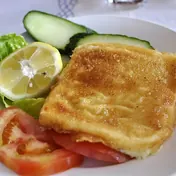
Detroit Greektown's signature theatre dish: a thick slab of Kasseri cheese dredged in flour, pan-fried golden, doused in brandy and ignited tableside with a shouted Opa. Eaten with lemon and torn pita.
Flaming saganaki was invented at the Parthenon restaurant in Chicago's Greektown in 1968, when owner Chris Liakouras lit the fried Kasseri tableside at a customer's suggestion; the format spread through Midwest Greek-American restaurants in the 1970s. Detroit's Greektown, anchored on Monroe Street since the late 19th century by Greek immigrant families, adopted the flaming presentation early and made it a fixture of the neighborhood's dinner theatre. Pegasus Taverna on Monroe Street runs the canonical Detroit Greektown version with the Opa shout from servers.
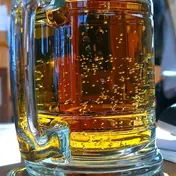
Detroit's defining soda: a deep-aged ginger ale James Vernor barreled in 1862, served from his Woodward Avenue pharmacy in 1866, vanilla-and-spice deep from 4 years in oak. Served straight or in a Boston Cooler.
Vernors Ginger Ale was created by Detroit pharmacist James Vernor, who blended ginger, vanilla and spices in an oak barrel in 1862 and set it aside while he served in the Civil War. Upon his return in 1866, the four-year-aged blend had developed the deep flavour that became the canonical Vernors recipe, first sold from his Woodward Avenue soda fountain that year. The original Woodward Avenue location in Detroit ran continuously from 1866 until 1985. Today owned by Keurig Dr Pepper, Vernors retains a deeply local following in Michigan; it is the structural ingredient in the Boston Cooler.
Signature Dishes in Detroit, FAQ
What food is Detroit known for?
Detroit's signature dishes include Detroit-style pizza, Coney dog, Paczki, Boston cooler, Bumpy cake. See our signature dishes chapter for where to eat each.