Signature dishes
Denver's defining plate: a flour tortilla wrapped around scrambled eggs, potatoes, bacon or chorizo, drowned under a ladle of Pueblo green chile sauce and melted cheddar.
Where: Pete's Kitchen, Sam's No. 3, La Loma, Santiago's, Chubby's
Price: $12-16
Whole rainbow or cutthroat trout from Colorado high country streams, pan-seared bone-in with brown butter, lemon and toasted almonds, on a bed of wild rice or polenta.
Where: Mercantile Dining and Provision, Bistro Vendome, Rioja
Price: $32-46
A folded three-egg omelet packed with diced ham, green bell pepper and onion, served on a sourdough toast plate with hash browns; a railroad-era breakfast that survives in every diner.
Where: Sam's No. 3, Pete's Kitchen, Snooze A.M. Eatery, Lucile's Creole Cafe
Price: $13-17
A burger built from Colorado-raised bison, ground with chuck or brisket trim, formed into a thick patty and grilled medium-rare on a brioche bun with charred onions and Tillamook cheddar.
Where: Linger, My Brother's Bar, Highland Tap and Burger
Price: $18-26
A double-crust pie filled with August Palisade peaches from the Grand Valley, sugared and thickened with cornstarch, the lattice top brushed with cream and turbinado sugar.
Where: Rebel Bread
Price: $8 per slice, $36-44 per pie
Slow-roasted Colorado lamb shoulder or rack from the Western Slope, rubbed with mountain herbs, salt and garlic; the state's premium pasture-raised lamb on Denver tasting menus.
Where: Frasca Food and Wine, Bistro Vendome, Rioja, The Buckhorn Exchange
Price: $48-72
Picked-that-morning sweet corn from Olathe in the Uncompahgre Valley, the state's defining summer ear; served on the cob with butter, queso fresco and chile lime salt.
Where: Mister Oso, Adelitas Cocina y Cantina, Tamayo, Mercantile Dining and Provision
Price: $8-16
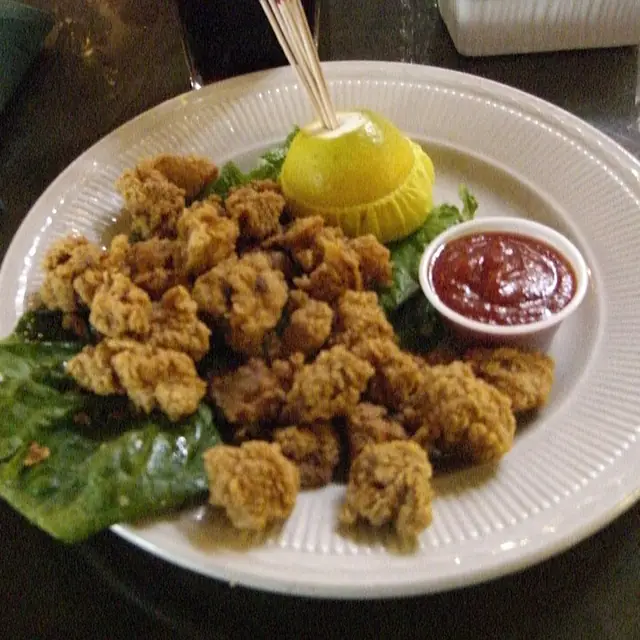
Battered and deep-fried bull testicles, sliced thin, served with horseradish cream and cocktail sauce; a ranch-country bar snack that survived in old-Denver steakhouses.
Where: Bull and Bush Pub, The Buckhorn Exchange
Price: $14-22
A Pueblo Mirasol pepper roasted, peeled, stuffed with Monterey Jack or beef picadillo, dipped in beaten egg batter, fried golden, smothered in green chile and queso.
Where: La Loma, Tamayo, Adelitas Cocina y Cantina, Las Delicias
Price: $15-22
Denver's defining build-your-own burger: hand-formed patty on a soft sesame bun at Cherry Cricket in Cherry Creek since 1945. Featured on Food Network's Diners, Drive-Ins and Dives and Man v. Food.
Where: Cherry Cricket, Park Burger (Highland), Highland Tap and Burger, Hopdoddy Burger Bar
Price: $12-16
Bierstadt Lagerhaus's German-style pilsner poured over 4 to 5 minutes via the traditional 19th-century slow-pour method, creating a foamy crown that locks in CO2 and softens the bitterness.
Where: Bierstadt Lagerhaus, Wynkoop Brewing Company, Crooked Stave Artisan Beer Project, Denver Beer Co
Price: $7-9 per pour
Hand-rolled, kettle-boiled bagels made with Brooklyn-replicated water (Denver's water filtered to match New York's mineral profile), topped with house-cured lox, cream cheese, capers, and red onion.
Where: Rosenberg's Bagels and Delicatessen, Denver Biscuit Company, Snooze A.M. Eatery
Price: $3-5 per bagel; $12-18 for lox plate
Smothered green chile burrito
Denver's defining plate: a flour tortilla wrapped around scrambled eggs, potatoes, bacon or chorizo, drowned under a ladle of Pueblo green chile sauce and melted cheddar.
History: Green chile arrived in Denver through Pueblo growers and Mexican working families in the early 20th century. The Contos family opened Pete's Kitchen on Colfax in 1942 and made the smothered breakfast burrito a 24-hour ritual; Sam's No. 3 carried it forward from 1927. The Pueblo versus Hatch green chile rivalry remains a Colorado political question; Denver kitchens use the Pueblo Mirasol pepper from August to October. La Loma on Osage Street has run the smothered tradition since 1973, and Chubby's at 38th and Lipan keeps the pre-dawn version going for the night shift.
Where to try it: Pete's Kitchen, Sam's No. 3, La Loma, Santiago's, Chubby's
Watch out for: Gluten, Dairy, Eggs
Pan-seared Rocky Mountain trout
Whole rainbow or cutthroat trout from Colorado high country streams, pan-seared bone-in with brown butter, lemon and toasted almonds, on a bed of wild rice or polenta.
History: Rainbow trout is Colorado's state fish and the Front Range's defining freshwater plate, harvested from streams above 7,000 feet and from trout farms in the San Luis Valley. The dish entered Denver hotel restaurants in the 1880s through the railroad-era Brown Palace and Oxford Hotel kitchens. Modern Denver versions across Mercantile and Bistro Vendome lean on Colorado farmed trout from the San Luis Valley and the Western Slope. The pan-seared bone-in version with brown butter and almonds has been the canonical preparation since the 1950s.
Where to try it: Mercantile Dining and Provision, Bistro Vendome, Rioja
Watch out for: Fish, Dairy, Tree nuts
Denver omelet
A folded three-egg omelet packed with diced ham, green bell pepper and onion, served on a sourdough toast plate with hash browns; a railroad-era breakfast that survives in every diner.
History: The Denver omelet, also called the western omelet, dates to the railroad-construction camps of the 1880s along the Union Pacific and Denver and Rio Grande lines. Cowboys and Chinese railroad cooks combined cured ham, peppers and onions into a sandwich filling that became the western sandwich, then folded inside eggs by the 1920s diners. The dish kept the city's name as it spread nationally through diner chains in the 1950s. Denver versions at Sam's No. 3, Pete's Kitchen and Snooze use the original folded form, not the spread-flat souffle style.
Where to try it: Sam's No. 3, Pete's Kitchen, Snooze A.M. Eatery, Lucile's Creole Cafe
Watch out for: Eggs, Dairy
Colorado bison burger
A burger built from Colorado-raised bison, ground with chuck or brisket trim, formed into a thick patty and grilled medium-rare on a brioche bun with charred onions and Tillamook cheddar.
History: Bison returned to Colorado restaurants in the 1980s through Ted Turner's ranches in the San Luis Valley and the Rocky Mountain Bison Co-op. The bison burger replaced the elk burger as the city's dependable lean-game patty by the 2000s. The Buckhorn Exchange on Osage Street, holding Colorado liquor license number one, served bison from its 1893 opening; modern versions at Linger, Ace Eat Serve and the Cherry Creek hotel grills run leaner builds with brioche buns and brown-sugar bacon. Highland Tap and Burger keeps a Colorado-bison patty on the menu year-round.
Where to try it: Linger, My Brother's Bar, Highland Tap and Burger
Watch out for: Gluten, Dairy
Palisade peach pie
A double-crust pie filled with August Palisade peaches from the Grand Valley, sugared and thickened with cornstarch, the lattice top brushed with cream and turbinado sugar.
History: Palisade peaches arrived in the Grand Valley of western Colorado in the 1880s and grew into the state's signature fruit by the 1920s. Denver bakeries source from August to early September, when the Palisade Peach Festival draws weekend crowds to the orchards. The Denver pie tradition runs through bakeries like Rebel Bread; the Palisade peach is the canonical August pie filling here and a fixture on every Front Range farmers market table.
Where to try it: Rebel Bread
Watch out for: Gluten, Dairy
Colorado lamb
Slow-roasted Colorado lamb shoulder or rack from the Western Slope, rubbed with mountain herbs, salt and garlic; the state's premium pasture-raised lamb on Denver tasting menus.
History: Colorado lamb has been a Front Range ranching staple since the 1880s, raised on the Western Slope and San Luis Valley pastures. The state ranks among the top US lamb producers. Mountain States Rosen marketed Colorado lamb to white-tablecloth kitchens nationally from the 1970s. Frasca's Friuli kitchen, Bistro Vendome and Rioja all run lamb-shoulder courses through the year; the slow-roast preparation owes to Italian and Greek immigrant kitchens on Federal Boulevard and in Globeville from the early 20th century.
Where to try it: Frasca Food and Wine, Bistro Vendome, Rioja, The Buckhorn Exchange
Olathe sweet corn
Picked-that-morning sweet corn from Olathe in the Uncompahgre Valley, the state's defining summer ear; served on the cob with butter, queso fresco and chile lime salt.
History: Olathe sweet corn has been grown on the Western Slope since the 1970s, harvested in a tight late-July to early-September window. The Olathe Sweet Corn Festival has run since 1992; Denver chefs source through the season. The Mexican-influenced elote preparation, with crema, queso fresco and chile, took hold on Federal Boulevard and at Mister Oso, Tamayo and Adelitas. Mercantile and Fruition both run sweet-corn courses through August.
Where to try it: Mister Oso, Adelitas Cocina y Cantina, Tamayo, Mercantile Dining and Provision
Watch out for: Dairy
Rocky Mountain oysters
Battered and deep-fried bull testicles, sliced thin, served with horseradish cream and cocktail sauce; a ranch-country bar snack that survived in old-Denver steakhouses.
History: Rocky Mountain oysters arrived in Denver with the Front Range cattle trade in the 1860s, a ranch-economy use of branding-season byproducts. The Buckhorn Exchange, opened in 1893 by Henry H. Zietz, kept them on the menu through the 20th century alongside elk and bison. The Testicle Festival in Throckmorton, Texas popularised the dish nationally; in Denver, Buckhorn and a handful of old-school steakhouses still run them as a starter. The dish remains a tourist initiation more than a serious local staple.
Where to try it: Bull and Bush Pub, The Buckhorn Exchange
Watch out for: Gluten, Dairy
Pueblo chile relleno
A Pueblo Mirasol pepper roasted, peeled, stuffed with Monterey Jack or beef picadillo, dipped in beaten egg batter, fried golden, smothered in green chile and queso.
History: The Pueblo chile relleno entered Denver kitchens through Pueblo-immigrated families in the 1920s and 1930s. The Mexican-American kitchens along Federal Boulevard and in Globeville carried it through the 20th century. La Loma, opened in 1973 on Osage by the Castro family, set the Denver template for the dish. Modern versions at Tamayo, Adelitas and Las Delicias rotate between traditional cheese-stuffed and modern picadillo or chorizo variations.
Where to try it: La Loma, Tamayo, Adelitas Cocina y Cantina, Las Delicias
Watch out for: Gluten, Dairy, Eggs
Cherry Cricket Burger
Denver's defining build-your-own burger: hand-formed patty on a soft sesame bun at Cherry Cricket in Cherry Creek since 1945. Featured on Food Network's Diners, Drive-Ins and Dives and Man v. Food.
History: Cherry Cricket opened in 1945 in Cherry Creek as Mary Zimmerman's Bar, renamed Cherry Cricket in 1950 under Lloyd Page. The Cricket became one of Denver's first sports bars under Bernard Duffy from 1963. Eli McGuire took over in 1990, then sold to Wynkoop (John Hickenlooper's company) in 2000. The build-your-own burger format and the long topping list (including peanut butter, cream cheese, fried egg, and green chile strips) is the city benchmark; Food Network's Diners, Drive-Ins and Dives and Man v. Food both featured the burger. The Ballpark location opened in 2017.
Where to try it: Cherry Cricket, Park Burger (Highland), Highland Tap and Burger, Hopdoddy Burger Bar
Watch out for: Gluten, Dairy, Egg
Bierstadt Slow-Pour Pils
Bierstadt Lagerhaus's German-style pilsner poured over 4 to 5 minutes via the traditional 19th-century slow-pour method, creating a foamy crown that locks in CO2 and softens the bitterness.
History: Ashleigh Carter and Bill Eye founded Bierstadt Lagerhaus in RiNo in 2016, importing a traditional German Lukr side-pull tap system to brew Helles and German Pilsner. The Slow Pour Pils, served only via the 4-to-5-minute side-pull tap, became a national craft-beer reference and helped popularise the slow-pour ritual at American taprooms.
Where to try it: Bierstadt Lagerhaus, Wynkoop Brewing Company, Crooked Stave Artisan Beer Project, Denver Beer Co
Watch out for: Gluten
Rosenberg's Bagel and Lox
Hand-rolled, kettle-boiled bagels made with Brooklyn-replicated water (Denver's water filtered to match New York's mineral profile), topped with house-cured lox, cream cheese, capers, and red onion.
History: Joshua Pollack opened Rosenberg's Bagels and Delicatessen in 2014 in Five Points, building a water-treatment system that reverse-osmosis-filters and remineralises Denver's hard mountain water to match the soft, slightly acidic profile of Brooklyn's water. The bagels are kettle-boiled in malt-syrup water and baked on burlap-covered boards.
Where to try it: Rosenberg's Bagels and Delicatessen, Denver Biscuit Company, Snooze A.M. Eatery
Watch out for: Gluten, Dairy, Fish, Egg