Signature dishes
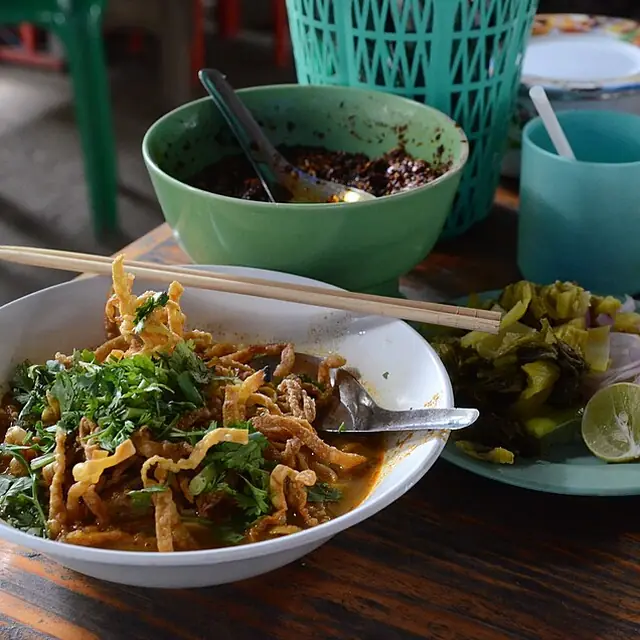
Chiang Mai's defining bowl: soft egg noodles and chicken or beef in a coconut curry broth, crowned with crisp fried noodles, lime, shallot and pickled greens.
Where: Khao Soi Khun Yai, Khao Soi Lamduan Fa Ham, Khao Soi Lung Prakit Kad Kom, Khao Soi Mae Sai
Price: ฿50-90
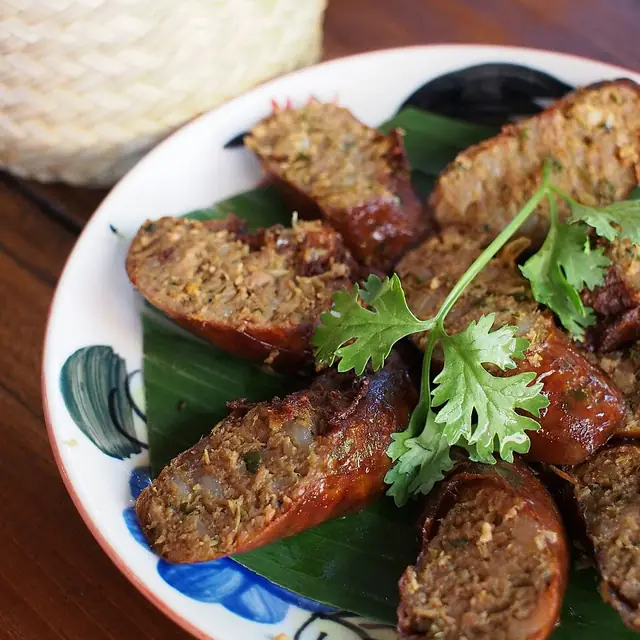
The northern herb sausage: coarsely chopped pork packed with lemongrass, galangal, kaffir lime leaf, shallot, garlic and chilli, coiled and grilled over charcoal.
Where: Sai Ua Dam Rong, Huen Muan Jai, Tong Tem Toh
Price: ฿20-40 per 100g
A soft, smoky green-chilli dip of roasted long green chillies pounded with charred shallot, garlic and lime, eaten with sticky rice, crackling and steamed vegetables.
Where: Huen Phen, Huen Muan Jai, Tong Tem Toh
Price: ฿40-80
A rich Burmese-influenced pork-belly curry, slow-cooked with ginger, tamarind, garlic and a dry-spice hang lay powder until sweet, sour and meltingly tender.
Where: Huen Muan Jai, Aroon Rai, Krua Phech Doi Ngam
Price: ฿60-120
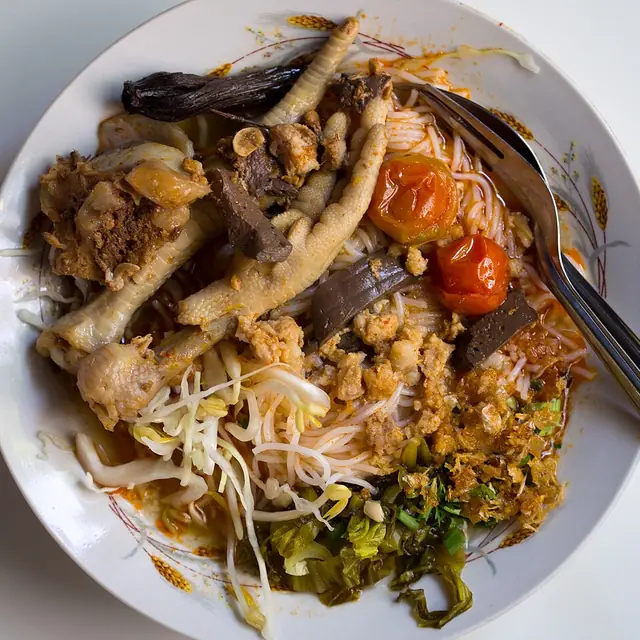
Fresh rice vermicelli under a tangy tomato-and-pork-rib broth flavoured with fermented soybean and dried kapok flowers, the north's everyday noodle bowl.
Where: Kanomjeen Sanpakoi, Huen Phen
Price: ฿40-70
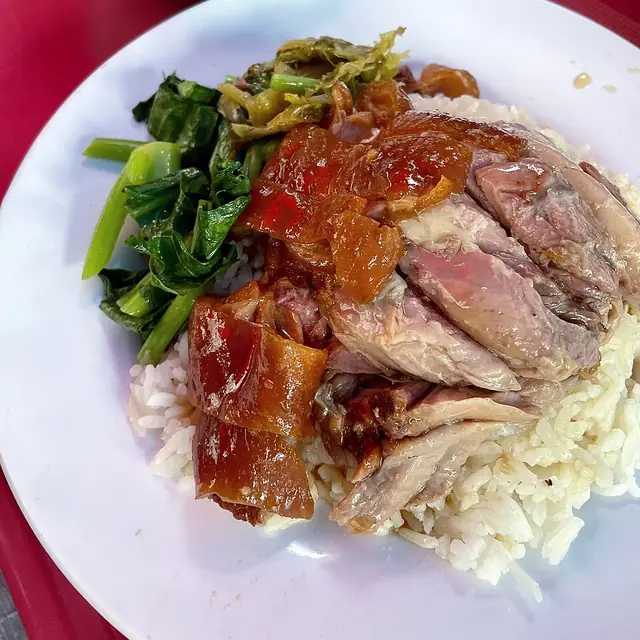
Braised pork leg stewed soft in a dark, five-spice and soy broth, sliced over rice with pickled greens, chilli-garlic vinegar and a soft-boiled egg.
Where: Khao Kha Moo Chang Phueak (Cowboy Hat Lady)
Price: ฿40-60
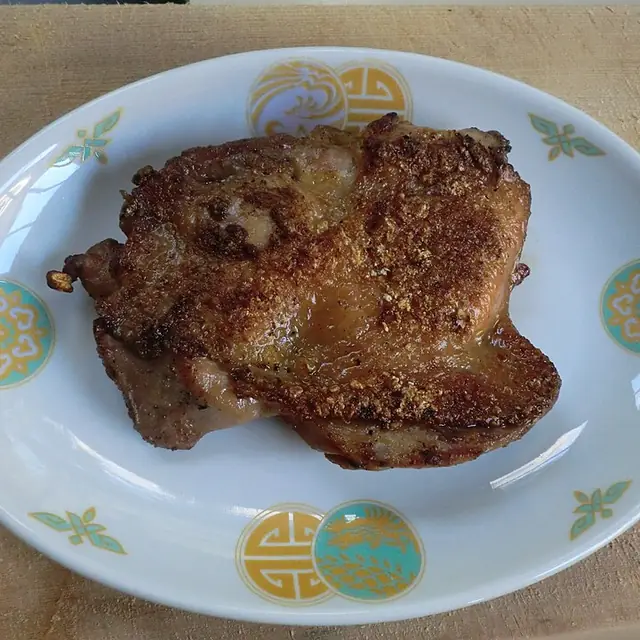
Charcoal-grilled marinated chicken, butterflied and cooked slow over coals until smoky and lacquered, torn by hand and eaten with sticky rice and chilli dip.
Where: SP Chicken, Cherng Doi Roast Chicken, Aroon Rai
Price: ฿60-150
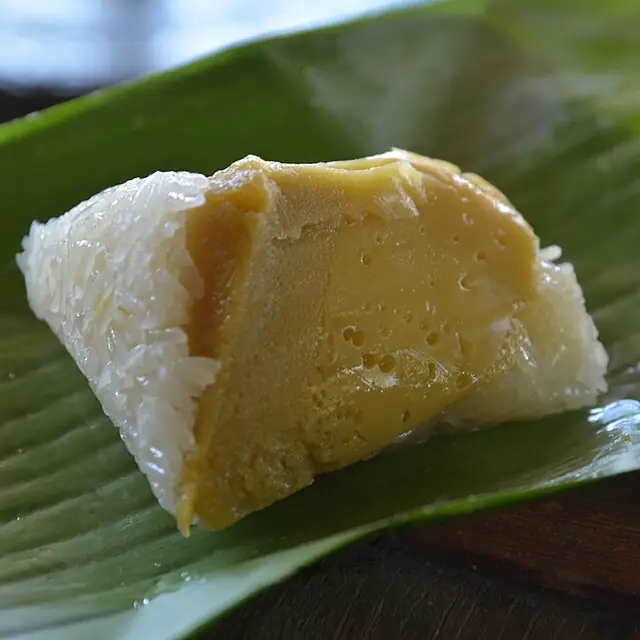
Glutinous sticky rice steamed in a bamboo basket and served in a lidded container, the north's staple starch, rolled by hand to scoop up curries, dips and grills.
Where: Huen Phen, Huen Muan Jai, SP Chicken
Price: ฿10-20
Khao soi
Chiang Mai's defining bowl: soft egg noodles and chicken or beef in a coconut curry broth, crowned with crisp fried noodles, lime, shallot and pickled greens.
History: Khao soi came to northern Thailand with 19th-century Yunnanese-Muslim (Haw) caravan traders, who settled around Chiang Mai's Ban Haw mosque near Warorot Market. Their original version was a clearer, halal beef broth closer to Burmese and Yunnanese noodle soups. Over time the Thai north sweetened and enriched it with coconut milk and red curry paste, added the signature tangle of deep-fried crisp noodles on top, and paired it with pickled mustard greens, shallots and lime. Today it is the single dish most identified with Chiang Mai, sold everywhere from garage counters to Michelin Bib Gourmand shops.
Where to try it: Khao Soi Khun Yai, Khao Soi Lamduan Fa Ham, Khao Soi Lung Prakit Kad Kom, Khao Soi Mae Sai
Watch out for: Gluten, Egg
Sai ua
The northern herb sausage: coarsely chopped pork packed with lemongrass, galangal, kaffir lime leaf, shallot, garlic and chilli, coiled and grilled over charcoal.
History: Sai ua is the everyday flavour of the north, sold by weight from coiled rings at every Chiang Mai market. Its dense herb-and-spice paste, heavy on lemongrass, galangal, kaffir lime leaf, turmeric and dried chilli, reflects the Shan and Burmese influence that separates Lanna cooking from the milder central Thai plate. Traditionally it was a way to use and preserve pork, seasoned generously and grilled slowly over coals until the casing blisters. Warorot Market stalls like Dam Rong built reputations on their recipes, and today sai ua travels home with visitors as the north's edible souvenir.
Where to try it: Sai Ua Dam Rong, Huen Muan Jai, Tong Tem Toh
Nam prik noom
A soft, smoky green-chilli dip of roasted long green chillies pounded with charred shallot, garlic and lime, eaten with sticky rice, crackling and steamed vegetables.
History: Nam prik is the backbone of the northern meal, a chilli relish eaten with sticky rice and vegetables rather than as a sauce. Nam prik noom uses mild long green chillies roasted over flame until the skins blister, then pounded with charred garlic and shallot, fish sauce and lime into a soft, smoky, spoonable paste. It is almost always served alongside nam prik ong, a tomato-and-pork red version, with a platter of steamed and raw vegetables, crisp pork crackling (khaep moo) and a basket of sticky rice. Together they define the shared, hands-on rhythm of a Lanna table.
Where to try it: Huen Phen, Huen Muan Jai, Tong Tem Toh
Watch out for: Fish, Shellfish
Gaeng hang lay
A rich Burmese-influenced pork-belly curry, slow-cooked with ginger, tamarind, garlic and a dry-spice hang lay powder until sweet, sour and meltingly tender.
History: Gaeng hang lay is the clearest culinary trace of the two centuries Chiang Mai spent under Burmese rule. Unlike coconut-based Thai curries, it is a dry, spice-driven braise of fatty pork belly cooked long with ginger, garlic, tamarind, palm sugar and a dedicated hang lay curry powder heavy on turmeric and dried spice. The result is sweet, sour and deeply savoury, mellowing over a day or two, which is why it appears at temple merit-making and festivals cooked in vast pots. It remains a signature of the Lanna feast and a staple of the north's Bib Gourmand kitchens.
Where to try it: Huen Muan Jai, Aroon Rai, Krua Phech Doi Ngam
Khanom jeen nam ngiao
Fresh rice vermicelli under a tangy tomato-and-pork-rib broth flavoured with fermented soybean and dried kapok flowers, the north's everyday noodle bowl.
History: Khanom jeen nam ngiao is the northern Thai and Shan answer to a quick, sour, savoury noodle lunch. Fresh fermented rice vermicelli (khanom jeen) is topped with nam ngiao, a rust-red broth built from tomato, pork rib or blood cake, fermented soybean (tua nao) and, distinctively, dried kapok or silk-cotton flowers that give body and a gentle tang. It arrived with Tai Yai (Shan) communities and became a market and morning-canteen staple across Chiang Mai. Served with bean sprouts, pickled greens, lime and crisp pork rind, it is cheap, sour and unmistakably of the north.
Where to try it: Kanomjeen Sanpakoi, Huen Phen
Watch out for: Fish
Khao kha moo
Braised pork leg stewed soft in a dark, five-spice and soy broth, sliced over rice with pickled greens, chilli-garlic vinegar and a soft-boiled egg.
History: Khao kha moo is a Thai-Chinese street staple that found its most famous home at Chiang Mai's Chang Phueak gate, where the goggle-and-cowboy-hat-wearing vendor known nationwide as the Cowboy Hat Lady turned a pork-leg cart into a pilgrimage. The pork leg is simmered for hours in a dark broth of soy, palm sugar, star anise and five spice until the meat and skin fall apart, then chopped over rice with pickled mustard greens, a sharp chilli-garlic vinegar and often a stewed egg. Cheap, rich and comforting, it is the classic Chiang Mai night-market dinner.
Where to try it: Khao Kha Moo Chang Phueak (Cowboy Hat Lady)
Watch out for: Soy
Gai yang
Charcoal-grilled marinated chicken, butterflied and cooked slow over coals until smoky and lacquered, torn by hand and eaten with sticky rice and chilli dip.
History: Grilled chicken is shared across northern and northeastern Thailand, carried into Chiang Mai kitchens by Isan cooks and northern grill houses alike. The bird is marinated in garlic, coriander root, white pepper, fish sauce and often a little turmeric, then butterflied and grilled slowly over charcoal so the skin lacquers without burning. It is eaten as part of a wider spread with sticky rice, green papaya salad and a fiery jaew dipping sauce, torn and shared by hand. In Chiang Mai it anchors cheap, smoky lunch counters like SP Chicken near Wat Phra Singh.
Where to try it: SP Chicken, Cherng Doi Roast Chicken, Aroon Rai
Watch out for: Fish
Khao niao
Glutinous sticky rice steamed in a bamboo basket and served in a lidded container, the north's staple starch, rolled by hand to scoop up curries, dips and grills.
History: Sticky rice is the foundation of the northern and northeastern Thai table, and Chiang Mai is firmly sticky-rice country. Glutinous rice is soaked for hours, then steamed over water in a cone-shaped bamboo basket until translucent and chewy, and kept in a woven lidded kratip that keeps it warm and soft. It is eaten with the hands: a small ball is pinched off, rolled, and used to scoop nam prik, sausage, grilled meat or curry. More than a side, it sets the communal, utensil-free rhythm of Lanna eating and appears at every meal from street stall to temple feast.
Where to try it: Huen Phen, Huen Muan Jai, SP Chicken