What is in season in Barcelona. and what to order when the market changes.
Spring
- Calçots: January to March only; long thin spring onions grilled black and eaten with romesco, the Catalan winter-into-spring ritual.
- Broad beans: March to May at the Boqueria; eaten raw at the bar with cheese and ham, or in fava-and-ham braises.
- Peas: April to May, sweet peas from the Maresme coast; the canonical Catalan pea dish is favetes amb cansalada.
Summer
- Tomatoes: June to September peak; heirloom from the Maresme. Used for pa amb tomaquet, esqueixada and gazpacho.
- Anchovies: July peak from L'Escala on the Costa Brava; the canonical Spanish-cured anchovy is the centrepiece of any tapas board.
- Stone fruit: Peaches and apricots from the Penedes from June to August; the Costa Brava picotas cherries arrive in May.
Autumn
- Wild mushrooms: September to November: rovellons (saffron milk caps) from the Pyrenees, ceps and trompetes. The Boqueria's mushroom stall opens through autumn.
- Game: October to December: partridge, hare, wild boar from the Catalan interior. The Catalan country bistros run game dishes through autumn.
- Chestnuts: Roasted chestnuts (castanyes) appear on street corners in October; the Castanyada festival on 31 October celebrates them with sweet wine.
Winter
- Salt cod (bacallà): Year-round but most cooked December to February; the traditional Christmas-Eve dinner uses bacallà a la llauna or esqueixada.
- Catalan winter stew (escudella): Christmas and New Year's tradition: a long-cooked meat-and-vegetable stew with pasta and pilota meatballs, served over two courses.
- Neules and torrons: Catalan Christmas sweets: neules wafer biscuits and torrons almond nougat from Jijona and Agramunt, sold from December at every pastisseria.
Book food experiences in Barcelona
Guided tour · 3 hours
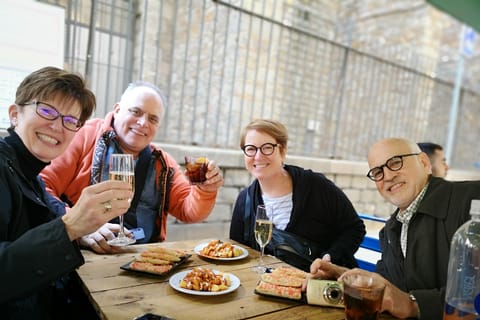
Food Lover Tour Explores Barcelona the local way, after dark, one bar at a time. This evening tapas crawl is all about great food and the stories behind the bars where...
Day trip · 10 hours
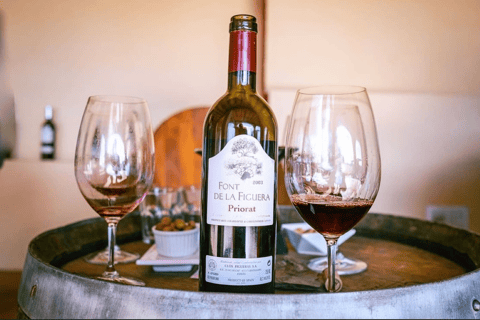
Welcome to a unique experience in the heart of Priorat, a region with some of Spain's most outstanding red wines. The only one classified under the DOC label near Barcelona.
Private tour · 5 hours
Combine a visit to the Sagrada Familia with a full tasting of the best Spanish gastronomy, paired with traditional drinks from the region. Enjoy skip-the-line entrance...
See all 807 bookable experiences in Barcelona