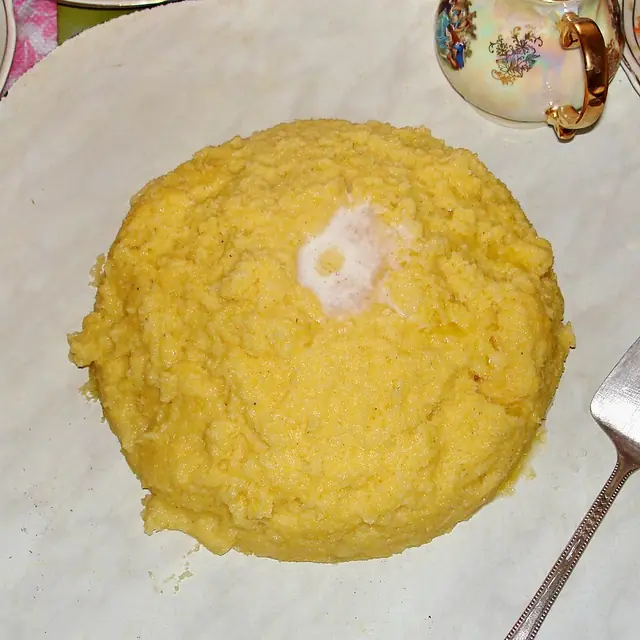
Mămăligă is Romania's cornmeal polenta, cooked thick with water and salt until it firms enough to slice with a string. It arrives under brânză, smântână, fried egg and slănină, or alongside ciorbă and sarmale.
Mămăligă entered Romanian cooking when maize arrived from the Americas via Ottoman trade routes in the 17th century, displacing earlier millet porridge. Through the 18th and 19th centuries it became the peasant staple and the rural breakfast, named the national bread by the writers of the 1848 generation. The modern Bucharest restaurant version uses fine cornmeal cooked stiff, sliced with a thread, and served as a side or a centrepiece under cheese and sour cream.
The 1808 caravanserai-turned-restaurant Hanu' lui Manuc on Franceză serves classic Romanian plates around one of Europe's last remaining inn courtyards.
OrderMici and a lamb tochitură; the cabbage rolls feed two.
TipThe courtyard fills first; ask for a balcony table inside the U-shaped inn.
Perfect for first‑time visitors, this small‑group food tour explores Bucharest’s history and daily life through neighborhood walks, a tram ride, and tastings at the ci...
Try a one day fun tour in the countryside! Get a taste of Romanian wines and savor a good meal in the vines, overlooking the valleys while taking in the picturesque la...