How Porto came to eat the way it does: the people, migrations and accidents that shaped the plate.
Key eras
-
1415, the tripeiros story
According to tradition, the ships built at the Lordelo do Ouro shipyard in Porto in 1415 were secretly meant for Ceuta, and the townspeople gave the sailors their best meat and kept the offal. They cooked a poor dish of tripe and dark bread, and the people of Porto were nicknamed tripeiros, the tripe-eaters. Today's tripas à moda do Porto is a stew of tripe with white beans, carrots and rice.
-
1703, the Methuen Treaty and the rise of port wine
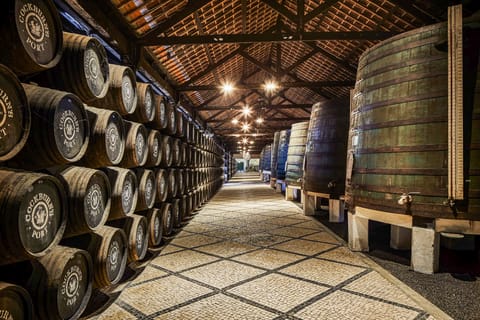
The Methuen Treaty, signed on 27 December 1703, let Portuguese wine enter England at a third less duty than French wine, at a time when war with France made French wine hard to get. Port became very popular in England, and British merchants built the trade around Vila Nova de Gaia, where rabelo boats brought barrels down the Douro to age in lodges. Shipper names such as Croft, Sandeman and Taylor show the British hand.
-
1756, the Port region defined
A royal charter of 10 September 1756 defined the production region for Port wine, and the Douro Wine Company was founded the same year during the rule of the Marquis of Pombal to guarantee quality and fair prices. Port is counted among the world's earliest formally demarcated wine regions.
-
The 19th century, cod preparations
By the 1700s salt cod had become a basic food for ordinary Portuguese. In the 19th century José Luís Gomes de Sá Júnior, a cod merchant working in Ribeira, created bacalhau à Gomes de Sá, and bacalhau à Brás is said to date from the second half of the century in Lisbon's Bairro Alto. In Portugal it is said there are more than 365 ways to cook salt cod, and it is the traditional Christmas Eve dinner in some parts of the country.
Taste it todayBacalhau à Brás -
The 1950s, the francesinha
Daniel David da Silva, a barman who had spent time in France and Belgium, joined A Regaleira on Rua do Bonjardim in the 1950s and, inspired by the croque monsieur, made a small sandwich with roast beef and smoked meat under a secret hot sauce. It became the francesinha. A Regaleira, open since 1934, still serves it to the original recipe, at number 83 of the same street since 2021.
Taste it todayFrancesinha -
2021 to today, the Michelin stars
Antiqvvm went from one star to two in 2024, while Casa de Chá da Boa Nova and The Yeatman hold two. Vila Foz gained a star in 2022, Euskalduna Studio and Le Monument in 2023 and Blind in 2025, and in 2026 DOP, EON, IN Diferente and Gastro by Elemento joined Pedro Lemos among the one-star restaurants of Porto.
Immigrant influences
- British (port wine traders)
- British merchants shaped the port trade after the Methuen Treaty of 1703, and shipper names such as Croft, Sandeman and Taylor over the Vila Nova de Gaia lodges still show it.
- Brazilian
- Samba no Porto, in its 36th edition in 2026, brings Brazilian music and food to the Mercado do Bolhão each Carnaval, and the Brazilian-born chef Angélica Salvador cooks at the Michelin-listed IN Diferente.
- Indian
- Real Indiana in Foz, founded in 2001 and calling itself Porto's first Indian fine-dining restaurant, serves chicken samosas and curries, and Mendi cooks Indian food on Avenida da Boavista.Taste it todayMendi
- French (via Belgium for the francesinha)
- Daniel David da Silva came back to Porto from France and Belgium and turned the croque monsieur into the francesinha, a sandwich of meats and cheese under a hot sauce.
Signature innovations
- Tripas à moda do Porto: tripe stew with white beans, behind the nickname tripeiros
- The francesinha, Porto's answer to the croque monsieur, created at A RegaleiraTaste it todayFrancesinha
- The cachorrinho at Cervejaria Gazela: a hot dog pressed on a griddle since 1962Taste it todayCervejaria Gazela
- Sandes de pernil at Casa Guedes: roast pork leg in a roll, on Praça dos Poveiros
- Bacalhau à Gomes de Sá: created by Porto cod merchant José Luís Gomes de Sá
- The bifana, the pork sandwich Conga Casa das Bifanas is named afterTaste it todayBifana
- Vinho do Porto: the region defined by royal charter on 10 September 1756