
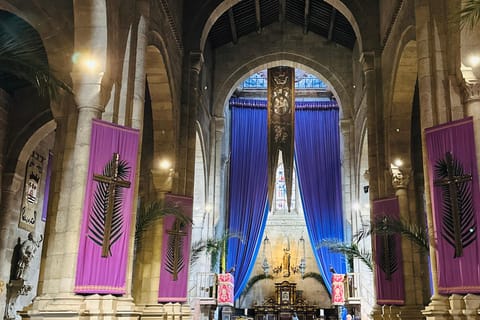
The plates that define Braga: what they are, where they came from, and where to eat the canonical version.
Signature dishes
-
Frigideira de Braga ★ 4.9
A fried pastry pocket of egg-yolk custard cream, unique to the Minho and made continuously in Braga since 1796. The dough is hand-stretched, filled, sealed and fried in lard until blistered and golden.
Where to try it: Frigideiras do Cantinho, Frigideiras da Sé
Price: €1.50-2.50
The frigideira is the oldest surviving conventual pastry of the Minho, traced to the convent kitchens of Braga in the late 18th century. Frigideiras do Cantinho at Largo de Sao Joao do Souto has operated at the same address since 1796, making it one of the longest continuously traded food shops in Portugal. The name comes from the frying pan used to finish the pastry. A second house, Frigideiras da Se, opened in the 20th century two hundred metres away near the cathedral. Neither uses electric fryers; both finish in hand-held lard pans.
Watch out for: Gluten, Dairy, Egg
-
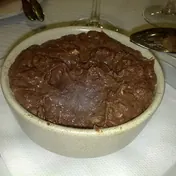
Papas de Sarrabulho ★ 4.8
A thick porridge of maize flour and pork blood cooked with offal, chourica and cured meats. The Minho's defining winter comfort dish, eaten on Sunday mornings at tascas across Braga.
Where to try it: Restaurante Tia Isabel, Cruz Sobral, Casa Garrafinha de Jeremias
Price: €9-14
Sarrabulho is one of the oldest surviving dishes of the Minho, documented in monastery records from the 17th century as a way to use the full pig after the November slaughter. The thick corn-flour base absorbs the blood from the fresh slaughter, producing a dark, iron-rich porridge. The dish is made at Bisaro-pig slaughter time (November to January) but is served year-round at Braga tascas. Cruz Sobral and Restaurante Tia Isabel are the two custodian addresses, both making it from scratch on Saturdays with fresh Bisaro blood from farms north of the city.
Watch out for: Gluten, Egg
-
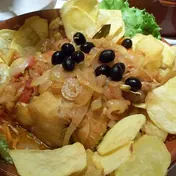
Bacalhau a Braga ★ 4.6
The Braga preparation of salt cod: thick fillets fried with onion rings, green pepper and olive oil, served with home-fried potatoes and olives. Distinct from Lisbon and Porto versions by its pepper and onion volume.
Where to try it: Restaurante Tia Isabel, Arcoense, Cozinha da Sé
Price: €13-20
Bacalhau a Braga is one of the 365 ways of cooking bacalhau documented across Portugal, but it holds a specific Minho character. The thick fried onion rings and green peppers distinguish it from the northern a Ze do Pipo or the southern Gomes de Sa preparations. The dish crystallised as a Braga signature at family restaurants in the mid-20th century; Restaurante Tia Isabel and Arcoense are its two canonical addresses. Cozinha da Se near the cathedral has kept the preparation on its menu since the 1990s without modification.
Watch out for: Fish, Gluten
Book food experiences in Braga
-
Tibias de Braga ★ 4.7
Bone-shaped profiteroles filled with egg-yolk cream, unique to Braga and named for their tibia shape. A conventual pastry distinct from the frigideira, made at two specialist shops near the cathedral.
Where to try it: Tibias de Braga, Frigideiras do Cantinho
Price: €1.50-2.50
The tibia de Braga is the second of the city's two signature conventual pastries, alongside the frigideira. The bone shape is a reference to the relics venerated in Braga's many churches, and the name is a direct translation of the leg bone. The filling of egg yolks, sugar and cream is the same conventual custard tradition that produced the pastel de Belem in Lisbon and the pastel de Tentugal in Coimbra. Tibias de Braga at Praca Conde Sao Joaquim is the specialist address and has held the recipe since the shop opened in the 20th century.
Watch out for: Gluten, Dairy, Egg
-

Pudim Abade de Priscos ★ 4.9
Portugal's most technically demanding conventual dessert: a trembling Port wine and egg-yolk pudding created by Abbot Antonio Joaquim de Almeida in the late 19th century.
Where to try it: Palatial, Docaria São Vicente
Price: €7-12
Abbot Antonio Joaquim de Almeida of Priscos, born 1840, created this pudding in the kitchens of the parish of Priscos, five kilometres from Braga. The recipe calls for Port wine, twenty egg yolks, sugar, cured lard and a caramel that sets the amber colour. It was first served at religious banquets and spread through the Minho convents in the late 19th century. Modern Braga restaurants treat it as the pinnacle of the conventual dessert tradition. Palatial serves it as a dessert course; Docaria São Vicente sells it chilled to take away.
Watch out for: Egg, Dairy, Sulphites
-
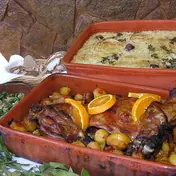
Cabrito Assado (Roast Kid) ★ 4.7
Slow-roasted whole kid goat, marinated in white wine, garlic and rosemary, cooked until the skin crisps and the meat falls from the bone. The Easter centrepiece of the Minho table.
Where to try it: Arcoense, Restaurante Tia Isabel, Casa de Pasto das Carvalheiras
Price: €16-24
Roast kid is the defining meat of the Minho spring table, reaching its peak at Easter when the youngest animals from mountain farms arrive in Braga. The tradition of serving cabrito at Easter derives from the region's monastic heritage, when the Church's restrictions on meat during Lent broke at Easter with the seasonal roast. Arcoense in the Cividade neighbourhood has served it as its flagship dish since the 1970s, sourcing kid from the same farm families in the Peneda hills each season.
-
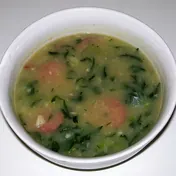
Caldo Verde ★ 4.5
Thick kale and potato soup with chourico, the defining comfort food of northern Portugal. The Braga version is denser and more pork-rich than the Lisbon preparation, made with finely shredded galega kale.
Where to try it: Caldo Entornado, Restaurante Tia Isabel, Taberna do Migaitas
Price: €5-9
Caldo verde originated in the Minho region and is the soup most associated with northern Portuguese domestic cooking. The combination of galega kale (a tough, dark-leafed variety grown in the Minho), potato and chourico was codified as a restaurant dish in Braga in the 20th century but has been made in farmhouse kitchens for at least three centuries. The Braga preparation uses more olive oil, more chourico and less water than the Lisbon version, producing a soup closer to a stew. Caldo Entornado near the cathedral is the benchmark address for visitors.
Watch out for: Gluten
-
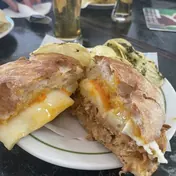
Bifana (Braga-style) ★ 4.4
A pork loin steak in a spiced wine marinade, stuffed into a crusty papo-seco roll. The Braga street version uses a more vinegar-forward sauce than the Lisbon original.
Where to try it: BLB Bifanaria
Price: €3-5
The bifana is Portugal's national sandwich, but each city runs a different version. The Braga bifana at BLB Bifanaria in Largo da Senhora a Branca uses a wine-and-vinegar sauce with more chilli heat than the Lisbon variety. The shop stays open late on weekends and is the student-quarter institution for a late snack after a night out. The bifana's association with Braga deepened as the university expanded from 1973, making it the defining budget meal of student life in the city.
Watch out for: Gluten
-
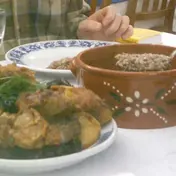
Rojoes a Minhota ★ 4.5
Cubes of pork shoulder fried in lard with white wine, garlic and cumin until caramelised and aromatic. The Minho's version of pork confited in its own fat, served with fried potatoes and pickled vegetables.
Where to try it: Arcoense, Cruz Sobral
Price: €12-18
Rojoes are the Minho's answer to the Alentejo pork dishes of the south; where Alentejo uses olive oil, the Minho renders the pork in its own lard. The preparation reflects the region's Bisaro pig culture and the tradition of using every part of the November slaughter. Arcoense has served rojoes as a fixed menu staple since the 1970s, sourcing the pork from the same hill farms near Peneda-Geres that supply the Easter kid.
-
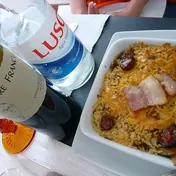
Arroz de Pato ★ 4.6
Duck and chourico baked rice: a whole duck braised and shredded, cooked into rice with its broth, finished in the oven with a crust of chourico slices and a beaten egg glaze.
Where to try it: Casa de Pasto das Carvalheiras, Cruz Sobral
Price: €13-20
Arroz de pato is one of the great rice dishes of the Portuguese table, and Braga's version at Casa de Pasto das Carvalheiras is the benchmark preparation in the city. The dish requires a whole duck braised for several hours, a step that most restaurants skip in favour of duck confit; the Carvalheiras kitchen makes it from scratch on a rotating weekly basis. The combination of long-braised duck, salty chourico and egg-glazed rice crust is a product of the Minho farmhouse tradition of using the Sunday duck for multiple meals.
Watch out for: Egg
-
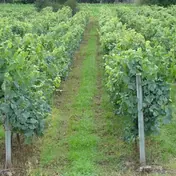
Vinho Verde (Minho style) ★ 4.8
The young, slightly sparkling white wine of the Minho, made from loureiro, alvarinho and arinto grapes harvested between August and September.
Where to try it: Letraria Craft Beer Library Braga, Domus Vinum, Bracara Degusta
Price: €3-8 per glass
Vinho Verde has been produced in the Minho region since at least the 12th century, when Cistercian monks from Braga's monasteries planted the first documented vineyards along the Lima and Cavado valleys. The Denominacao de Origem Controlada was established in 1908, making it one of Portugal's oldest protected wine regions. The wine is made from grapes grown on high pergola trellises that match the vines above the foggy valley floors, producing the green-fresh character the name describes. Braga sits at the heart of the Minho sub-region; Letraria Craft Beer Library Braga and Domus Vinum are the two best addresses for exploring the full range of local producers.
Watch out for: Sulphites
-

Bola de Berlim ★ 4.5
Portuguese filled doughnut: yeasted dough deep-fried golden, rolled in sugar, slit and filled with creme de ovos (egg-yolk custard). Braga's pastelarias make some of the country's finest versions.
Where to try it: Frigideiras do Cantinho, Frigideiras da Sé, Docaria São Vicente, Coretto Cafe e Tortaria
Price: €1.50-3 each
Bola de Berlim arrived in Portugal with German and central European refugees fleeing the 1930s and 1940s, who adapted the Berliner doughnut tradition to Portuguese tastes by adding the well-known creme de ovos (egg-yolk custard) filling. Braga's Catholic pastry tradition produced exceptional egg-yolk-cream versions; Frigideiras do Cantinho and Docaria São Vicente bake them daily. The dish is a Portuguese beach-boardwalk classic in summer and a year-round pastelaria staple in Braga.
Watch out for: Gluten, Egg, Dairy
Signature Dishes in Braga, FAQ
What food is Braga known for?
Braga's signature dishes include Frigideira de Braga, Papas de Sarrabulho, Bacalhau a Braga, Tibias de Braga, Pudim Abade de Priscos. See our signature dishes chapter for where to eat each.