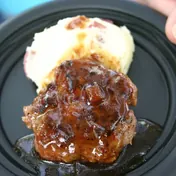
The Norwegian meatball, made from ground beef or beef-pork blend, pan-fried and served swimming in brown sauce with boiled potatoes, peas and a spoon of lingonberry.
More substantial than its Swedish neighbour, kjøttkaker has anchored Norwegian everyday cooking for over a century, the unfailing centre of the kafeteria-style husmannskost meal. The Oslo tradition was codified at Engebret Café and Kaffistova through the late 19th century, when migrant farm cooks brought the recipe to the capital from Western Norway. The Smalhans Thursday lunch keeps the canonical version with brown gravy, peas and lingonberry today.
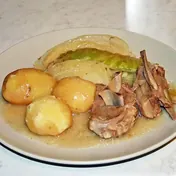
Lamb chunks layered with cabbage, whole black peppercorns and a little water, simmered slowly until tender, served with boiled potatoes. The national dish, simple by design.
Fårikål has been celebrated annually on Fårikål Day on the last Thursday of September since 1972, when Norwegians began voting it the national dish in a poll run by the magazine Nationen. The mutton-and-cabbage layered stew dates to medieval Western Norwegian farm kitchens, when autumn lamb slaughter coincided with the cabbage harvest. The Oslo tradition is built around the seasonal autumn arrival of fresh-killed sheep from the Telemark grazing pastures.
Dried fish reconstituted in lye, then cooked to a translucent gelatinous texture. Served with bacon lardons, peas, mustard, boiled potatoes and lefse from October to Christmas.
Lutefisk's lye preparation dates to medieval Scandinavia as a way to rehydrate stockfish, and remains a fixture of Norwegian Advent and Christmas tables. The dried cod is treated in birch ash lye for two days, then soaked in cold water for four more before cooking. Oslo's traditional rooms run dedicated lutefisk menus through October to early January; Schrøder, Engebret Café and the lutefisk lunch at Theatercaféen are the canonical addresses.
Discover the flavors, stories, and soul of Oslo’s trendiest neighborhood on your Grünerløkka Food Tour, a journey through the vibrant cafés, creative kitchens, and Nor...
Step off the tourist trail and into the soul of Norway. Just minutes from Oslo, trade the urban rush for the whispering pines of Nordmarka. This 3.5-hour immersive jou...
Cold-water North Atlantic prawn boiled at sea, peeled at the counter, eaten on dense rye bread with house-made mayonnaise, fresh dill and lemon. The Oslo summer staple, sold by the kilo on the Rådhusbrygga harbour wharf.
Norwegian prawn has been an Oslo summer ritual since the working fishing boats began selling reker straight from the deck on Rådhusbrygga in the 1920s. The Skagerrak cold-water catch is boiled in seawater at sea, the prawns are peeled by hand at the counter and eaten on dense rye bread with house mayonnaise. The harbour quay queue still forms from May through September; Solsiden has the canonical sit-down version on the Aker Brygge waterfront.
Cardamom-spiced enriched bun with vanilla custard in the centre, glazed with icing and finished with desiccated coconut. Lunchbox staple, bakery counter classic.
Skolebrød (school bread) became a Norwegian bakery fixture in the mid-20th century, eaten with milk through the school day and adopted by every bakery counter in Oslo. The cardamom-spiced enriched bun is baked with a vanilla custard centre, glazed with white icing and finished in desiccated coconut. Åpent Bakeri and Talormannen run the canonical Oslo versions; Hagen Konditori in Grünerløkka keeps the most traditional shape.
Reindeer has been on Norwegian tables for centuries, originally from Sami herders in Finnmark and Troms in the north; Oslo's fine-dining and traditional rooms keep it on the menu year-round. The autumn slaughter runs October through January and the freshest meat reaches Oslo from the Karasjok and Kautokeino reindeer cooperatives. Lofoten Fiskerestaurant, Bagatelle and Statholdergaarden run the canonical version with juniper, lingonberry and root vegetables.
Brown cheese made from whey, milk and cream, boiled until the sugars caramelise. Sliced thin with a cheese plane onto crispbread, waffles or a sourdough loaf.
Brunost dates to 1863 when dairymaid Anne Hov first added cream to the whey in the Solbråsetra dairy in Gudbrandsdalen; it has been Norway's most definitive food export ever since. The caramelised brown cheese was patented as Gudbrandsdalsost by TINE in 1866 and became a Norwegian breakfast and lunch fixture. Oslo's Hagen Konditori, the Mathallen brown cheese counter and Solberg & Hansen sell the canonical version sliced thin onto crispbread or sourdough.
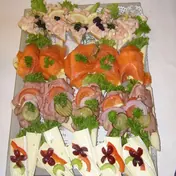
Open-face sandwich on dense rye or sourdough, dressed with combinations of smoked salmon, prawn salad, roast beef and remoulade, or pickled herring with red onion and beetroot.
Smørbrød became a Norwegian lunch institution through the early 20th century, with hotel cafés and restaurants like Theatercaféen on Stortingsgata popularising the open-face form as a counter-and-table classic. The Norwegian version differs from the Danish smørrebrød by carrying less garnish and leaning on smoked or pickled fish, prawn salads and roast beef with remoulade. Engebret Café, Schrøder and the Mathallen counter run the canonical Oslo versions on dense rye or sourdough.
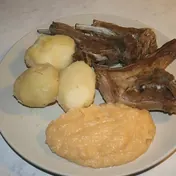
Salt-cured, dried lamb ribs soaked overnight then steamed slowly over birch sticks until the meat falls off the bone. Served with mashed rutabaga, almond potatoes and aquavit.
Pinnekjøtt (stick meat) is the Christmas Eve centrepiece across most of Western Norway, the steaming method named for the birch sticks that hold the salt-cured lamb ribs above the pot's water. The dish became a national Christmas table standard through the 20th century; surveys put it on roughly three in four Norwegian Christmas Eve tables today. Oslo's traditional kitchens at Engebret Café, Stortorvets Gjæstgiveri and Asylet all run a defensible version through Advent.
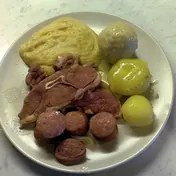
Boiled potato dumplings made from grated raw potatoes mixed with cooked potato and barley flour, served Thursday lunchtimes with salted lamb, rendered bacon and rutabaga mash.
Raspeballer (also called komle or klubb depending on the region) have been Norway's Thursday tradition since the 19th century, a Western Norway peasant dish elevated by Oslo's husmannskost rooms. The dumpling is built around grated raw potato bound with cooked mashed potato and barley flour, dense and savoury rather than fluffy. Kaffistova, Asylet and Smalhans run the canonical Oslo Thursday-lunch versions with salt-cured lamb, rendered bacon and rutabaga mash.
Salmon cured in salt, sugar and dill for two to three days, sliced paper-thin and served with hovmastersaus, a sweet mustard-and-dill sauce, on rye crispbread.
Gravlaks (literally buried salmon) descends from a medieval Nordic preservation method of fermenting salmon under stones with salt; the modern fresh dill-and-sugar cure that defines it today dates to the late 19th century, when refrigeration removed the need for fermentation. The Norwegian version uses sea-farmed Atlantic salmon, cured 48 to 72 hours. Lofoten Fiskerestaurant, Solsiden and Theatercaféen carry the canonical Oslo version with hovmastersaus, sweet mustard-and-dill, on rye crispbread.
Pickled herring fillets steeped in a vinegar, sugar and onion brine, served on dark rye with sour cream, red onion and pickled beetroot. Year-round counter staple, Christmas table essential.
Sursild is the Norwegian take on Scandinavia's centuries-old herring tradition, anchored at every Oslo fish counter and the obligatory opening of any proper julebord (Christmas table). The classic brine is dill-vinegar-sugar-onion with bay; the rødvinssild (red-wine herring) and sennepsild (mustard herring) are the variants seen on Christmas spreads. Mathallen Oslo, Theatercaféen and Engebret Café run defensible counter versions year-round and full julebord spreads through December.
Watch out for: Fish, Gluten
Signature Dishes in Oslo, FAQ
What food is Oslo known for?
Oslo's signature dishes include Kjøttkaker, Fårikål, Lutefisk, Norwegian prawn (reker), Skolebrød. See our signature dishes chapter for where to eat each.