Key eras
1097, the Rialto Pescheria opens
Venice's fish market starts on the Rialto banks in 1097, anchoring the city's eastern lagoon catch trade. The Republic codifies fish-market regulations in the 13th century, including minimum-size rules for sole and goby that still hold today, and the Pescheria remains in continuous operation in the same neo-Gothic loggia rebuilt in 1907.
13th-15th centuries, the spice trade
The Venetian Republic's monopoly on the Eastern spice trade brings pepper, cinnamon, cloves, nutmeg and saffron into the city's pantry from the Levant. Sarde in saor (sweet-and-sour sardines with onions, raisins and pinenuts) and bigoli in salsa (whole-wheat pasta with anchovy and onion) are codified in this era as the lagoon's response to Adriatic-Asian flavour grammar.
1462, Cantina Do Mori opens
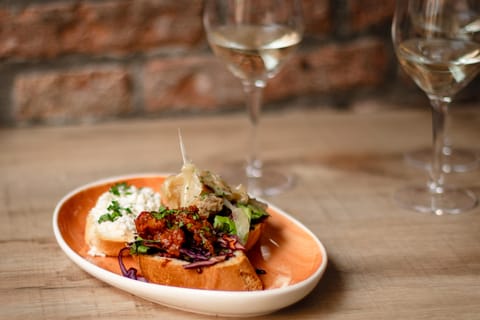
The oldest bacaro in Venice opens on Calle dei Do Mori in San Polo, near the Rialto market. Cantina Do Mori is the canonical wine bar serving ombre (small glasses of wine) and francobolli (postage-stamp-sized sandwiches), establishing the cicchetti tradition that still defines Venetian counter eating five centuries later.
1516, the Jewish Ghetto is founded
The Venetian Republic confines the Jewish community to a small island in Cannaregio in 1516, creating Europe's first ghetto. The community develops a distinct Sephardic-Italian kitchen of azzime dolci sweet biscuits, kosher bagels and the artichoke alla giudia tradition, all of which still anchor the Ghetto Vecchio at Gam Gam and Panificio Volpe.
1720, Caffe Florian opens
Caffe Florian opens in Piazza San Marco on 29 December 1720, the oldest coffee house in continuous operation in Italy. The cafe was the only Venetian coffeehouse to admit women, attracting Casanova, Goldoni and Goethe, and codifies the standing-counter espresso culture that still defines Venetian morning rituals.
1931, Harry's Bar invents the Bellini and carpaccio
Giuseppe Cipriani opens Harry's Bar on Calle Vallaresso in 1931. The bar invents the Bellini (white peach puree with Prosecco) for the painter Giovanni Bellini's 1948 exhibition, and beef carpaccio (raw beef sliced thin) for Countess Amalia Nani Mocenigo in 1950. Both are now codified in global menus; both originated here.