The plates that define Palermo. what they are, where they came from, and where to eat the canonical version.

Must-try dishes

Pane ca' meusa ★ 4.9

Pane ca' meusa is a sesame-seeded vastedda bun stuffed with veal spleen, lung and trachea boiled then fried in lard, served maritato with caciocavallo and ricotta or schietto with lemon, the most distinctive Palermitan street food.

Where: Pani Ca' Meusa Porta Carbone, Nni Franco u' Vastiddaru, Antica Focacceria San Francesco

Price: 3 to 5 euros

Panelle e Crocche ★ 4.7

Panelle are thin chickpea-flour fritters; crocche di patate are mashed-potato croquettes. Together they fill a sesame vastedda bun for the Palermitan working lunch sandwich.

Where: Friggitoria Chiluzzo, Panelle e Crocche del Ballaro, Antica Focacceria San Francesco

Price: 2 to 4 euros

Arancina ★ 4.9

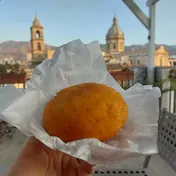
Arancina is a deep-fried saffron rice ball, round in the Palermitan tradition (conical in Catania), stuffed with meat ragu, butter and ham, spinach or porcini, breadcrumbed and fried golden.

Where: Ke Palle Arancine d'Autore, Arancina del Mercato del Capo, Bar Pasticceria Alba

Price: 2.50 to 4 euros

Sfincione ★ 4.8

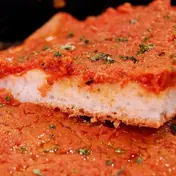
Sfincione is the Sicilian focaccia-pizza, a thick spongy dough topped with caciocavallo, anchovies, onion, oregano and breadcrumbs, baked in trays and cut into thick squares for street eating.

Where: Sfincione del Mercato della Vucciria, Antica Focacceria San Francesco, Ballarak Birrificio

Price: 2 to 4 euros per slice

Cassata Siciliana ★ 4.8

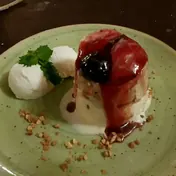
Cassata is the Sicilian sponge cake encased in green marzipan and ricotta cream, topped with candied fruit and pan di Spagna sponge, the convent-tradition crown jewel of Palermitan pasticceria.

Where: I Segreti del Chiostro, Pasticceria Cappello, Antico Caffe Spinnato

Price: 4 to 8 euros per slice

Cannolo Siciliano ★ 4.9

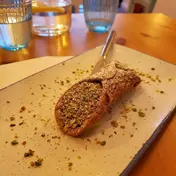
Cannolo is a fried tube of pasta-frolla shell filled to order with sweetened sheep's-milk ricotta, candied citrus, chocolate chips and crushed pistachios, the most exported Palermitan sweet.

Where: Bar Pasticceria Alba, Pasticceria Cappello, I Segreti del Chiostro

Price: 2 to 4 euros each

Pasta con le sarde ★ 4.8

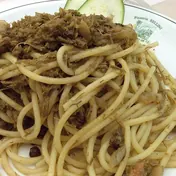
Pasta con le sarde is bucatini or perciatelli tossed with fresh sardines, wild fennel fronds, pine nuts, sultanas, anchovies and saffron, breadcrumbed at the top, Palermo's defining pasta.

Where: Trattoria Ai Cascinari, Buatta Cucina Popolana, Osteria Ballaro

Price: 9 to 15 euros

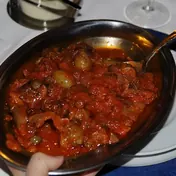
Caponata ★ 4.7

Caponata is a sweet-and-sour Sicilian aubergine stew with celery, capers, olives, tomato, sugar and vinegar, served at room temperature as an antipasto or contorno, on every Palermitan carte.

Where: Buatta Cucina Popolana, Bisso Bistrot, Trattoria Ai Cascinari

Price: 6 to 12 euros

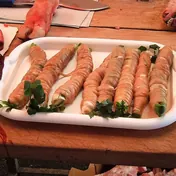
Sarde a beccafico ★ 4.7

Sarde a beccafico are stuffed butterflied sardines wrapped around a breadcrumb, pine nut, raisin and orange-zest filling, tail-up in a baking dish, the Palermitan signature antipasto.

Where: Buatta Cucina Popolana, Trattoria Ai Cascinari, Osteria Ballaro

Price: 7 to 12 euros

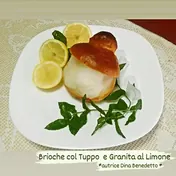
Granita with brioche col tuppo ★ 4.8

Granita is a Sicilian semi-frozen flavoured ice (almond, mulberry, coffee, lemon) eaten with brioche col tuppo, a fluffy yeasted breakfast bun, the Palermitan summer breakfast rite.

Where: Gelateria Stancampiano, Bar Pasticceria Alba, Antico Caffe Spinnato

Price: 3 to 5 euros

Stigghiola ★ 4.6

Stigghiola is grilled lamb or veal intestines, wrapped with spring onion and parsley around a wooden skewer and charred on charcoal braziers, the Albergheria after-dark Palermitan street snack.

Where: Stigghiolari del Ballaro, Mercato Notturno Borgo Vecchio, Antica Focacceria San Francesco

Price: 3 to 6 euros

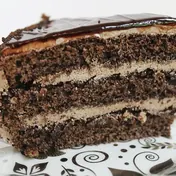
Setteveli ★ 4.7

Setteveli is a seven-layer chocolate cake with bitter chocolate mousse, gianduja, hazelnut praline, sponge, ganache and a thin chocolate glaze on top, the modern Palermitan signature.

Where: Pasticceria Cappello, Pasticceria Costa, Antico Caffe Spinnato

Price: 5 to 8 euros per slice

Pane ca' meusa

Pane ca' meusa is a sesame-seeded vastedda bun stuffed with veal spleen, lung and trachea boiled then fried in lard, served maritato with caciocavallo and ricotta or schietto with lemon, the most distinctive Palermitan street food.

History: Pane ca' meusa traces to medieval Palermitan Jewish butchers in the Giudecca quarter, who could not eat the pork that Sicilian Christians did. After the 1492 Spanish expulsion of Sicilian Jews, Christian butchers inherited the spleen-sandwich tradition; it has been sold at Palermo street counters continuously for 500 years. Antica Focacceria San Francesco has served it since 1834.

Where to try it: Pani Ca' Meusa Porta Carbone, Nni Franco u' Vastiddaru, Antica Focacceria San Francesco

Watch out for: Gluten, Sesame, Dairy

Panelle e Crocche

Panelle are thin chickpea-flour fritters; crocche di patate are mashed-potato croquettes. Together they fill a sesame vastedda bun for the Palermitan working lunch sandwich.

History: Panelle trace to Arab Sicily; chickpea flour was a Maghrebi staple that entered Sicilian cooking after the 9th-century conquest. The form survives at every Ballaro, Capo and Vucciria street counter and is the most enduring Arab Sicilian legacy in the city's daily diet.

Where to try it: Friggitoria Chiluzzo, Panelle e Crocche del Ballaro, Antica Focacceria San Francesco

Watch out for: Gluten, Sesame

Arancina

Arancina is a deep-fried saffron rice ball, round in the Palermitan tradition (conical in Catania), stuffed with meat ragu, butter and ham, spinach or porcini, breadcrumbed and fried golden.

History: Arancina traces to Arab Sicily in the 9th century; the Arabic muqattam (small ball) shape evolved into the saffron rice form during the Norman period. The Palermitan round shape is the older form; Catania's conical shape developed later as a homage to Etna. Ke Palle opened the city's first dedicated arancineria on Via Maqueda in 2013, frying to order with 20-plus daily fillings.

Where to try it: Ke Palle Arancine d'Autore, Arancina del Mercato del Capo, Bar Pasticceria Alba

Watch out for: Gluten, Dairy, Eggs

Sfincione

Sfincione is the Sicilian focaccia-pizza, a thick spongy dough topped with caciocavallo, anchovies, onion, oregano and breadcrumbs, baked in trays and cut into thick squares for street eating.

History: Sfincione is traditionally attributed to the 17th-century nuns of the Monastero di San Vito in Palermo, who baked it as a richer feast-day alternative to daily bread. The street-vendor tradition consolidated in the 20th century; the Bagheria variant uses caciocavallo and breadcrumbs without anchovy. Sfincione Fest in Bagheria each November is the dish's annual celebration.

Where to try it: Sfincione del Mercato della Vucciria, Antica Focacceria San Francesco, Ballarak Birrificio

Watch out for: Gluten, Dairy, Fish

Cassata Siciliana

Cassata is the Sicilian sponge cake encased in green marzipan and ricotta cream, topped with candied fruit and pan di Spagna sponge, the convent-tradition crown jewel of Palermitan pasticceria.

History: Cassata's name traces to the Arabic 'qas'at' (a deep round dish); its modern form emerged from the Spanish Habsburg court of 16th-century Palermo when Genoese sugar refineries supplied the marzipan. The convent of Santa Caterina d'Alessandria in Palermo refined the recipe; cassata became Easter's defining Sicilian pastry and remains so.

Where to try it: I Segreti del Chiostro, Pasticceria Cappello, Antico Caffe Spinnato

Watch out for: Gluten, Dairy, Eggs, Nuts

Cannolo Siciliano

Cannolo is a fried tube of pasta-frolla shell filled to order with sweetened sheep's-milk ricotta, candied citrus, chocolate chips and crushed pistachios, the most exported Palermitan sweet.

History: Cannolo originated in the Sicilian Arab kingdom around the 10th century as a carnival treat; its form (the tube around a horizontal stick) traces to Arab pastry technique. Sicilian convents of Caltanissetta and Palermo refined it through the 18th century. The pasticceria Bar Alba and Cappello fill cannoli to order, which is the only correct way to serve them.

Where to try it: Bar Pasticceria Alba, Pasticceria Cappello, I Segreti del Chiostro

Watch out for: Gluten, Dairy, Eggs, Nuts

Pasta con le sarde

Pasta con le sarde is bucatini or perciatelli tossed with fresh sardines, wild fennel fronds, pine nuts, sultanas, anchovies and saffron, breadcrumbed at the top, Palermo's defining pasta.

History: Pasta con le sarde traces to the 9th-century Arab conquest of Sicily; the combination of sardines, raisins, pine nuts and saffron is the most Arab-influenced of all Palermitan dishes. Tradition has it that an Arab general's cook created it on the Sicilian shore using the campaign rations to hand. The dish is on every Palermitan trattoria carte.

Where to try it: Trattoria Ai Cascinari, Buatta Cucina Popolana, Osteria Ballaro

Watch out for: Gluten, Fish, Nuts

Caponata

Caponata is a sweet-and-sour Sicilian aubergine stew with celery, capers, olives, tomato, sugar and vinegar, served at room temperature as an antipasto or contorno, on every Palermitan carte.

History: Caponata's name traces to the Catalan 'caponada' (a sweet-and-sour sailors' dish), brought to Sicily by Aragonese rule in the 14th century. The Sicilian agrodolce balance, the use of capers, olives and pine nuts, all consolidated through the Spanish Habsburg centuries. There are over 30 documented regional Sicilian caponata variants.

Where to try it: Buatta Cucina Popolana, Bisso Bistrot, Trattoria Ai Cascinari

Watch out for: None

Sarde a beccafico

Sarde a beccafico are stuffed butterflied sardines wrapped around a breadcrumb, pine nut, raisin and orange-zest filling, tail-up in a baking dish, the Palermitan signature antipasto.

History: Sarde a beccafico was a 19th-century Palermitan reinvention of the noble dish 'beccafichi' (small songbirds stuffed and roasted). When ordinary Sicilians could no longer afford songbirds, butterflied sardines stuffed with the same filling took their place; the rolled shape and arranged tray mimics the original presentation.

Where to try it: Buatta Cucina Popolana, Trattoria Ai Cascinari, Osteria Ballaro

Watch out for: Gluten, Fish, Nuts

Granita with brioche col tuppo

Granita is a Sicilian semi-frozen flavoured ice (almond, mulberry, coffee, lemon) eaten with brioche col tuppo, a fluffy yeasted breakfast bun, the Palermitan summer breakfast rite.

History: Granita traces to Arab sherbet, brought to 9th-century Sicily by the Aghlabid conquest. The Arab snow-and-honey form evolved during the Norman period into the modern flavoured-ice version, sweetened with cane sugar from the new Sicilian sugar refineries. The pairing with the topknot brioche is a 19th-century Palermitan ritual that survives intact.

Where to try it: Gelateria Stancampiano, Bar Pasticceria Alba, Antico Caffe Spinnato

Watch out for: Gluten, Dairy, Eggs, Nuts

Stigghiola

Stigghiola is grilled lamb or veal intestines, wrapped with spring onion and parsley around a wooden skewer and charred on charcoal braziers, the Albergheria after-dark Palermitan street snack.

History: Stigghiola has been documented in Palermo since the 16th century as the working-class street meat of the Ballaro and Vucciria quarters. The Spanish word 'estiglio' (entrail) gave it its name. The brazier vendors (stigghiolari) on Piazza Carmine maintain a near-unchanged form across 400 years.

Where to try it: Stigghiolari del Ballaro, Mercato Notturno Borgo Vecchio, Antica Focacceria San Francesco

Watch out for: None

Setteveli

Setteveli is a seven-layer chocolate cake with bitter chocolate mousse, gianduja, hazelnut praline, sponge, ganache and a thin chocolate glaze on top, the modern Palermitan signature.

History: Setteveli is the Palermitan seven-layer chocolate cake associated with Pasticceria Cappello, where AMPI master pastry chef Salvatore Cappello refined the Sicilian version. (The contemporary competition Setteveli that won the Coupe du Monde de la Patisserie in Lyon in 1997 was the work of a separate Italian team; Cappello's Palermo cake is the city's local standard.) The cake has become the modern signature Palermitan pastry, sold across the city alongside the historic convent and Arab-origin sweets.

Where to try it: Pasticceria Cappello, Pasticceria Costa, Antico Caffe Spinnato

Watch out for: Gluten, Dairy, Eggs, Nuts

Signature Dishes in Palermo, FAQ

What food is Palermo known for?

Palermo's signature dishes include Pane ca' meusa, Panelle e Crocche, Arancina, Sfincione, Cassata Siciliana. See our signature dishes chapter for where to eat each.

← Back to Palermo food guide