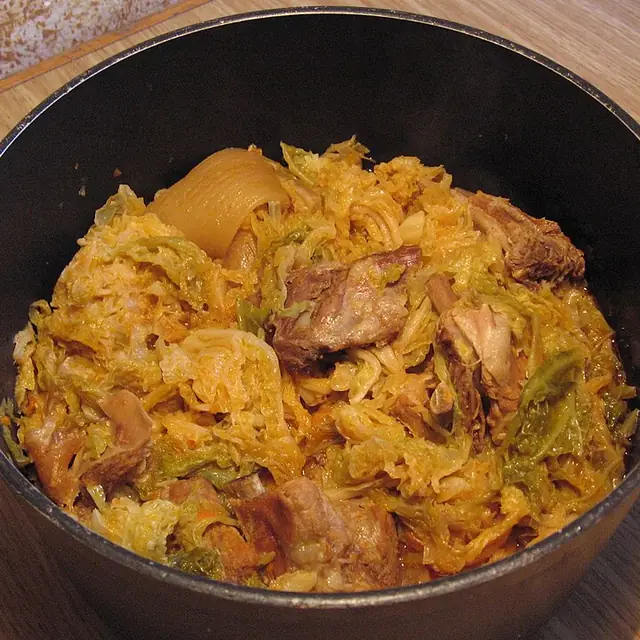
Cassoeula is Milan's winter braise: pork ribs, sausage and odd cuts (cotenna, foot) slow-cooked with savoy cabbage, onion, carrot and celery for three hours. The defining Lombard Sunday lunch of the cold months.
The cassoeula is first recorded in 16th-century Lombard farming manuscripts as a peasant November-to-February dish using the parts of the pig left after the main butchery: ribs, sausages, rind (cotenna), foot, ear. The slow braise with savoy cabbage (verza) is the canonical Milanese form, distinct from the Spanish ancestor cassola the dish takes its name from. The dish is served only between November (after the first frost, which sweetens the cabbage) and February. Trattoria Masuelli San Marco, Antica Trattoria della Pesa and Trattoria del Nuovo Macello serve canonical versions; Ratana modernises it with house-made luganega.
Trattoria del Nuovo Macello in Milan's south-east has cooked the Lombard trattoria canon since 1927, near the old slaughterhouse. Located in Porta Romana.
OrderThe risotto alla milanese, the cotoletta alla milanese with bone in, and the ossobuco when on the carte.
TipBookings open one month ahead on the website. Lunch is the calmer service; Friday evening fills up first.
Discover Milan’s Navigli district on a small-group food tour blending local culture, canals, and regional flavours. Enjoy a curated walking journey with multiple tasti...
Taste the soul of Milan in the Navigli district: creamy risotto, Sicilian arancina, Milanese pizza, pasticciotto, gelato, wine & prosecco. Topped off with our very own...
Cook with a Michelin-trained Chef in Milan and learn to make pasta, gnocchi, and tiramisù. Enjoy Prosecco and Italian wine, then share your creations in a fun, authent...