

The plates that define Reykjavik: what they are, where they came from, and where to eat the canonical version.
Signature dishes
-
Pylsa (Icelandic hot dog) ★ 4.8
The Icelandic hot dog is lamb-based with pork and beef, in a bun with ketchup, sweet mustard, remoulade, crisp fried onion and raw onion. Ask for eina med ollu, one with everything.
Where to try it: Baejarins Beztu Pylsur
Price: ISK 880
Baejarins Beztu Pylsur has sold hot dogs from its Tryggvagata stand since 1937 and stays open until 01:00 on most nights and until 06:00 on Fridays and Saturdays. Bill Clinton visited Iceland in 2004 and, being on a diet, took his hot dog with mustard only, and the stand says a hot dog with mustard has been called a Clinton ever since. The Guardian named it the best hot dog stand in Europe in 2006.
Watch out for: Gluten, Mustard
-
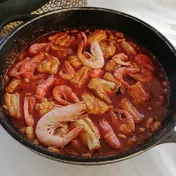
Plokkfiskur (fish stew) ★ 4.4
Plokkfiskur is a creamed stew of cod or haddock, potatoes and onions, eaten with Icelandic rye bread. The name literally translates as plucked fish.
Where to try it: Hofnin, Cafe Loki, Kaffivagninn, Messinn
Price: ISK 3,950 to 5,450
The name literally translates as plucked fish, and the base is cod or haddock with milk, potatoes and onions; newer versions add curry powder, cheese or a bechamel. In Reykjavik Cafe Loki serves it gratinated with rye bread and salad, Hofnin lists a traditional creamed fishstew with buttered potatoes and rye bread, Kaffivagninn bakes it with melted cheese and Bearnaise, and Messinn serves it in a pan with Bearnaise and rye bread.
Watch out for: Fish, Gluten, Milk
-

Kjotsupa (Icelandic lamb soup) ★ 4.5
Kjotsupa is Iceland's traditional meat soup, built on lamb and root vegetables with a grain such as barley, rice or oats. Cafe Loki serves an Icelandic lamb meat soup.
Where to try it: Cafe Loki
Price: ISK 4,850
The Grapevine calls kjotsupa a meal Icelanders have eaten for centuries and one of the few traditional dishes still eaten regularly. It was once a special meal for Sundays or Christmas, early cooks thickened it with barley before rice and oats, and a pot keeps on the stove for days. Cafe Loki, across the street from Hallgrimskirkja, lists its Icelandic lamb meat soup at ISK 4,850 and says its lamb roams free during the summer.
Book food experiences in Reykjavik


-
Humarsupa (langoustine soup) ★ 4.5
Humarsupa is Iceland's langoustine soup, a creamy shellfish soup. Saegreifinn on the old harbour is known for it, and Messinn, Fish Company and Hofnin each serve their own version.
Where to try it: Saegreifinn, Messinn, Fish Company, Hofnin
Price: ISK 3,550 to 3,990
Langoustine, humar in Icelandic, is sold fresh from May to August and frozen all year. Saegreifinn began as a small fishmonger by the old harbour and became known for its lobster soup, slightly sweet, with celery, red pepper and tomato, cream and a little cinnamon, clove and nutmeg. Messinn adds cognac, Fish Company cooks langoustine with apples and cardamom, and Hofnin builds a shellfish soup with mussels and scallops.
Watch out for: Crustaceans, Milk
-
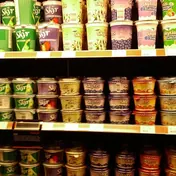
Skyr ★ 4.6
Skyr is an Icelandic cultured dairy food, thick like strained yogurt but classed as a fresh sour milk cheese. It is traditionally served cold, sometimes with cream.
Where to try it: Sandholt, Cafe Loki, Hofnin, Fish Company
Price: ISK 1,490 to 3,490
Skyr is mentioned in medieval sources including Egil's saga and Grettis saga, though nobody knows how like modern skyr that was, and Hotel Ranga says Icelanders have eaten it for over 1000 years. Today it starts from skimmed milk, a spoonful of an earlier batch and rennet, ferments for about five hours and is strained through cloth. In Reykjavik Sandholt serves it with lemon cream and berries, Cafe Loki with cream and sugar, and Hofnin as its house dessert.
Watch out for: Milk
-
Rugbraud (Icelandic rye bread) ★ 4.3
Rugbraud is a dark, very dense, usually rather sweet Icelandic rye bread without a crust that keeps for a long time. It is often served with butter, mutton pate, smoked lamb or pickled herring.
Where to try it: Cafe Loki, Kaffivagninn, Messinn, Hofnin
Price: ISK 1,600 to 2,800
Rye bread was traditionally baked in pots or boxes buried in holes near hot springs, and the geothermal version is called hverabraud, hot-spring bread. Eating a lot of it is said to cause flatulence, which earned the loaf its nickname thrumari, roughly thunderbread. When Bernhoftsbakari began baking in 1834 it made little but rye bread, sifted bread, French bread, sour bread and country bread. Cafe Loki serves rye bread slices with plokkfiskur or smoked lamb and its own rye bread ice cream.
Watch out for: Gluten
-
Fiskipanna (Icelandic fish pan) ★ 4.4
The fish pan is fish cooked and served in the same pan: at Messinn cod, wolffish, salmon or char with potatoes and vegetables. Hofnin and Kaffivagninn serve the catch of the day in a pan too.
Where to try it: Messinn, Hofnin, Kaffivagninn
Price: ISK 4,150 to 6,350
Messinn opened on Laekjargata around 2016, with a menu heavily influenced by Tjoruhusid in Isafjordur, where owner Jon Myrdal worked summers, and its name comes from the mess deck where a fishing boat's chef cooks. Its fish pans are served in the pan they were cooked in. Hofnin lists the fish of the day in a pan with herb sauce, and Kaffivagninn always serves its catch of the day in the pan with bread and whipped butter.
Watch out for: Fish, Milk
-

Kleina (Icelandic doughnut) ★ 4.2
Kleinur are small fried dough pieces cut into trapezoids, slit in the middle with one end pulled through to make a knot. In Iceland they are eaten plain and sold singly in bakeries.
Where to try it: Bjornsbakari
Price: ISK 330 to 350
Fried pastries of this kind are mentioned in Denmark as early as the 14th century and are traditionally eaten around Christmas in Scandinavia; the name may come from Low German Kleinet, a little object. In Iceland kleinur are eaten plain, sold singly in bakeries and in bags of about ten in shops, and sometimes sprinkled with sugar. Bjornsbakari on Hringbraut lists kleinur at ISK 330 and chocolate kleinur at ISK 350.
Watch out for: Gluten, Milk, Egg
-
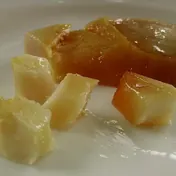
Hakarl (fermented shark) ★ 3.8
Hakarl is shark meat, traditionally Greenland shark, buried in sand and gravel for six to twelve weeks and then hung to dry for months. It is served as small cubes, often with a shot of brennivin.
Where to try it: Kolaportid, Cafe Loki, Kaffivagninn
Price: ISK 2,900 to 3,950
Fresh Greenland shark is poisonous because of its urea and trimethylamine oxide, and the fermenting and drying make it safe to eat. Hakarl is sold all year but turns up most in thorramatur, the buffet of the midwinter Thorrablot. Kolaportid advertises the famous sour shark, Cafe Loki sells a fermented shark and brennivin tasting, and Kaffivagninn runs a Rotten Shark Club tasting with a shot of Black Death brennivin and a beer.
Watch out for: Fish
-
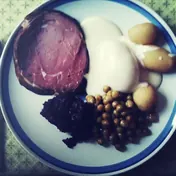
Hangikjot (Smoked Icelandic Lamb) ★ 4.6
Hangikjot is smoked and boiled lamb or mutton, smoked over Icelandic birch or dried sheep dung and sliced hot or cold. It is a festive food served at Christmas with potatoes in bechamel and green peas.
Where to try it: Cafe Loki
Price: ISK 2,800
Hangikjot takes its name from the old practice of smoking food to preserve it, and twice-smoked versions are closer to the old style, hung above the kitchen fire for many months. A survey found that around 90 percent of Icelanders eat it at least once over the holidays. Cold, it is cut thin onto flatkaka, rugbraud or laufabraud. Cafe Loki lists hangikjot on homemade rye bread and on flatbread, each at ISK 2,800.
-
Hardfiskur (Dried Fish with Butter) ★ 4.4
Hardfiskur is wind-dried fish, most often cod but also haddock and wolffish, torn into pieces and eaten with butter. It is sold in nearly every grocery store in Iceland.
Where to try it: Kolaportid, Cafe Loki
Hardfiskur hangs in cold outdoor air until bacteria cure it, much as cheese matures, and the hard, yellow fish is pounded with a mallet before it is soft enough to eat. The Grapevine calls it a staple of Icelandic diets for centuries, and it is part of thorramatur, served with butter. In Reykjavik Kolaportid's weekend market has a dried fish stall, Hafdal, and Cafe Loki serves dried fish with butter on its Icelandic Braveheart plate with a brennivin shot.
Watch out for: Fish, Milk
-
Skyrterta (Skyr Cake) ★ 4.4
Skyrterta is a no-bake Icelandic cake made with a cookie base and a skyr topping. Cafe Loki serves its skyr cake with cream and rhubarb syrup.
Where to try it: Cafe Loki
Price: ISK 2,300 per slice
Hotel Ranga describes skyrterta as a no-bake cake with a cookie base and a skyr topping, and skyr itself is a fresh sour milk cheese that Icelanders have eaten for centuries, thick like strained yogurt. No page we could read dates the cake. In Reykjavik Cafe Loki lists skyr cake with cream and rhubarb syrup at ISK 2,300, beside pancakes with skyr and caramel sauce and plain skyr with cream and sugar.
Watch out for: Milk, Gluten, Egg
Signature Dishes in Reykjavik, FAQ
What food is Reykjavik known for?
Reykjavik's signature dishes include Pylsa (Icelandic hot dog), Plokkfiskur (fish stew), Kjotsupa (Icelandic lamb soup), Humarsupa (langoustine soup), Skyr. See our signature dishes chapter for where to eat each.